A Breach of Parliamentary Privilege ref: Treaty of Vereeniging
31 May 1902
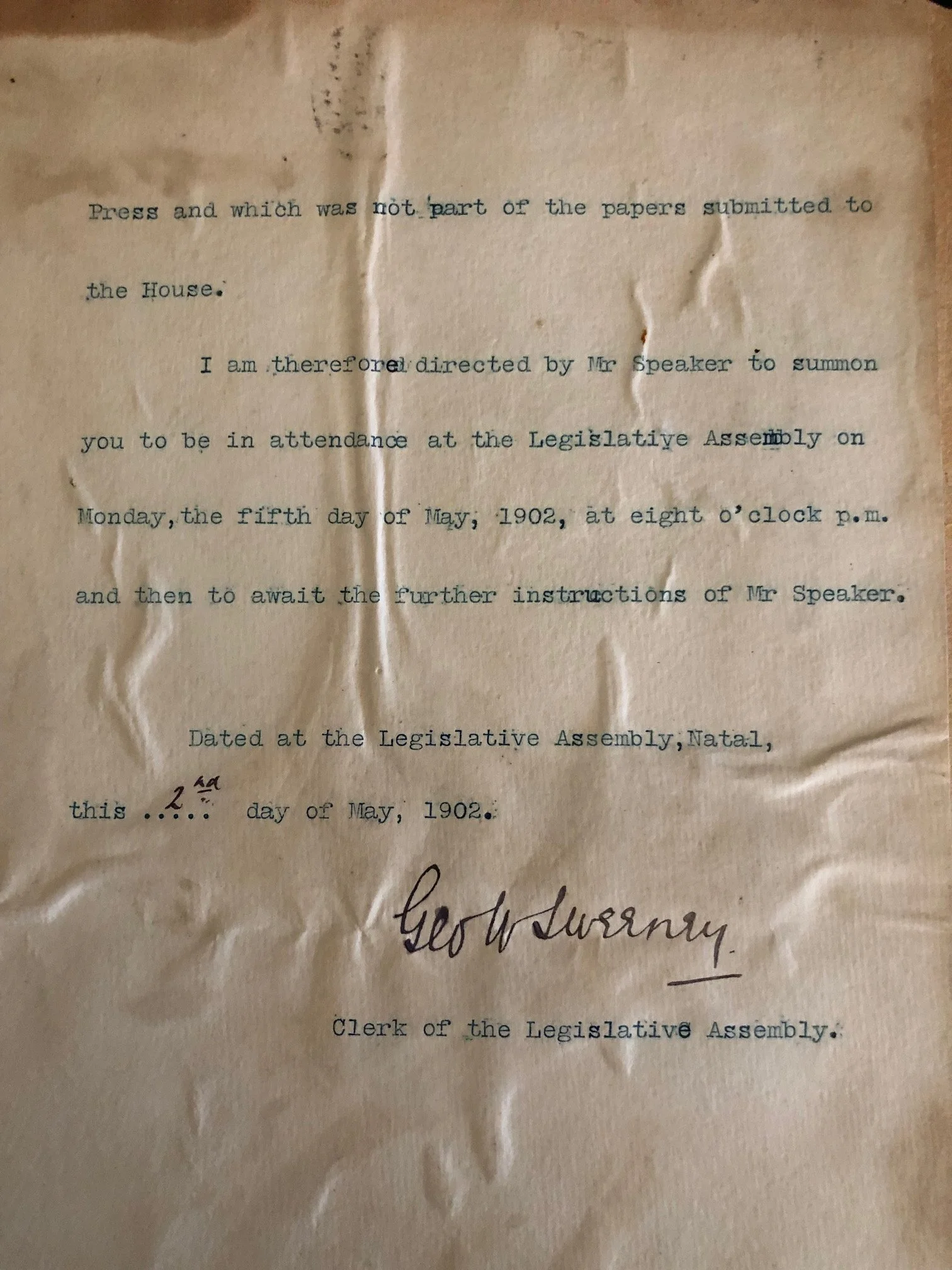
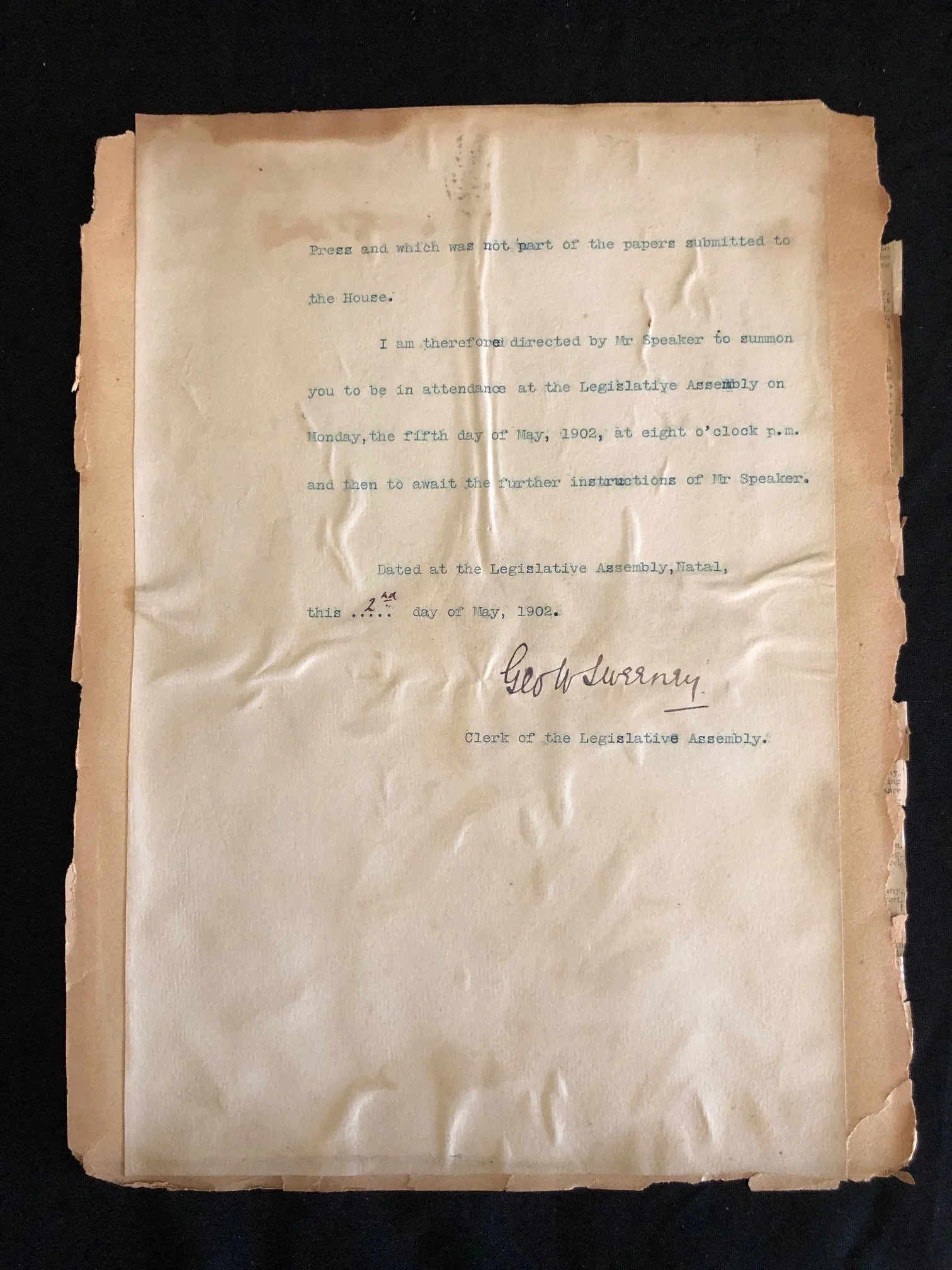
The typed summons is a remarkable legal and political artifact from the final, tense weeks of the Anglo-Boer War. Behind this seemingly mundane administrative request for an individual to appear before the Legislative Assembly lies a fascinating story of parliamentary privilege, wartime censorship, and a major geopolitical shift for the Colony of Natal.
A High-Stakes Breach of Privilege: The "Leaked" Papers
"...Press and which was not part of the papers submitted to the House."
The individual being summoned was likely in deep trouble for a breach of parliamentary privilege. During the Anglo-Boer War, the Natal government operated under intense political stress and strict martial law. If a member of the public, a civil servant, or a journalist obtained and published sensitive governmental documents before they were officially "laid upon the table" of the House, it was treated as a severe offense.
By order of the Speaker, the recipient was being subpoenaed to stand before the bar of the House at 8:00 p.m. on Monday, 5 May 1902, to face questioning regarding how unsubmitted papers were leaked to the press.
The Historic Date: May 1902
The date of the summons—2 May 1902—puts it right in the eye of a historical storm.
At this exact moment, Boer commandos and British authorities were gathered in the Transvaal participating in the preliminary peace talks that would ultimately lead to the signing of the Treaty of Vereeniging on 31 May 1902, ending the war.
Meanwhile, the Natal Parliament in Pietermaritzburg was in an uproar over the Annexation Bill (Act 39 of 1902). The Natal government was aggressively maneuvering to incorporate the Transvaal districts of Vryheid and Utrecht into Natal as a reward for its wartime loyalty to the British Crown. Documents regarding these borders and the status of local "rebels" were subject to fierce debate and tight confidentiality.
The Signatory: George W. Sweeney
The document is signed by Geo. W. Sweeney, the Clerk of the Legislative Assembly.
Sweeney was a foundational figure in the legal and administrative history of colonial Natal. Originally a clerk in the Crown Solicitor’s Office, he rose through the ranks of the civil service to become the chief administrative officer of the parliament.
Beyond his daily work summoning unruly individuals to the House, Sweeney is highly regarded by legal historians for co-compiling the monumental Statutes of Natal, a comprehensive, multi-volume compilation of the colony's laws from 1845 through the turn of the century. His neat, stylised signature validates the serious, statutory weight this summons carried.
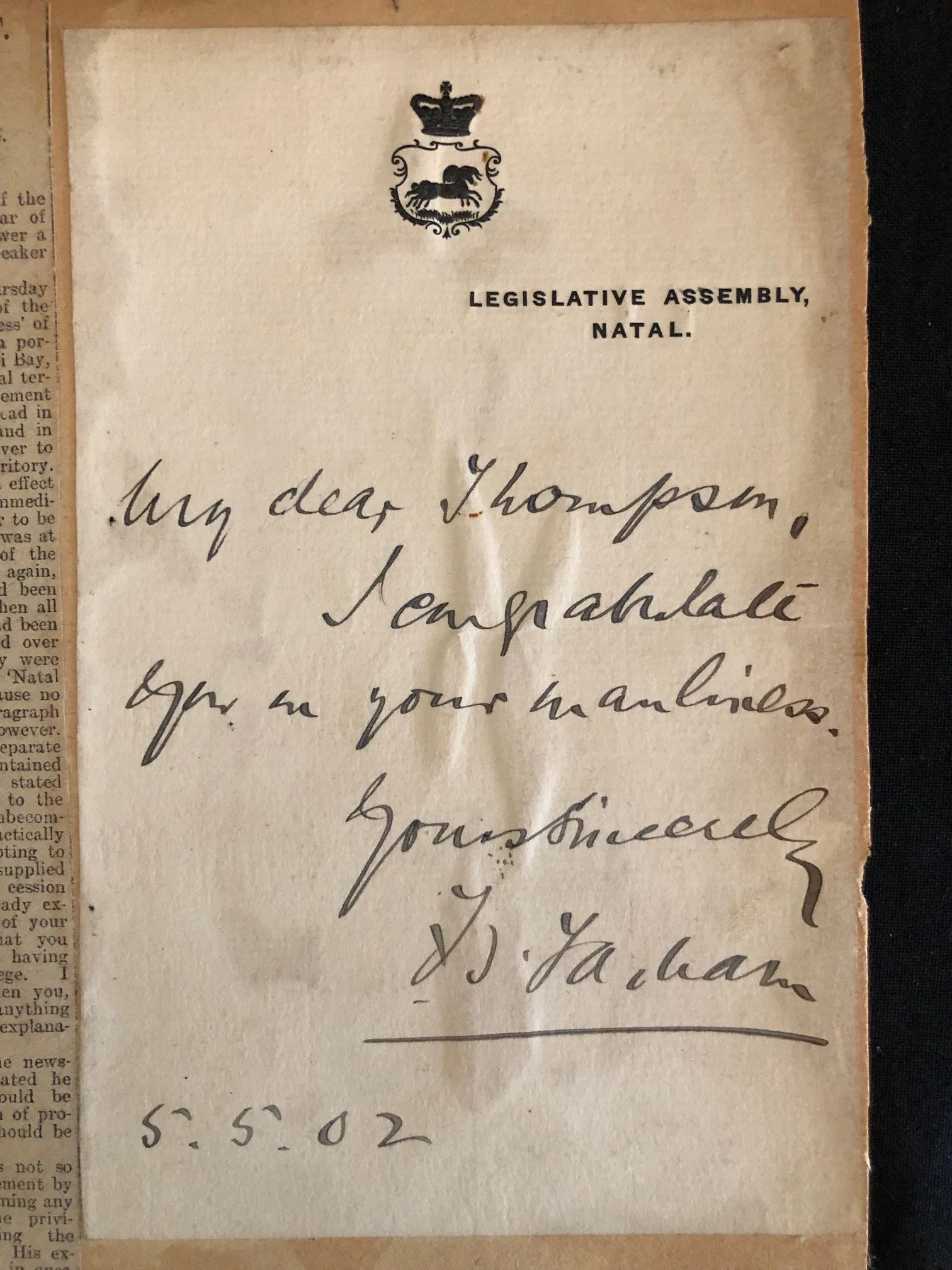
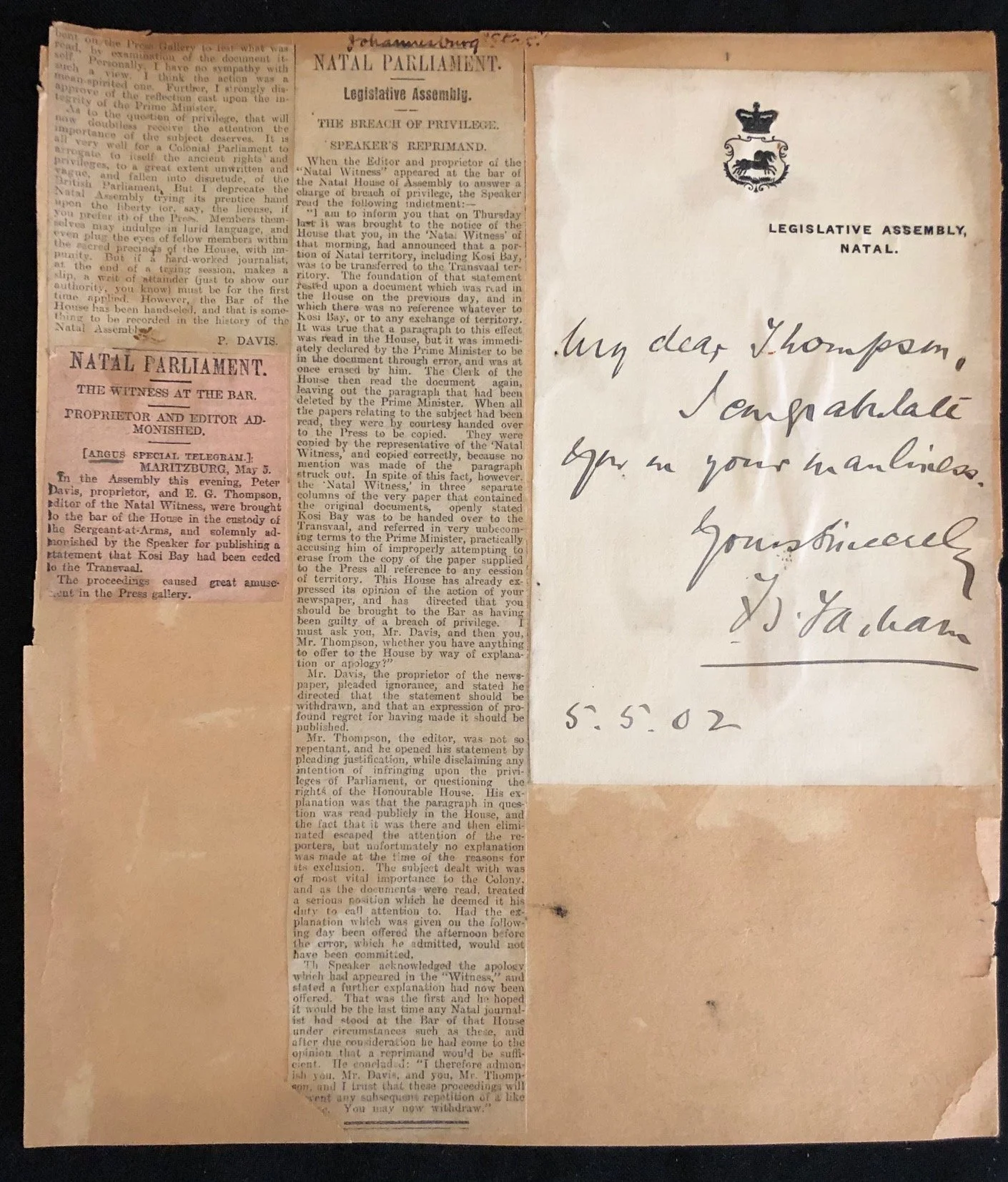
The handwritten note on official Legislative Assembly, Natal stationery provides the sensational "rest of the story" to the previous summons from May 1902.
It confirms the exact identity of the man who was hauled before the bar of the House, and reveals a fascinating glimpse of behind-the-scenes political solidarity during a major Victorian-era parliamentary scandal.
The Missing Piece: Identifying "Thompson"
This note is addressed to "My dear Thompson" and is dated 5.5.02 (5 May 1902)—the exact date and time the recipient of the previous summons was ordered to appear.
This directly identifies the man in the eye of the storm as Frank Braybrooke Thompson, a well-known Natal journalist and shorthand writer who worked extensively with the local press and the legislature. Thompson had been accused of a serious breach of privilege for obtaining and publishing confidential government documents before they were officially presented to the House.
A Dramatic Night at the Bar of the House
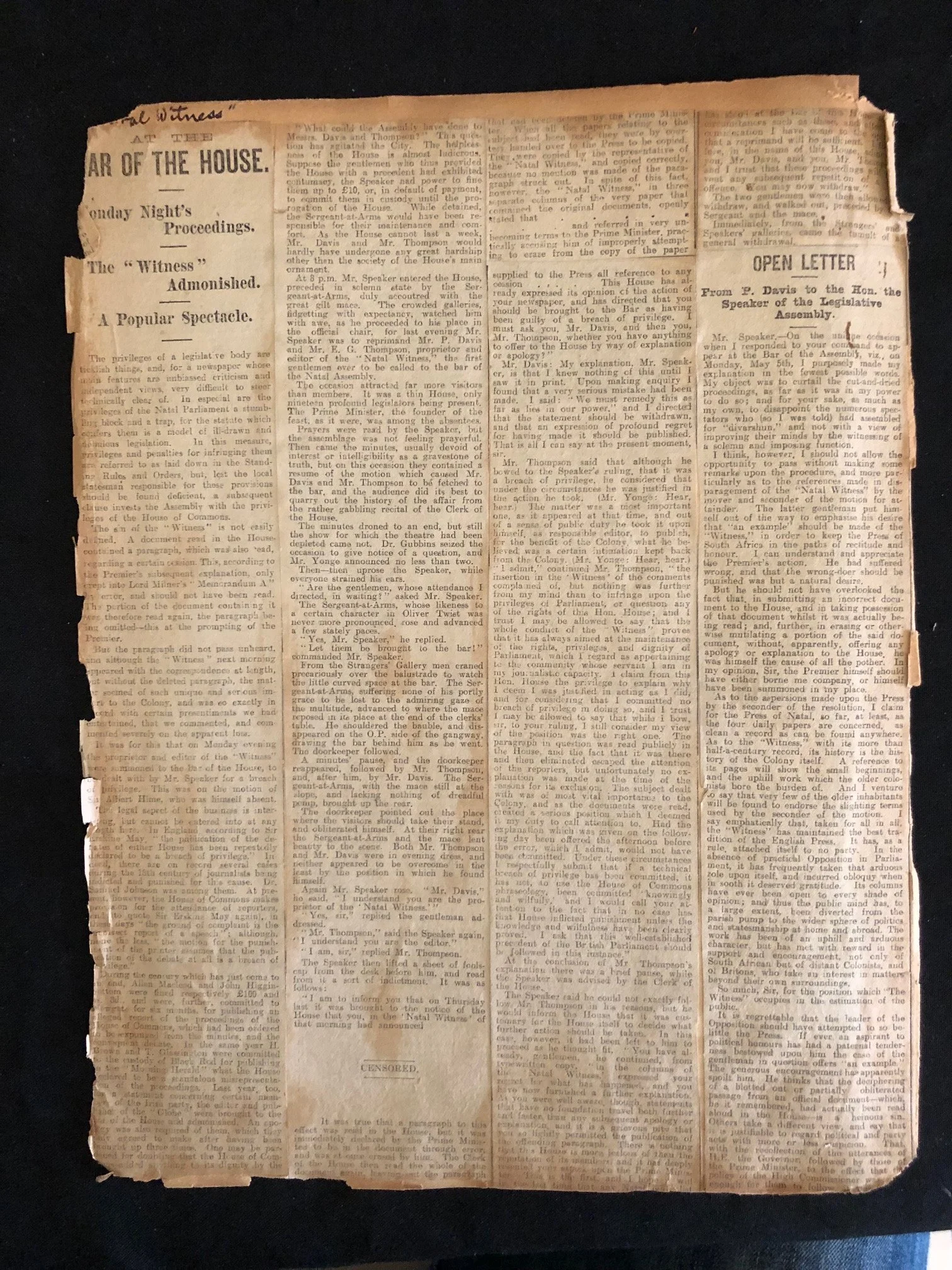
When Thompson stood before the packed Legislative Assembly at 8:00 p.m. on Monday, 5 May 1902, he did not back down or grovel. Instead of betraying his journalistic integrity, he refused to name the civil servant or politician who had leaked the papers to him.
The snippet of newspaper column visible on the left margin actually captures part of this dramatic interrogation. It notes that the Speaker questioned him regarding information published in the press that was "not part of the papers submitted to the House," and mentions Thompson's steadfast refusal to provide "any explanation" that would compromise his sources.
The Signatory: F. S. Tatham
While parliament officially had to condemn Thompson's actions to preserve its own rules, individual politicians secretly admired his grit. This note was written and handed to Thompson immediately after his ordeal by Frederic Spence Tatham (F. S. Tatham), who signs at the bottom.
Tatham was one of the most prominent, influential figures in Natal at the turn of the century:
The Soldier-Politician: He was a member of the Legislative Assembly for Pietermaritzburg, a King's Counsel (KC), and a highly decorated military officer who had commanded the Natal Carbineers during the Siege of Ladysmith just two years prior. He would later become a judge of the Supreme Court of South Africa.
The Letter: Writing privately on parliamentary notepad, Tatham tells the embattled journalist:
"I congratulate you on your manliness."
In the vocabulary of Edwardian Natal, calling a man's conduct "manly" was the highest possible praise for courage, honor, and a refusal to break under pressure.
This pair of documents constitutes a complete, self-contained archival treasure:
1). represents the heavy, intimidating machinery of the State enforcing wartime censorship and parliamentary dominance.
2). captures the human element—a celebrated Natal politician and Anglo-Boer War veteran privately praising a journalist for defending freedom of the press and protecting his sources.
Card size: 230mm x 270mm
Laid down; mellowed.
R1,500