Collection of Ephemera Relating to The Inkatha Freedom Party (IFP) (8)
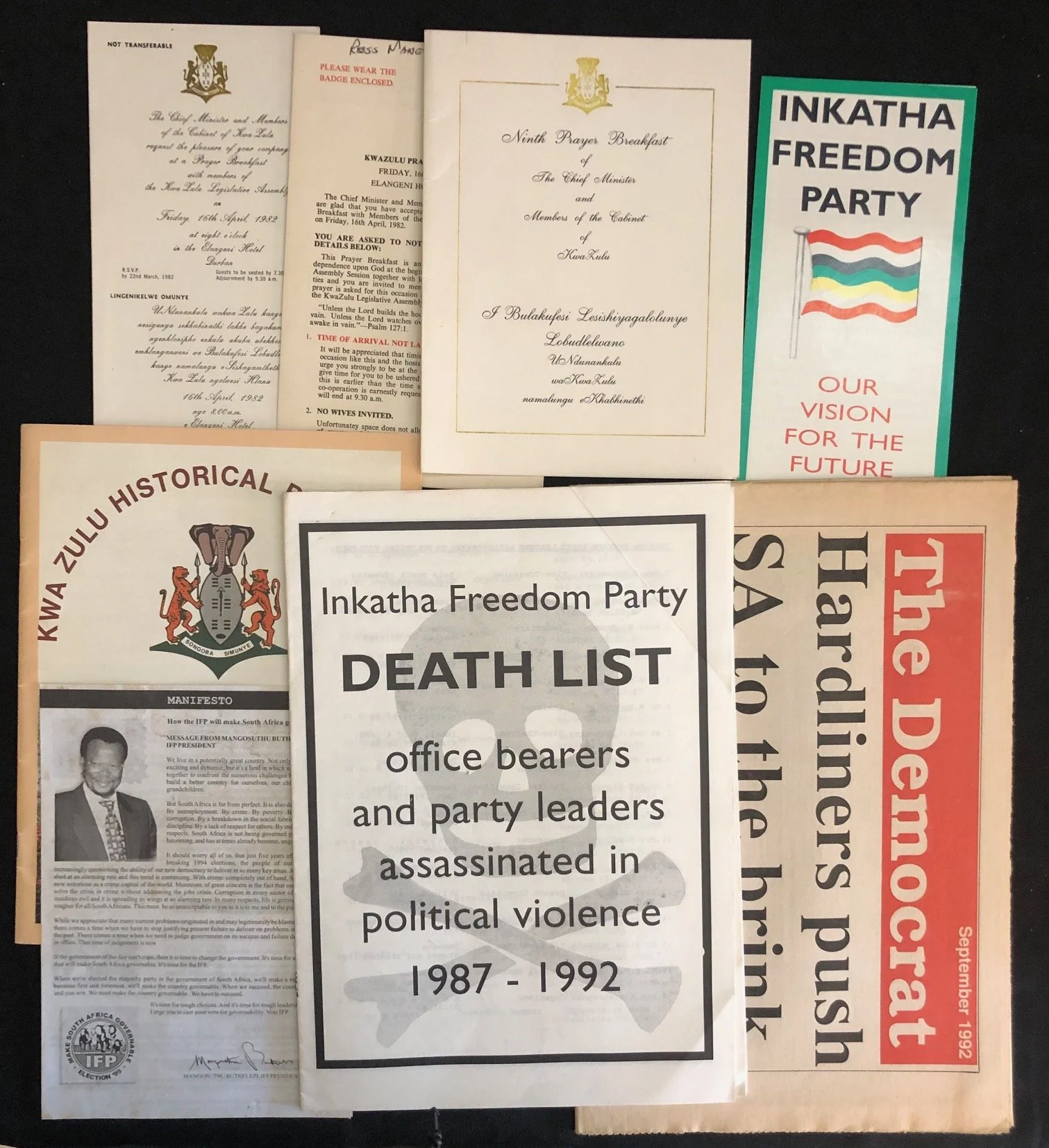
This collection of ephemera provides a powerful, multi-decade visual narrative of the Inkatha Freedom Party (IFP). It charts their evolution from an apartheid-era homeland administration into an embattled political party caught in a brutal, low-intensity civil war during South Africa’s democratic transition.
The historical arc of these specific items reveals several compelling themes:
The Consolidation of Homeland Power (1982)
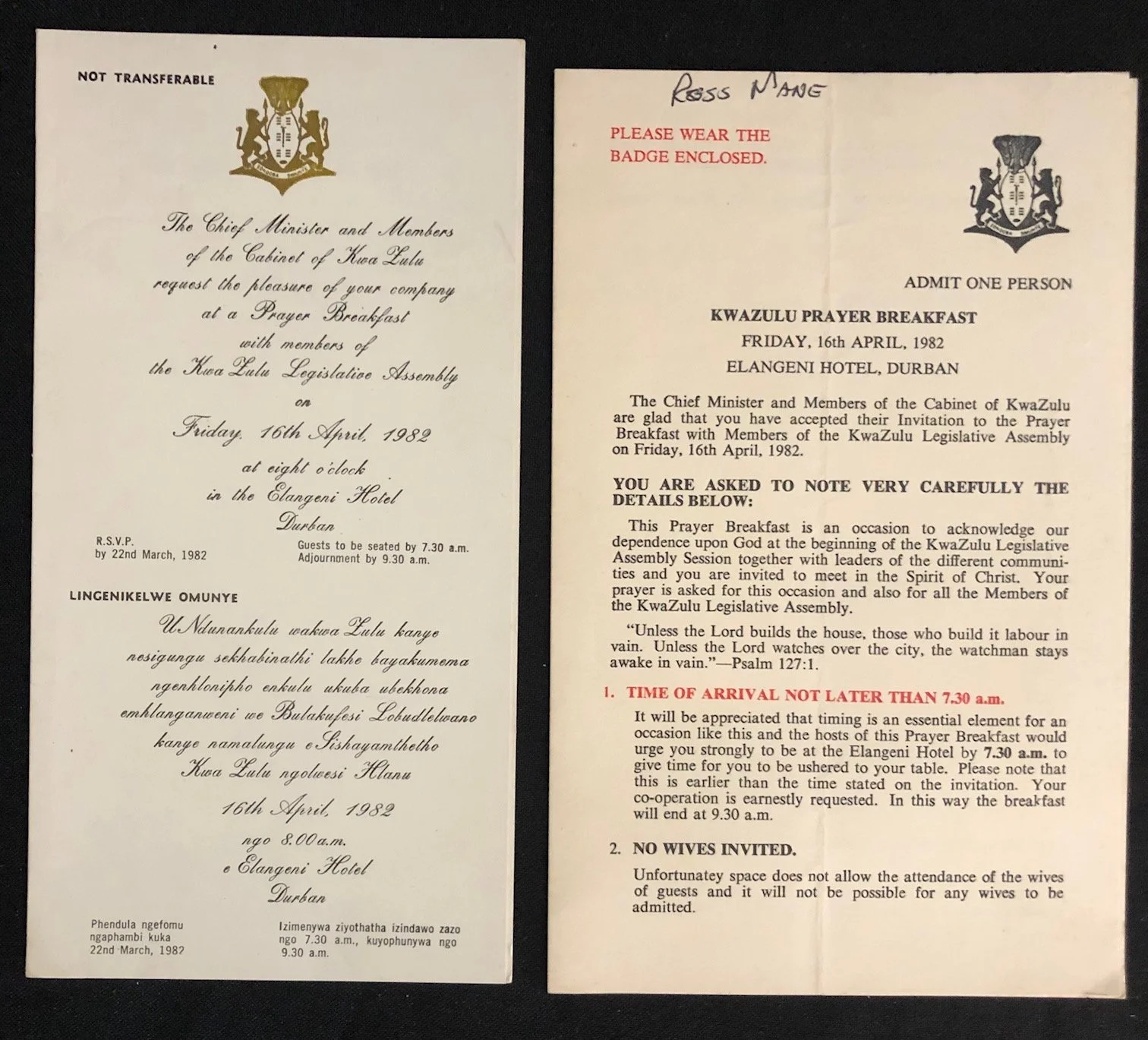
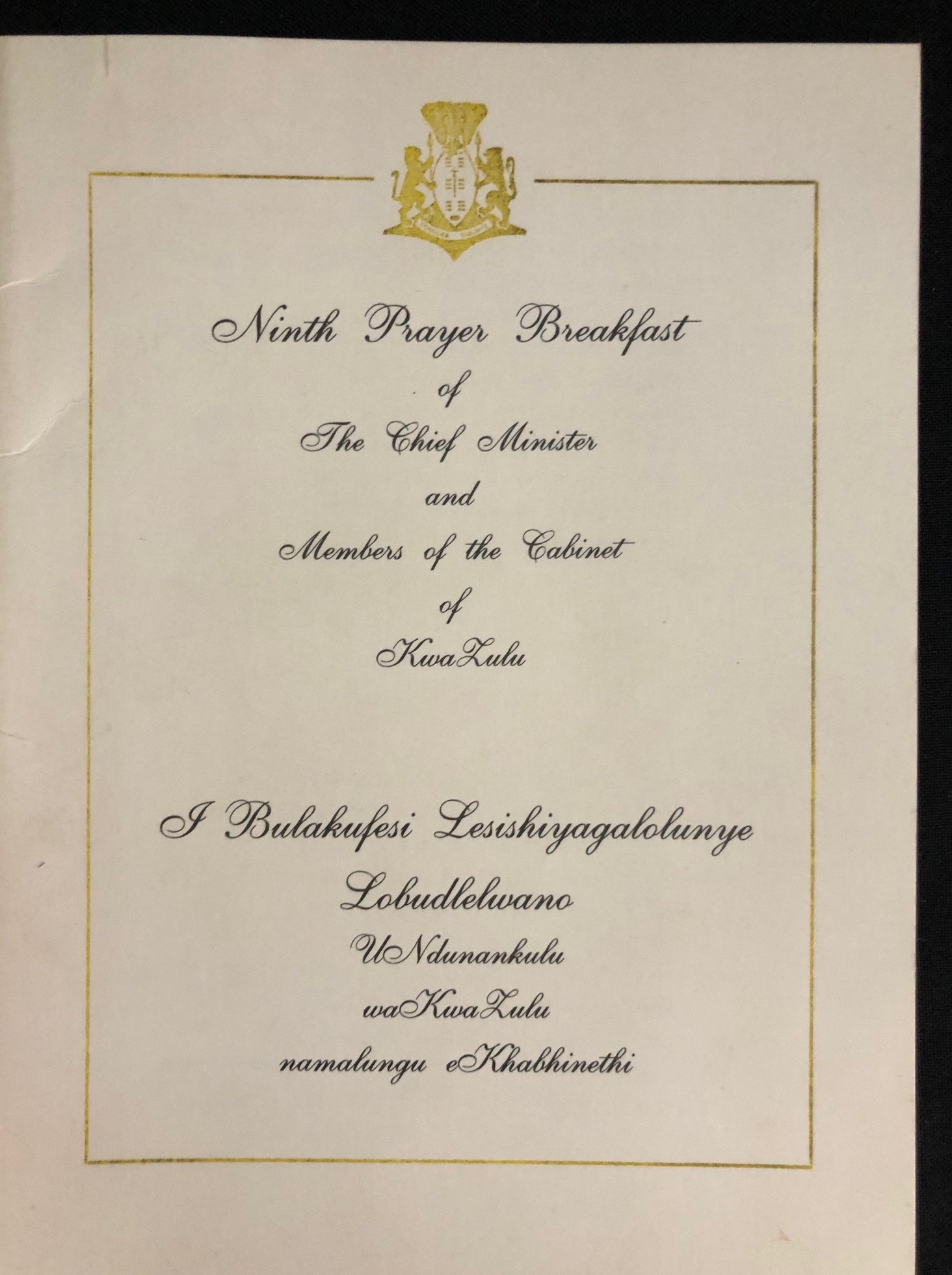
The documents from April 1982 details the Ninth Prayer Breakfast hosted by the Chief Minister of the KwaZulu bantustan, Mangosuthu Buthelezi, at the Elangeni Hotel in Durban.
The Politics of Piety: These breakfasts were highly formalized, institutional events used to solidify political cohesion, Christian-national alignment, and traditional authority within the KwaZulu Legislative Assembly.
Social Protocols: The strict, typewritten directive "NO WIVES INVITED" on the informational card reflects the rigid patriarchal and traditional structures governing homeland politics at the time.
The Mid-Transition "Death List" and the Township War (1987–1992)
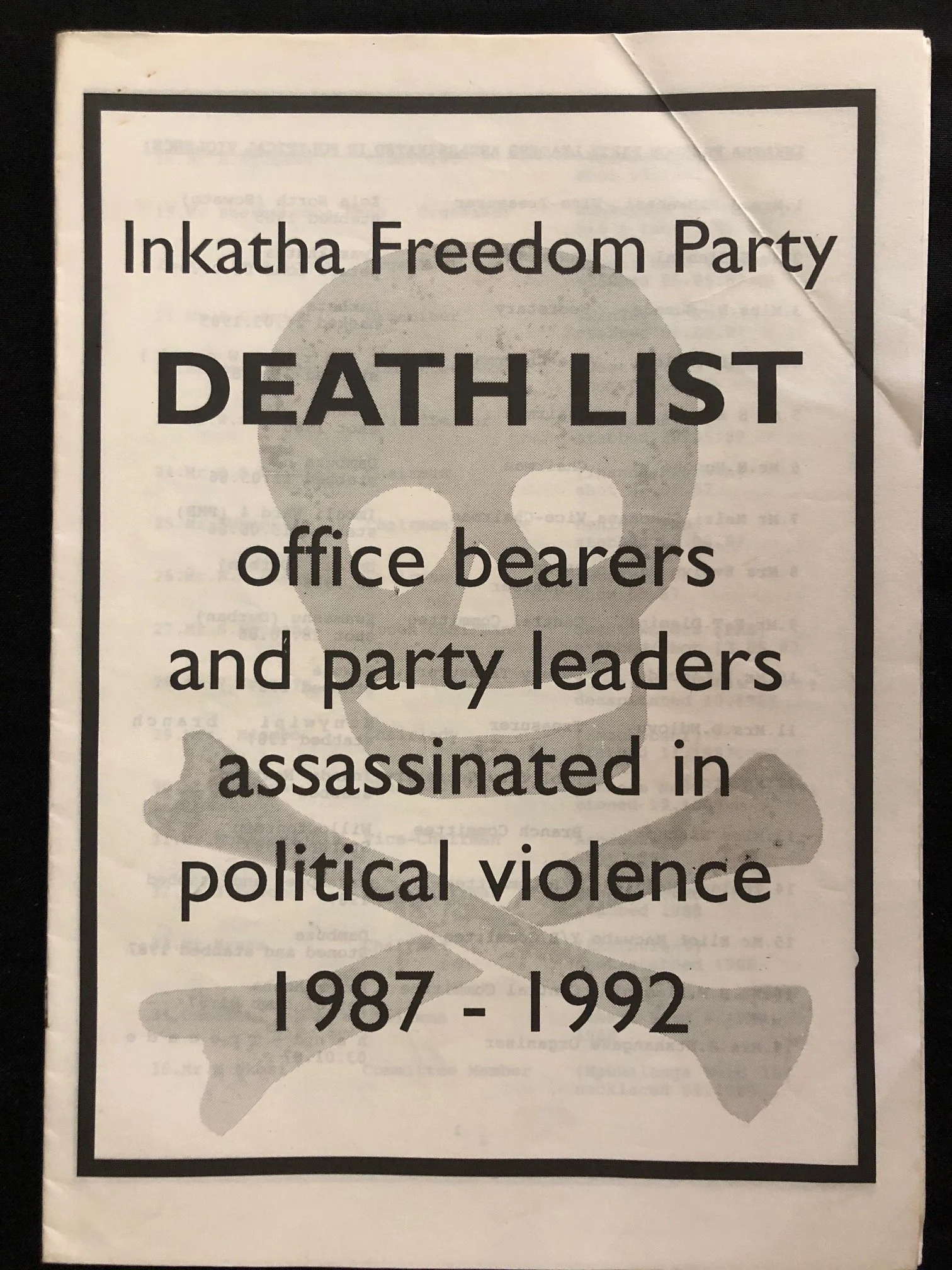
The striking document titled "Inkatha Freedom Party DEATH LIST: office bearers and party leaders assassinated in political violence 1987–1992."
The Low-Intensity Civil War: This booklet captures the peak of the bloody, internecine conflict between Inkatha and United Democratic Front (UDF)/ANC-aligned cadres in the KwaZulu-Natal Midlands and the Witwatersrand townships.
The Propaganda Battle: While international and domestic media often focused on state-sponsored third-force violence against liberation movements, the IFP compiled and published this stark, skull-and-crossbones document to counter that narrative, proving that their own local leadership and organizers were being systematically targeted for assassination.
A Nation on the Edge (September 1992)
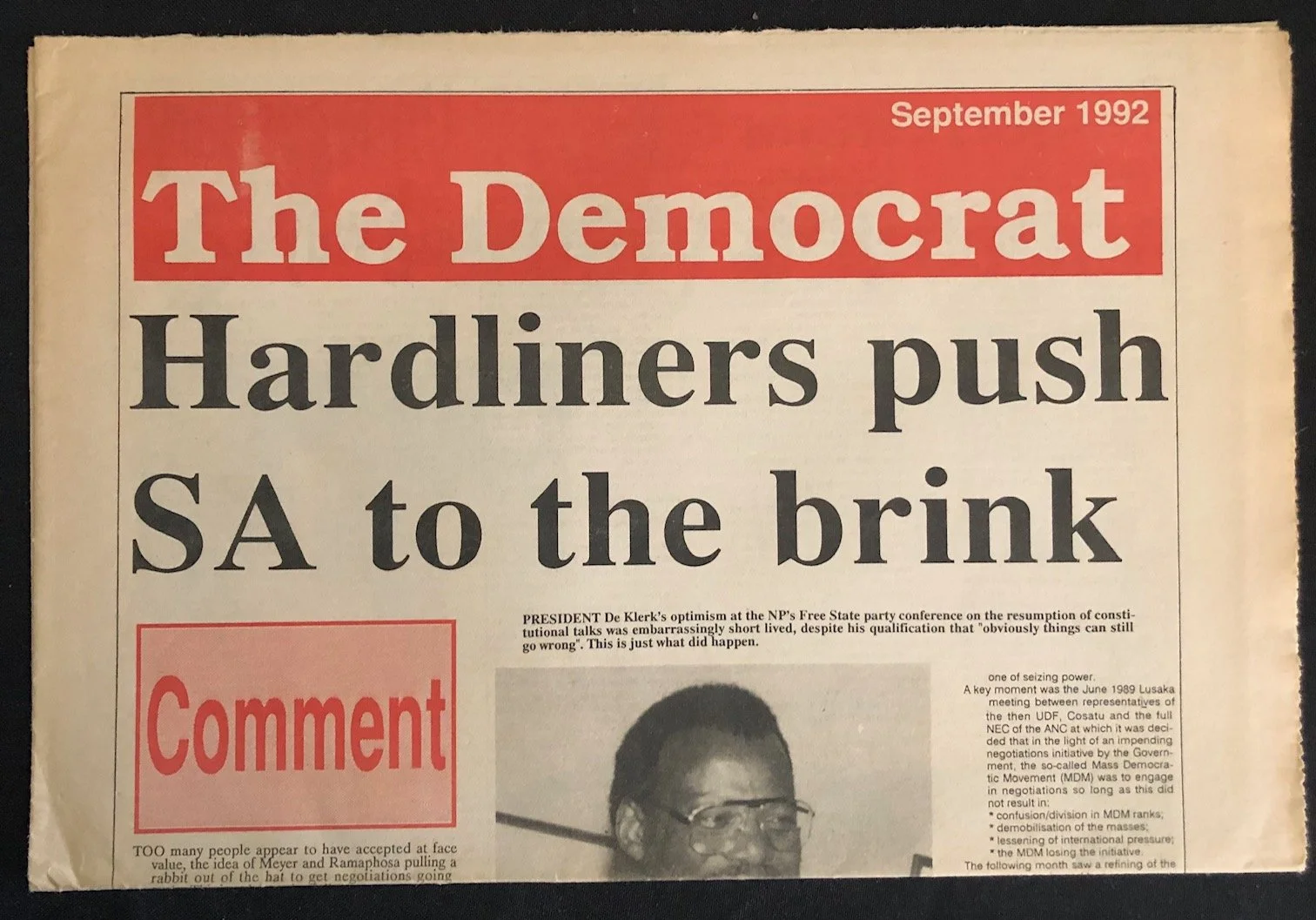
The September 1992 issue of The Democrat, featuring the headline "Hardliners push SA to the brink."
This captures the exact month of the Bisho Massacre (in the Ciskei homeland) and follows the Boipatong Massacre earlier that winter.
Multi-party constitutional negotiations had collapsed, and this artifact perfectly encapsulates the genuine national dread that South Africa was sliding into an uncontrollable, multi-factional civil war rather than a peaceful transition.
Transitioning into the Democratic Era (1994–1999)
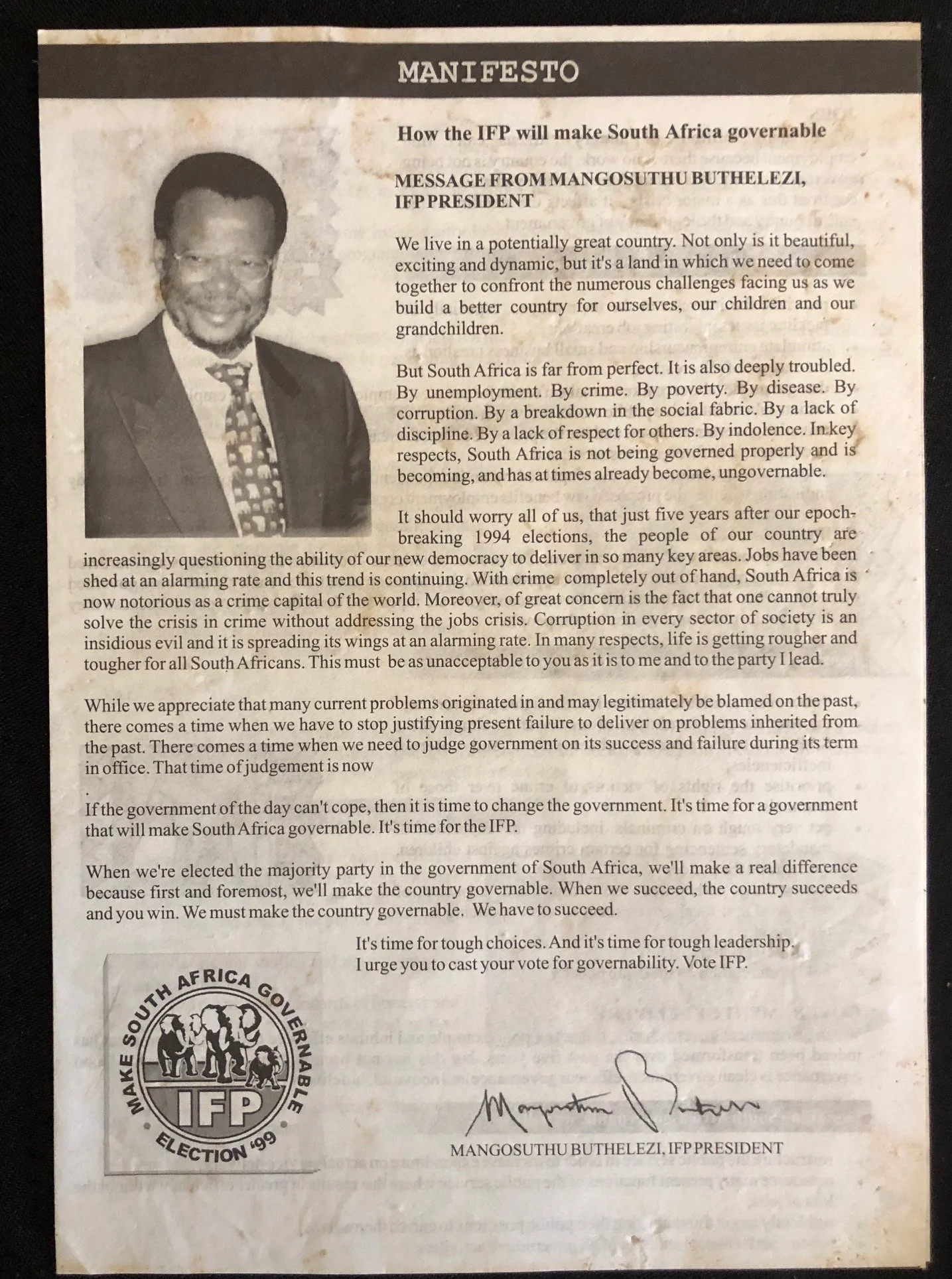
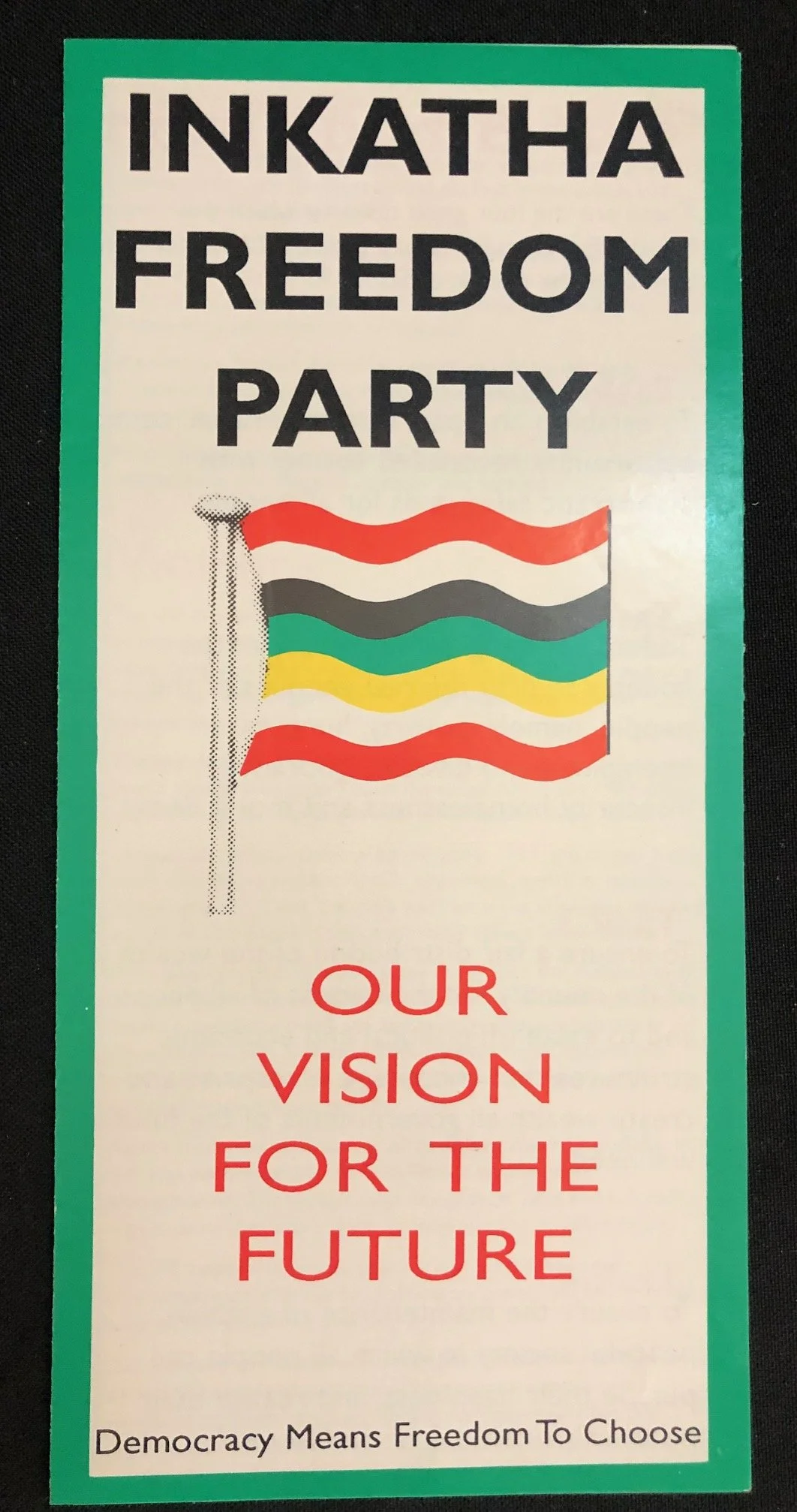
The “Our Vision for the Future” pamphlet and the KwaZulu Historical Manifesto (bearing an "IFP Election '99" stamp)—show the party's eventual transition into post-apartheid democratic politics. After nearly boycotting the historic 1994 elections, these documents show the IFP attempting to pivot away from wartime rhetoric to establish themselves as a conventional national political party focused on governance, federalism, and economic policy.
Various sizes.
R1,250