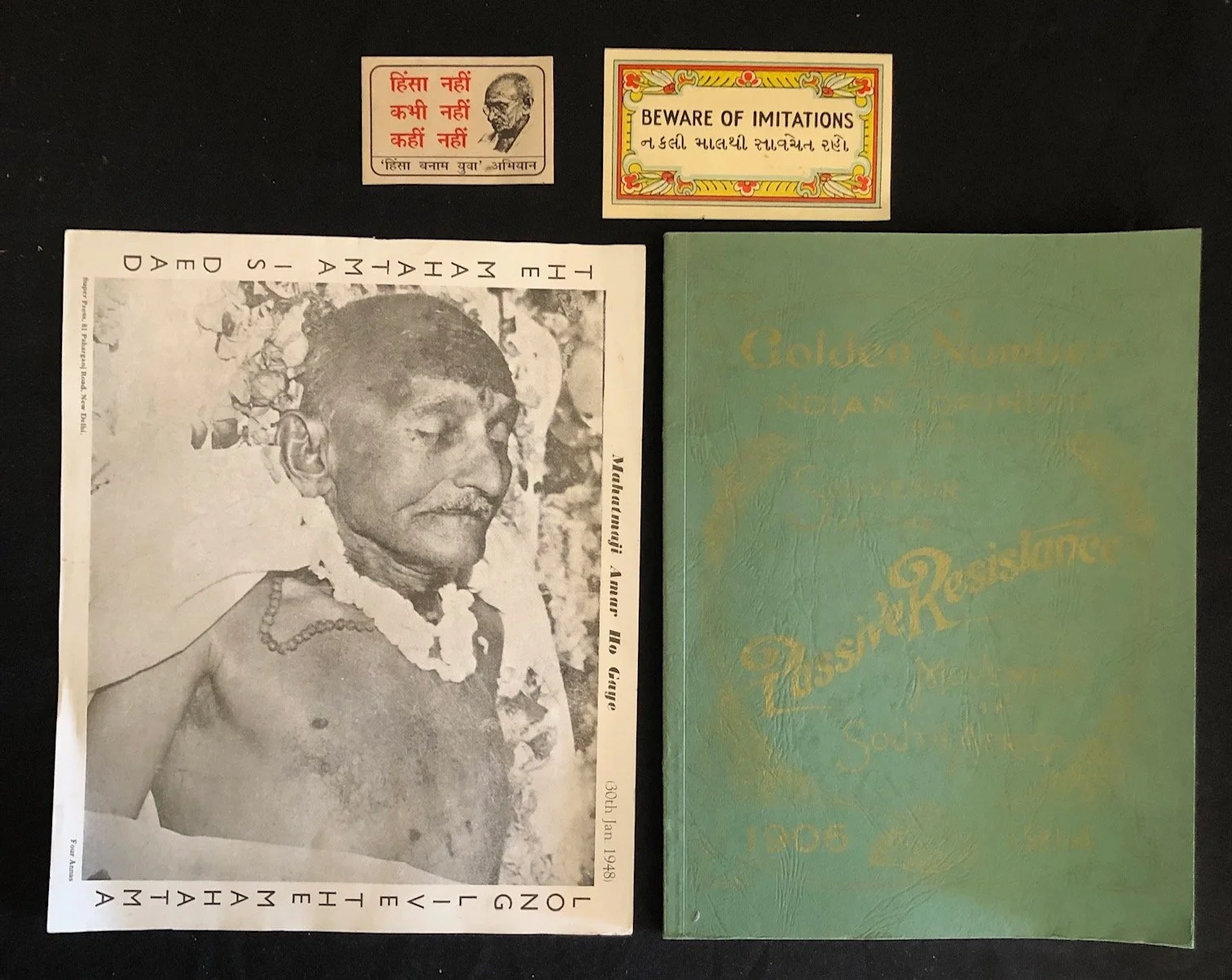
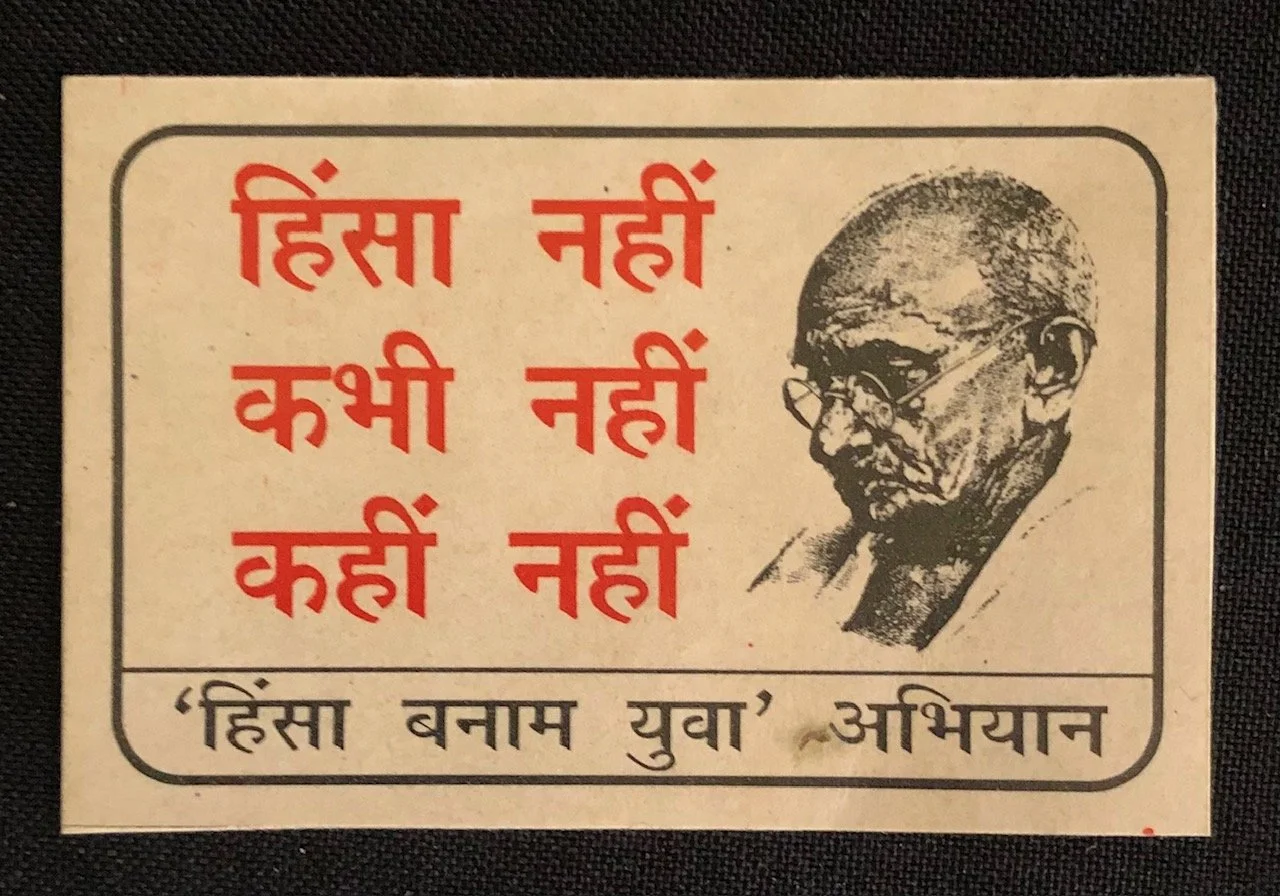
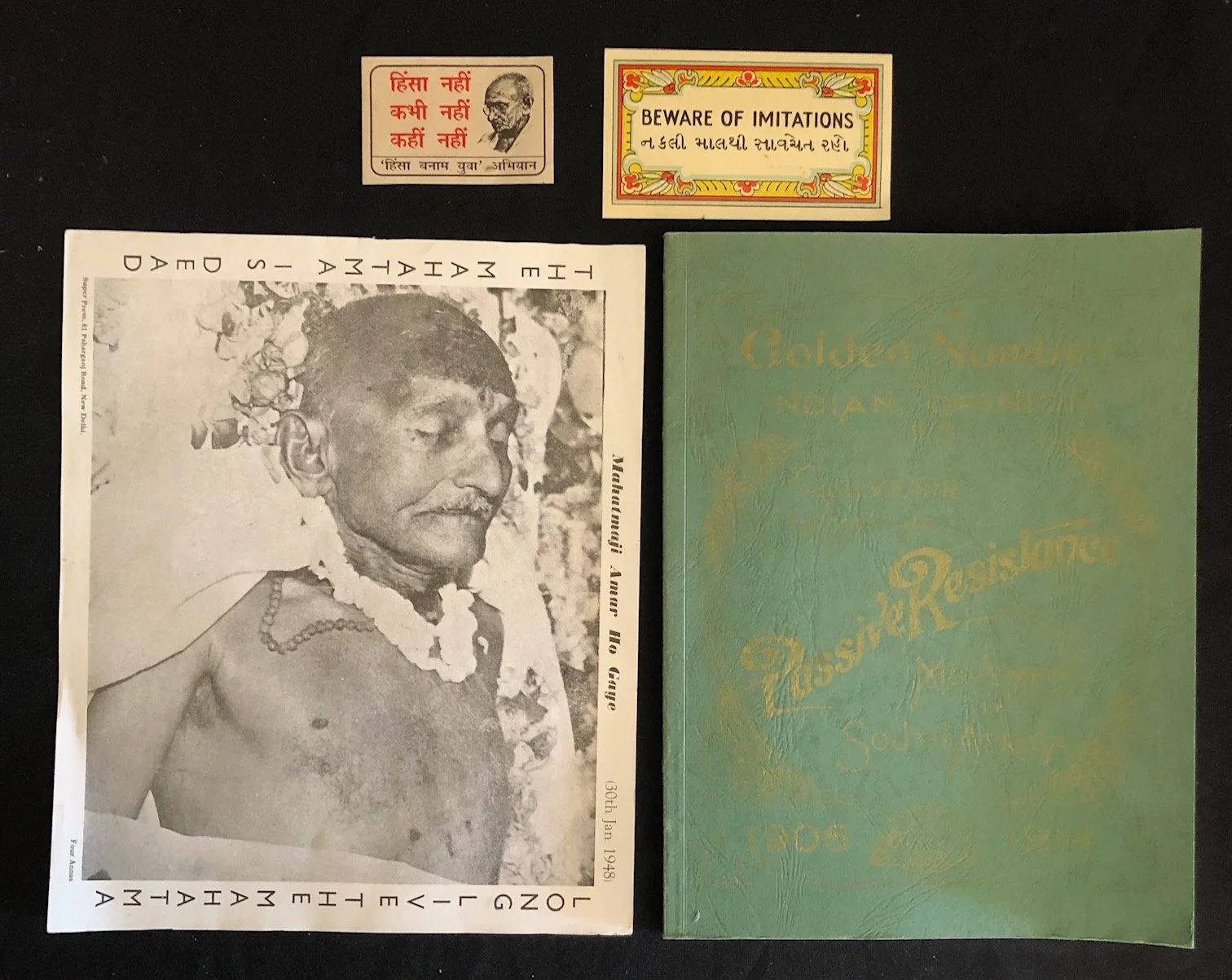
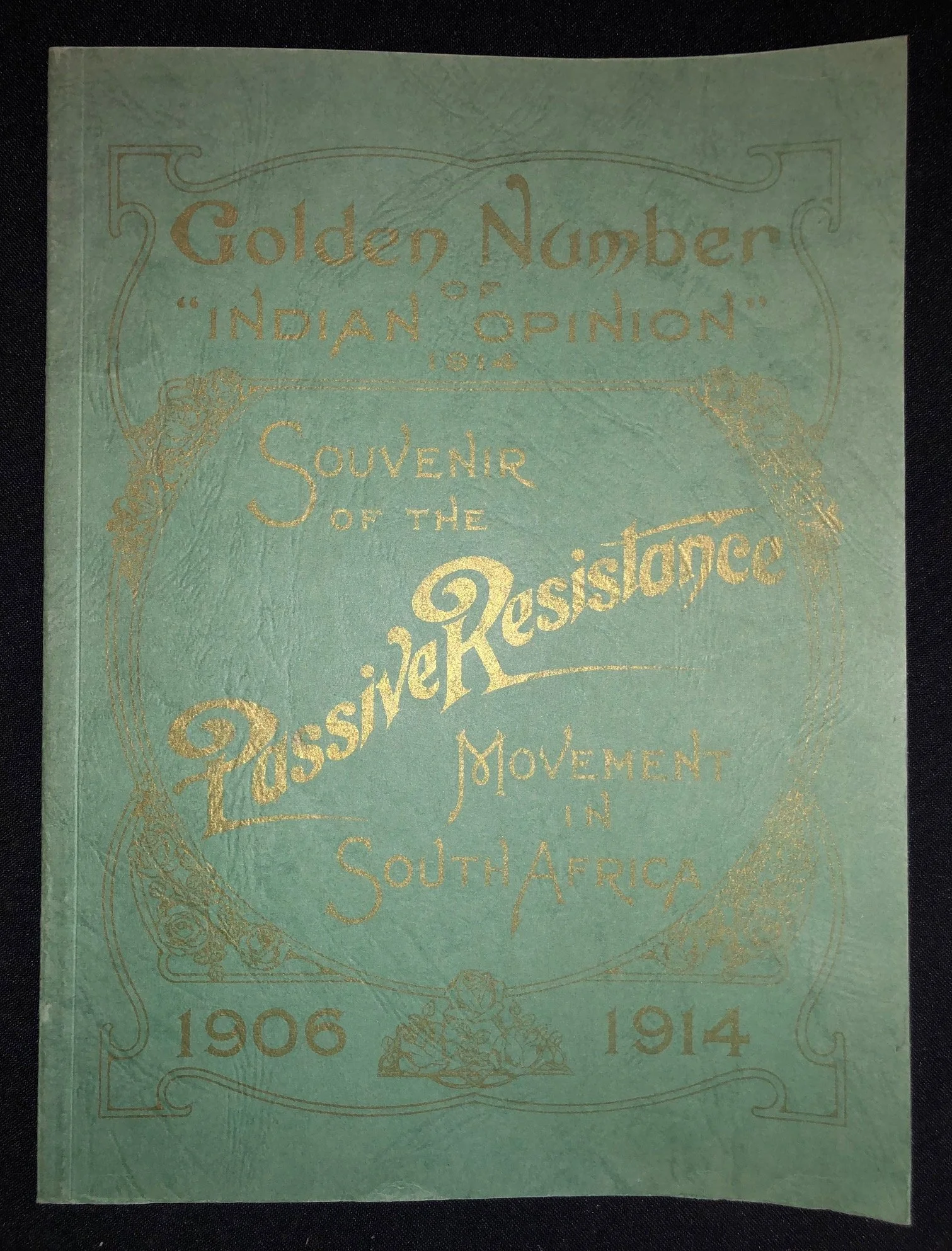
A Collection of Various Items Relating to Indian Passive Resistance. (4).
4 different items.
The collection captures the two bookends of Mahatma Gandhi’s political life: the birth of his philosophy of non-violent resistance (Satyagraha) in South Africa, and its ultimate conclusion with his assassination in India in 1948.
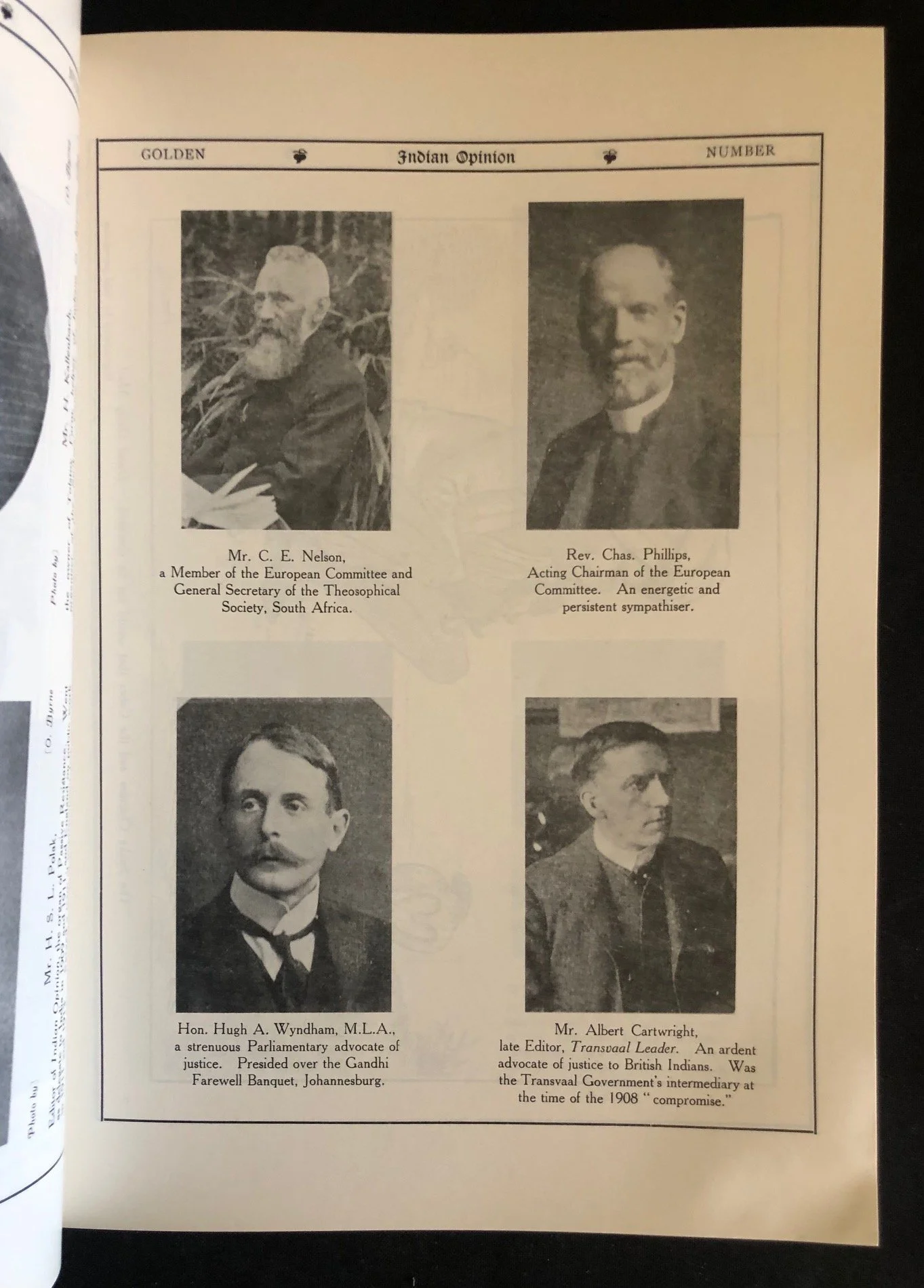
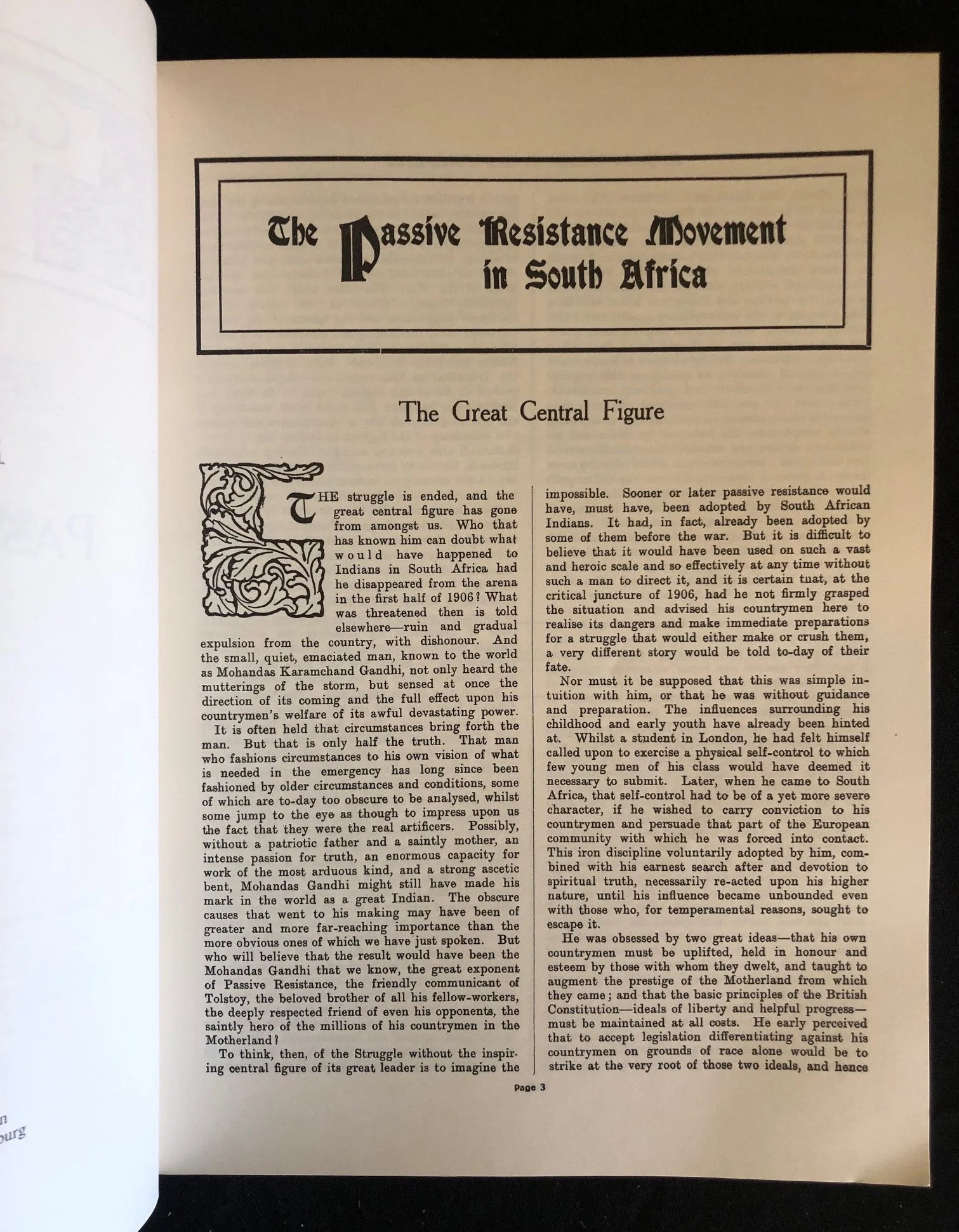
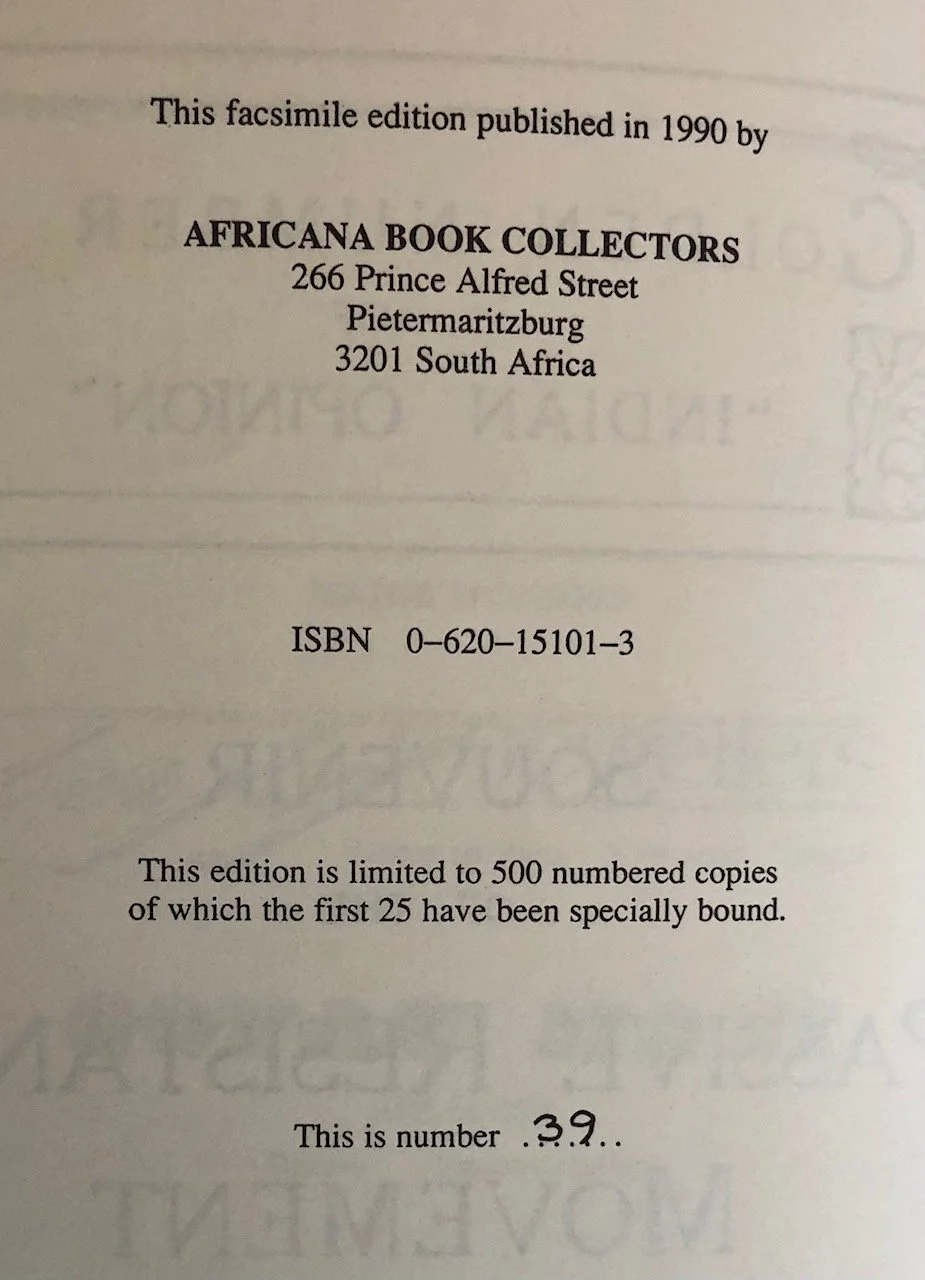
The Golden Number of Indian Opinion (1914): The Birth of Satyagraha on a Printing Press
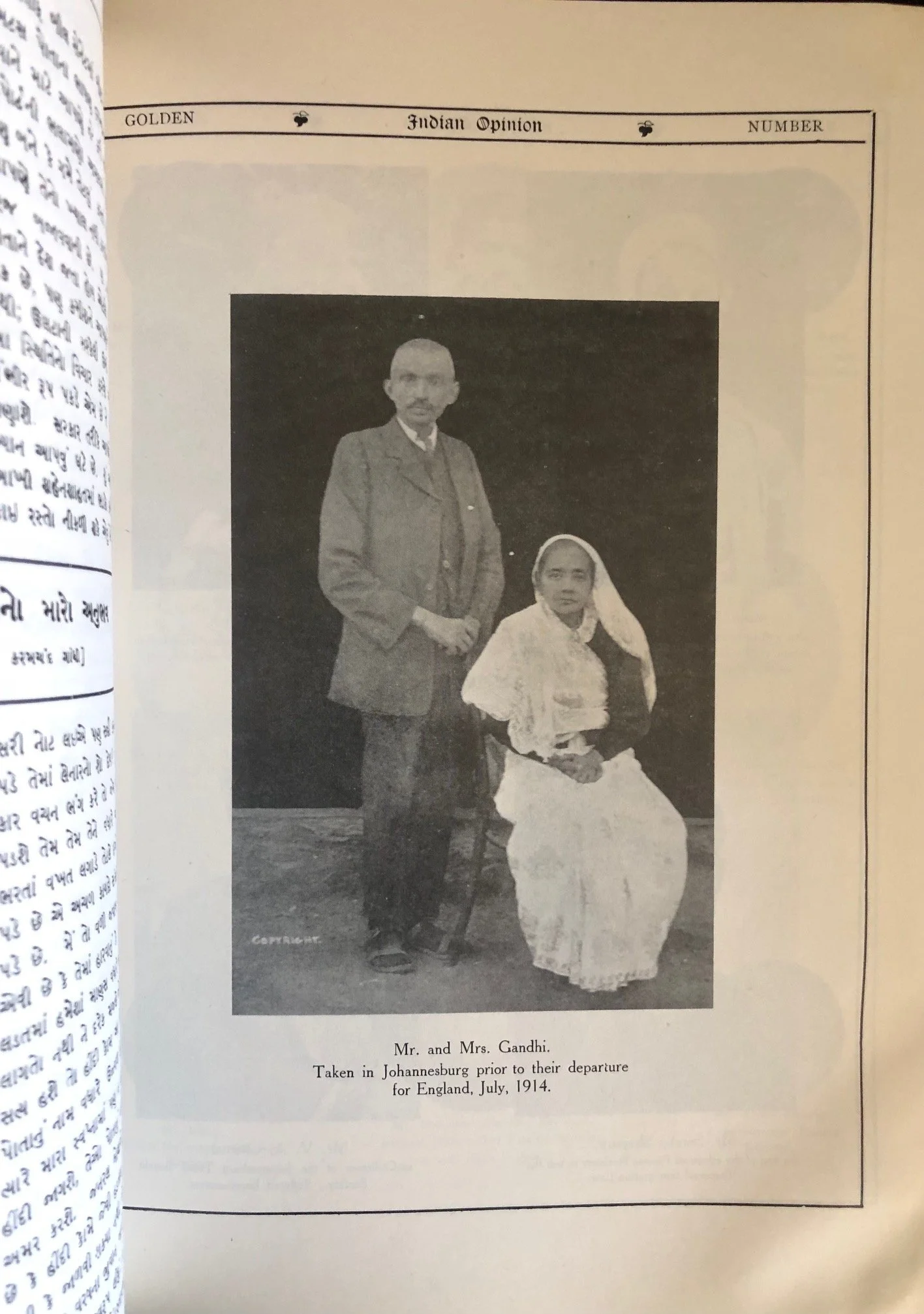
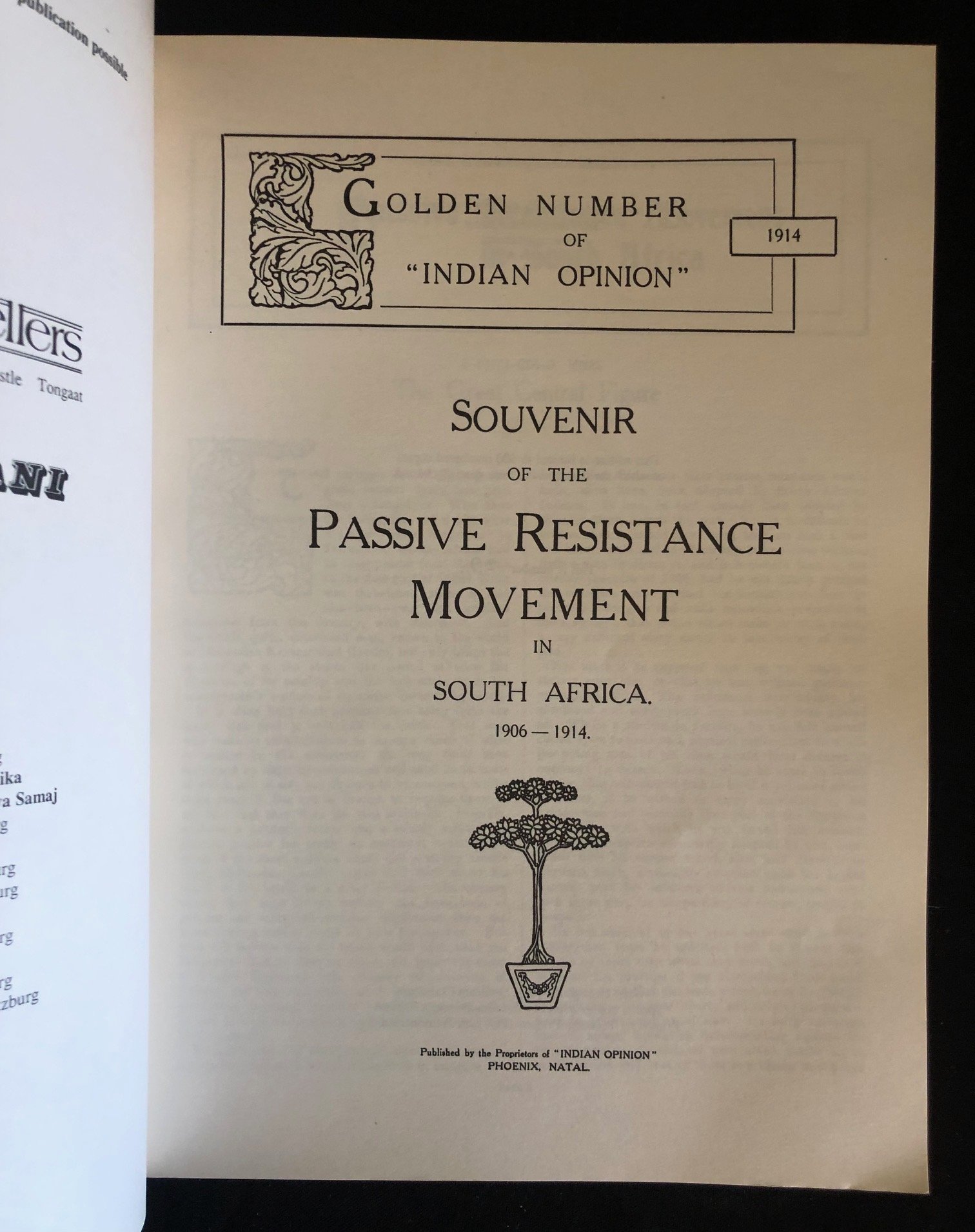
The Indian Opinion was a newspaper founded by Gandhi in 1903 and printed at the Phoenix Settlement in Natal. (The copy here is the limited edition reprint). It wasn't just a news source; it was the primary vehicle used to organize, educate, and mobilize the local Indian community against discriminatory colonial laws.
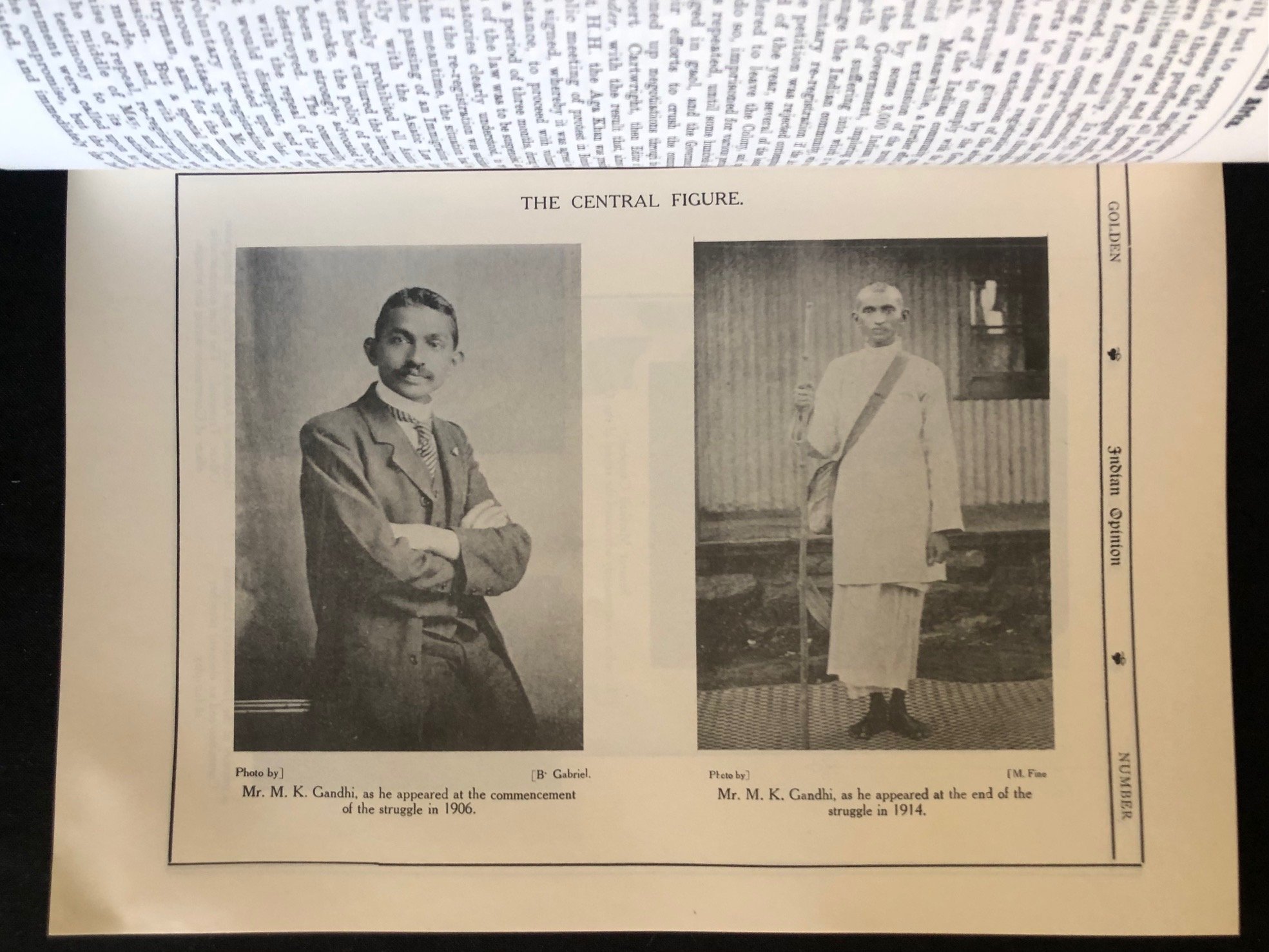
When Gandhi decided to leave South Africa and return to India in mid-1914, this special "Golden Number" was compiled as a definitive retrospective souvenir of the historic Passive Resistance Movement (1906–1914).
Why This Specific Publication is Historically Significant:
The First Roll of Honour: This souvenir contains what is essentially the first comprehensive directory and photographic record of the early Satyagrahis. It documents not just the leadership, but ordinary indentured laborers, miners, and women who went to prison or lost their lives during the protests.
The Phoenix Press Legacy: The printing press at Phoenix was entirely self-reliant. During strikes and intense periods of the resistance, the paper was often run by a skeleton crew of volunteers. The production of this high-quality, substantive volume in rural Natal was a massive logistical feat for an activist press.
A Theoretical Foundation: The essays contained within this specific 1914 (reprint) volume helped crystallize the definition of Satyagraha (soul-force or truth-force) as distinct from passive resistance, setting the exact philosophical framework that Gandhi would later deploy on a massive scale to dismantle British rule in India.
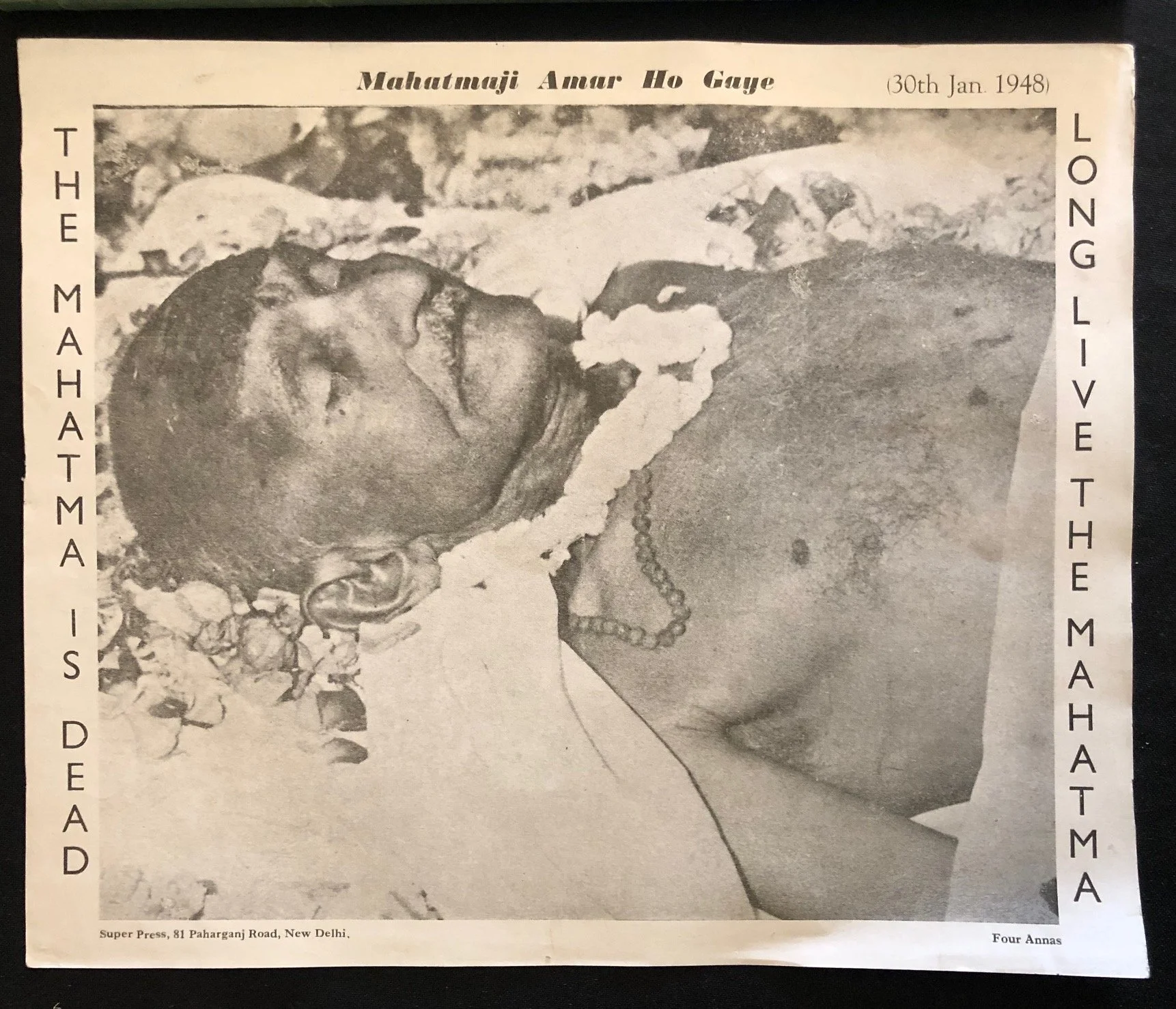
The juxtaposition with the 1948 memorial broadside, "The Mahatma is Dead," illustrates how a localized struggle for civil rights in KwaZulu-Natal directly shaped the man who would alter the course of global history.
R1,250