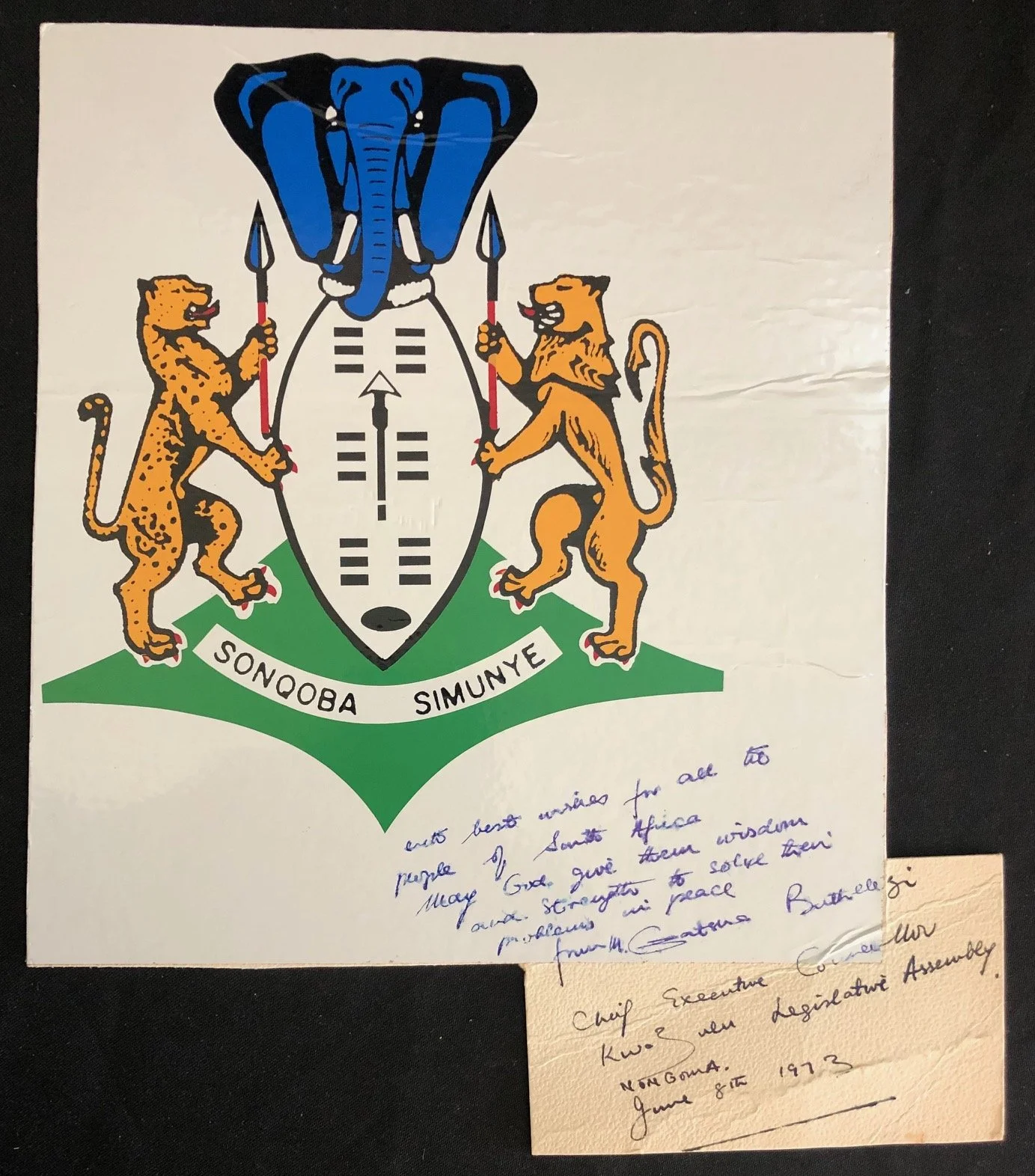
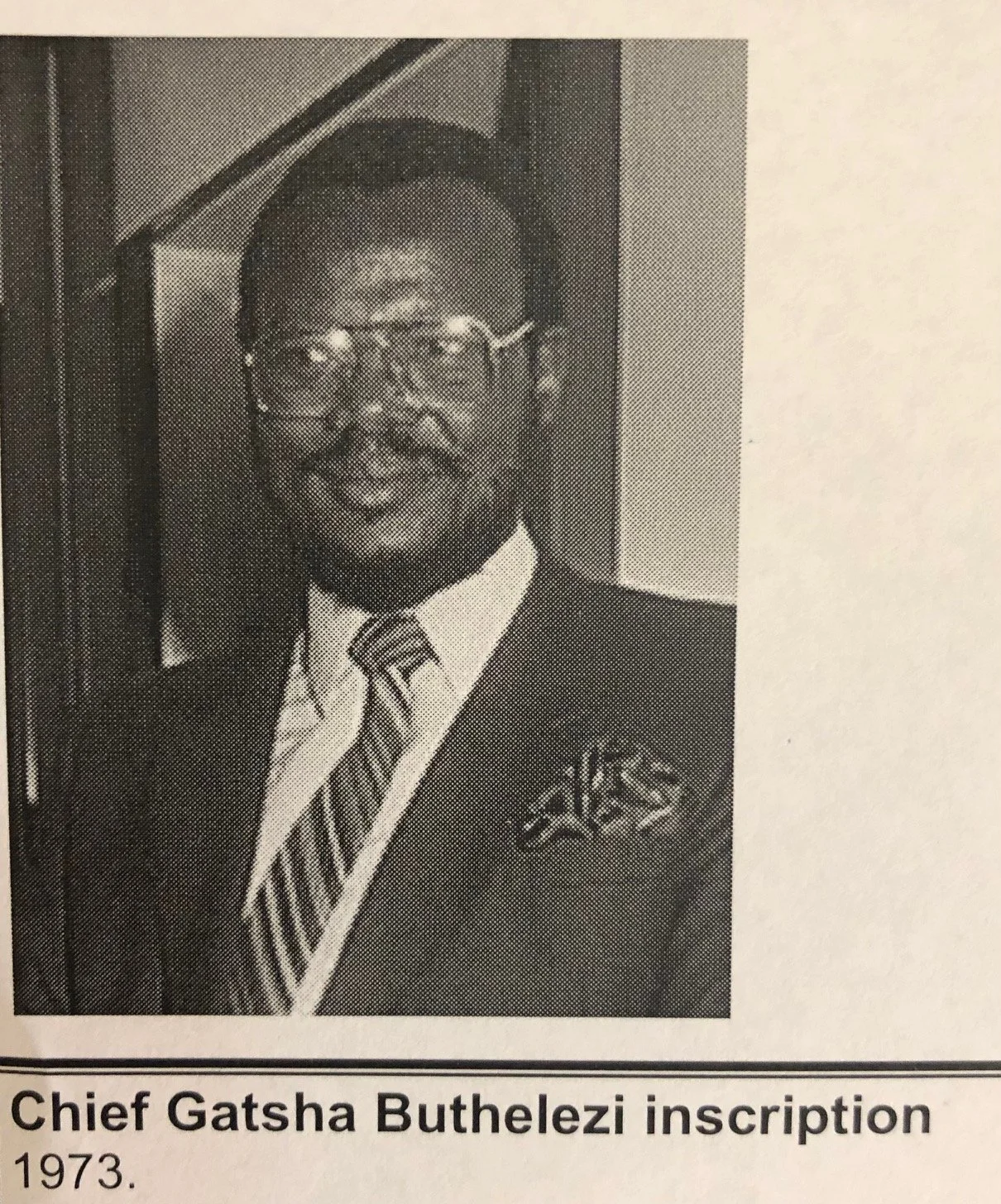
KwaZulu Homeland Coat of Arms, signed by a young Mangosuthu Buthelezi (1973)
This item reflects the genesis of the KwaZulu homeland’s formal political structure, signed by a young Mangosuthu Buthelezi at a critical early juncture in his leadership
The Dawn of the KwaZulu Legislative Assembly
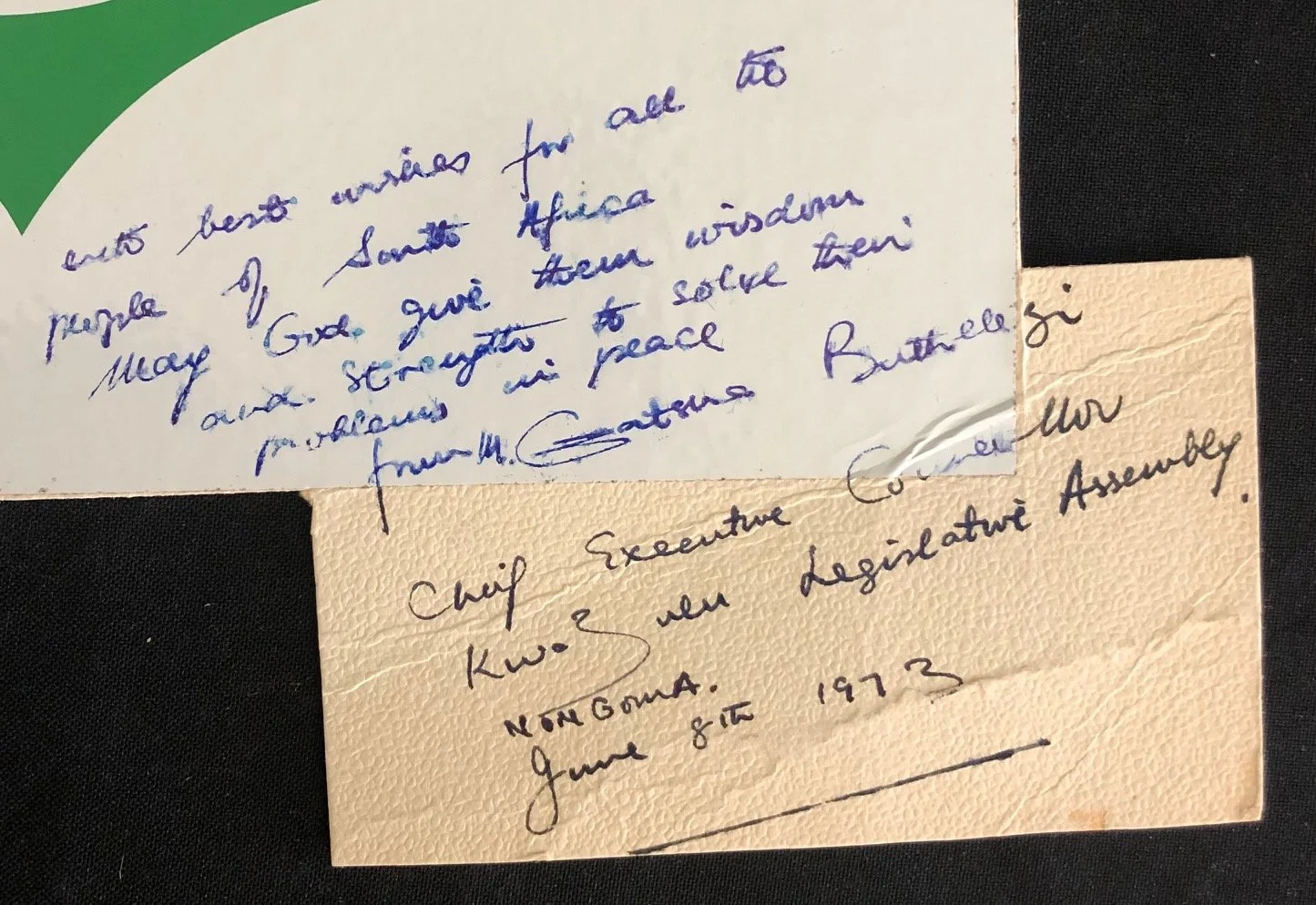
The card attached to the emblem is dated June 8th, 1973, from Nongoma (the historic royal capital of the Zulu Kingdom).
Just three years prior, in 1970, the KwaZulu Territorial Authority had been established with Buthelezi as its head.
By mid-1972, this was transitioned into the KwaZulu Legislative Assembly, and Buthelezi took on the title written in his own hand on this card: "Chief Executive Councillor."
This specific title predates his later, more famous title of "Chief Minister" (which he assumed when KwaZulu became a self-governing territory in 1977). This artifact is therefore a rare piece from the foundational dawn of that administration.
A Public Message Sent During Deep Apartheid
The handwritten note reflects the precarious balancing act Buthelezi maintained throughout his career. He writes:
"with best wishes for all the people of South Africa. May God give them wisdom and strength to solve their problems in peace. from M. Gatsha Buthelezi"
Writing this in 1973—a period of intense state repression following the banning of the ANC and PAC, and the same year that major labor strikes in Durban revitalized internal mass resistance—the message uses a carefully crafted, diplomatic appeal for "peace" and "wisdom" for all South Africans. It highlights his early projection of himself as a moderate, non-violent leader working within the system to affect change, a stance that earned him both Western allies and fierce liberation-movement rivals.
Heraldry of Traditional Sovereignty
The large emblem is the Coat of Arms of KwaZulu, complete with the motto "Sonqoba Simunye" (Together we shall conquer).
The iconography explicitly bypasses Western heraldry in favor of Zulu military and cultural symbols: the traditional Isihlangu (ox-hide shield), crossed Izinto (spears), two leopards as supporters, and a prominent blue elephant crest symbolizing majesty and strength.
Under Buthelezi's leadership, the homeland administration deliberately fused these deep traditional royal symbols with the bureaucratic mechanisms of the state to build a distinct, regional Zulu political identity that could withstand pressure from both the Pretoria regime and centralized liberation movements.
270mm x 285mm
Cropped and creased.
R1,750