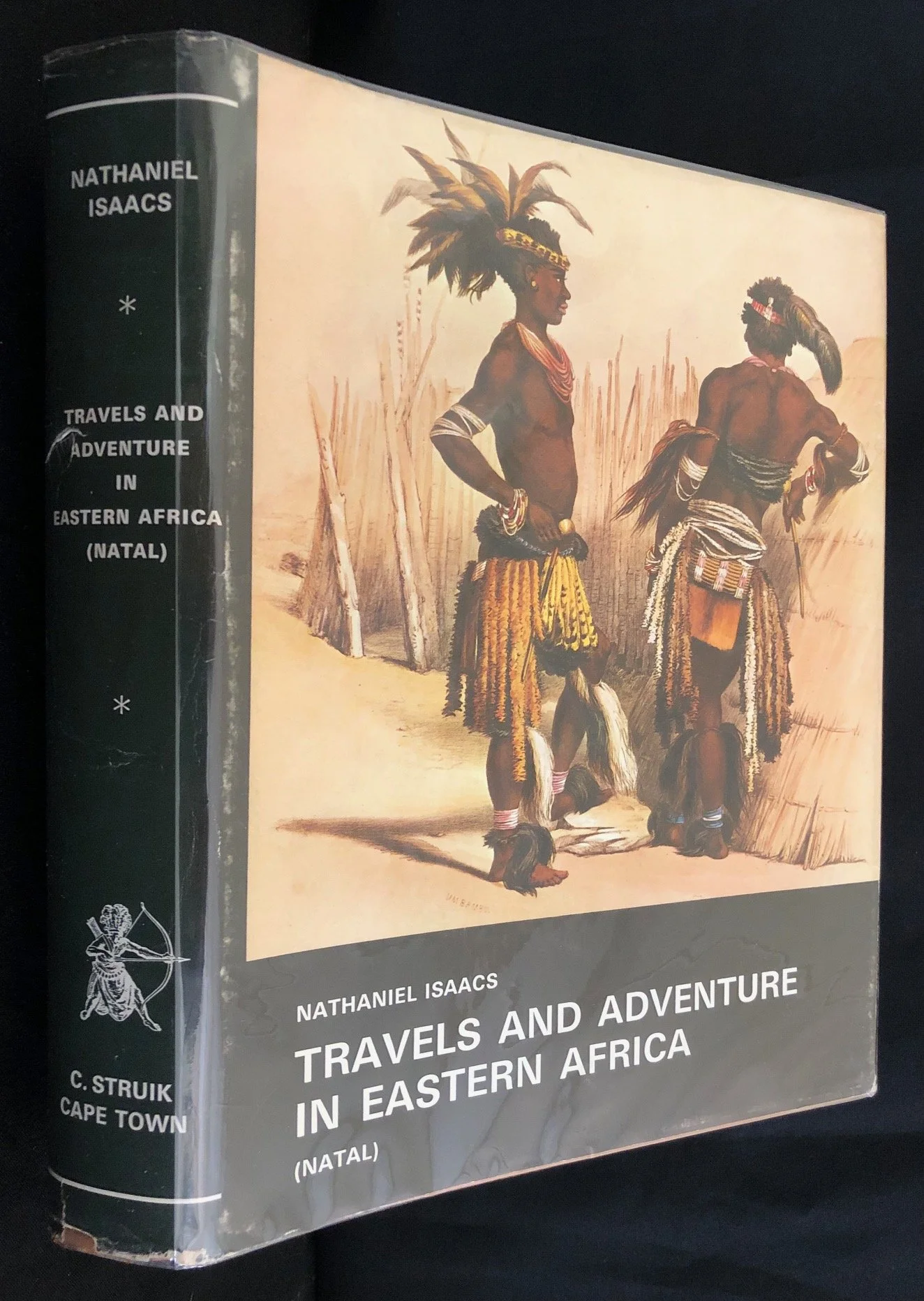
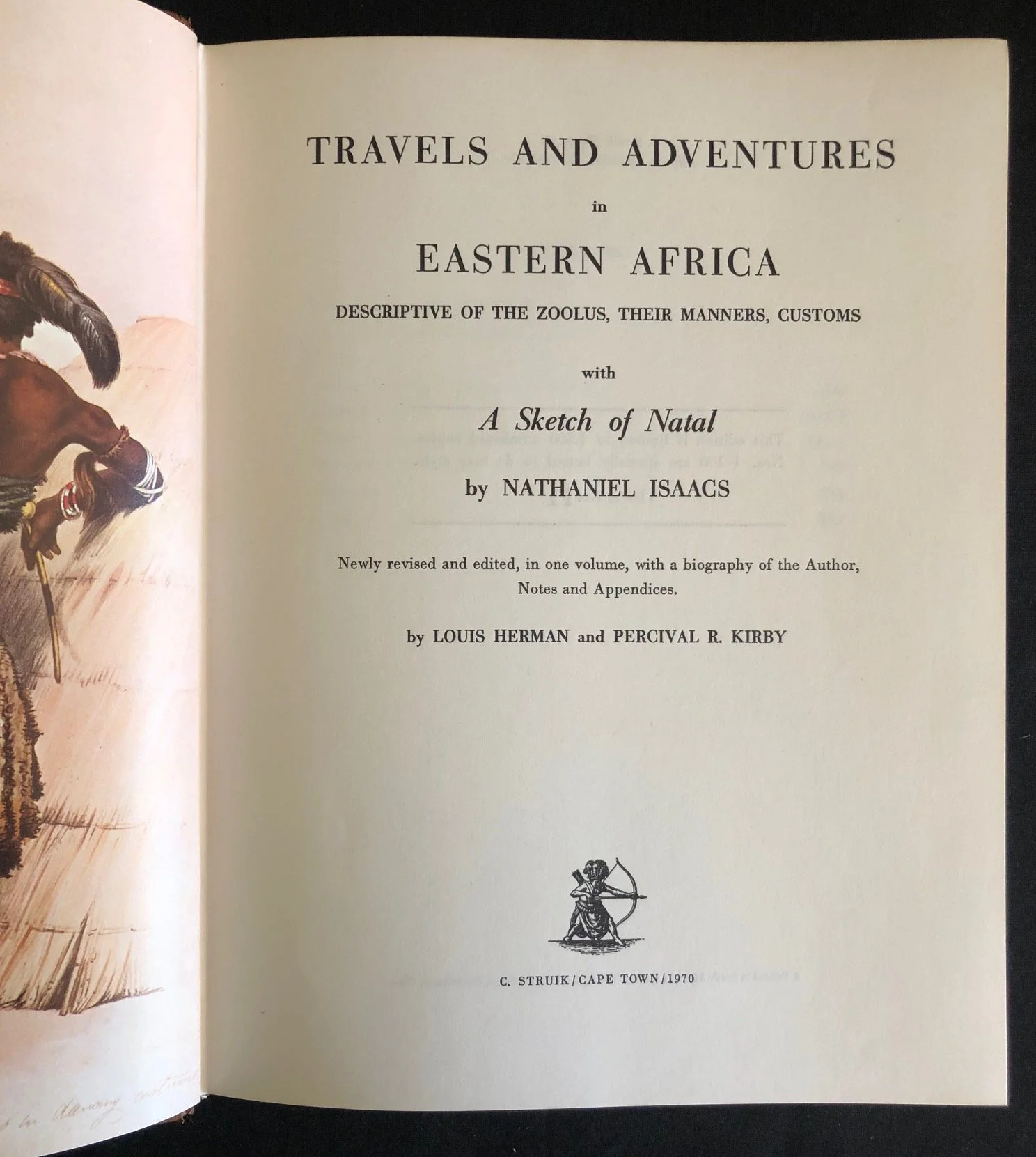
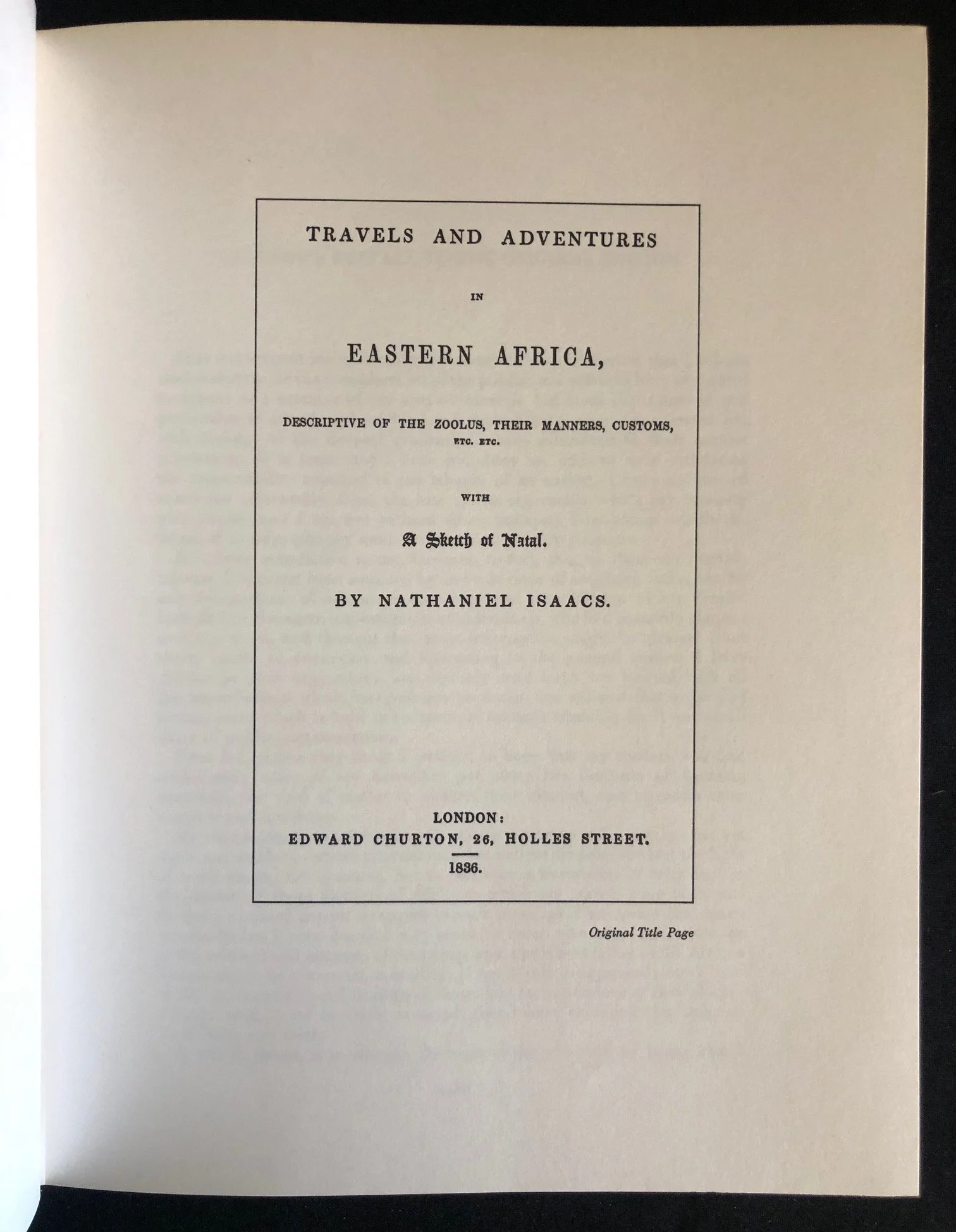
Nathaniel Isaacs' Travels and Adventures in Eastern Africa.
Deluxe reprint by C. Struik (1970)
The volume is a foundational work relating to the history of Natal: Nathaniel Isaacs' Travels and Adventures in Eastern Africa (originally published in 1836, reprinted here by C. Struik in 1970).
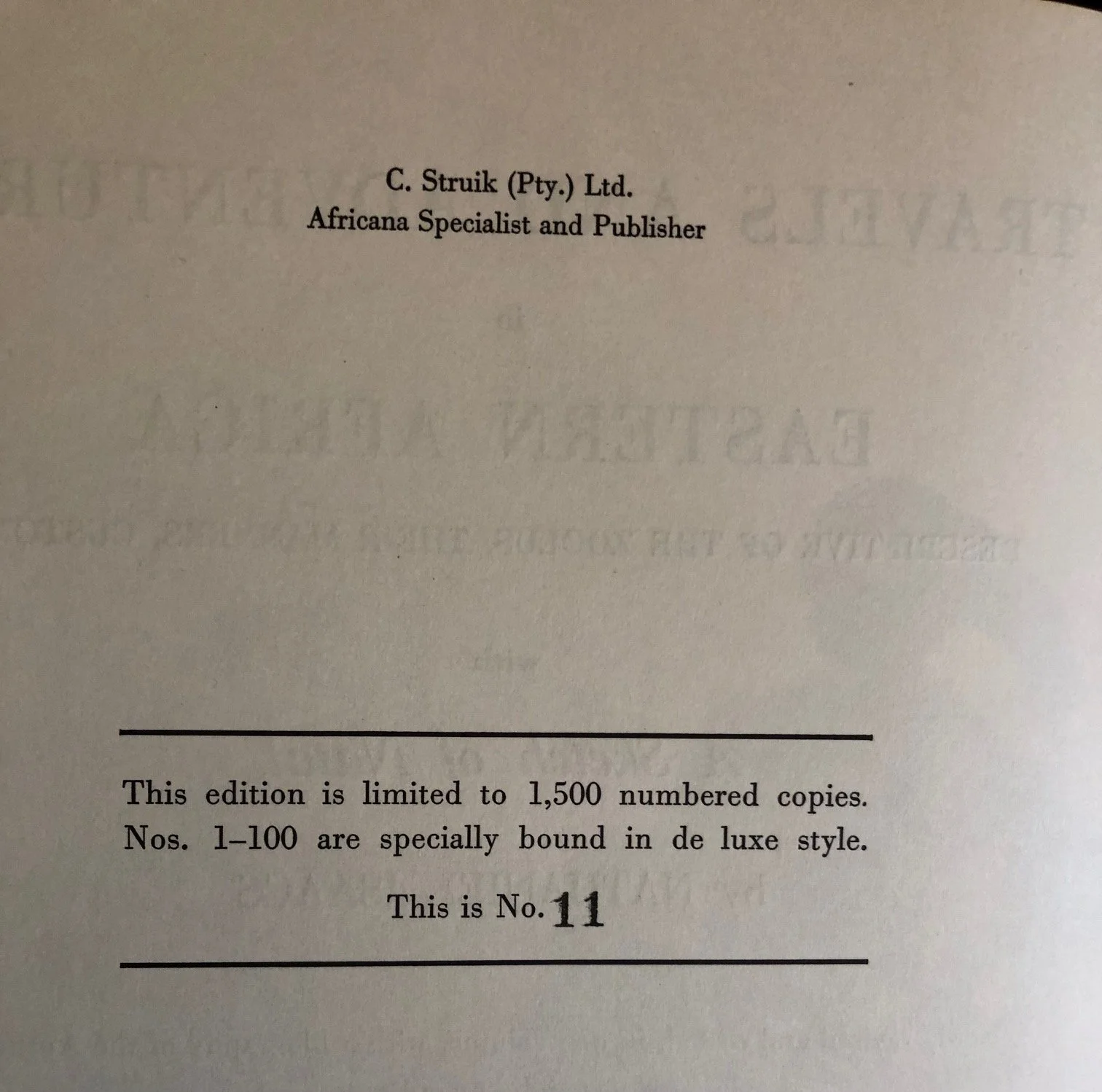
No. 11 of only 100 deluxe copies specially bound from a total run of 1,500.
Beyond its scarcity as an artifact of 20th-century Africana publishing, the text itself holds an fascinating and contentious place in South African historiography:
The "Sensationalized" Portrait of King Shaka
Nathaniel Isaacs was a young English adventurer who was shipwrecked at Port Natal (modern-day Durban) in 1825. He lived among the Zulu people for nearly seven years, becoming a close associate and fluent translator for King Shaka Zulu. Shaka even granted Isaacs large tracts of land and named him a chief.
Because Isaacs and his contemporary Henry Francis Fynn were among the only literate Europeans to witness the height of the Zulu Empire firsthand, Isaacs' journals became the primary source material used by subsequent historians, novelists, and filmmakers to shape the global image of Shaka.
The Historical Plot Twist
In the late 20th century, modern historians uncovered a stunning piece of archival evidence that recast the entire validity of this book: a private letter written by Isaacs to Fynn.
In the letter, Isaacs explicitly advised Fynn on how they should write their respective memoirs to maximize financial and political gain. He wrote:
"...make them [the Zulu] appear as barbarous as you can... speak of their cruelty and showcase them as bloodthirsty monsters... It will command a better market and make our books sell."
Isaacs' true motive wasn't just book sales; he and his fellow traders wanted to shock the British colonial authorities into officially annexing Natal to protect them, while simultaneously securing British validation for the land grants Shaka had given them.
A Complex Legacy
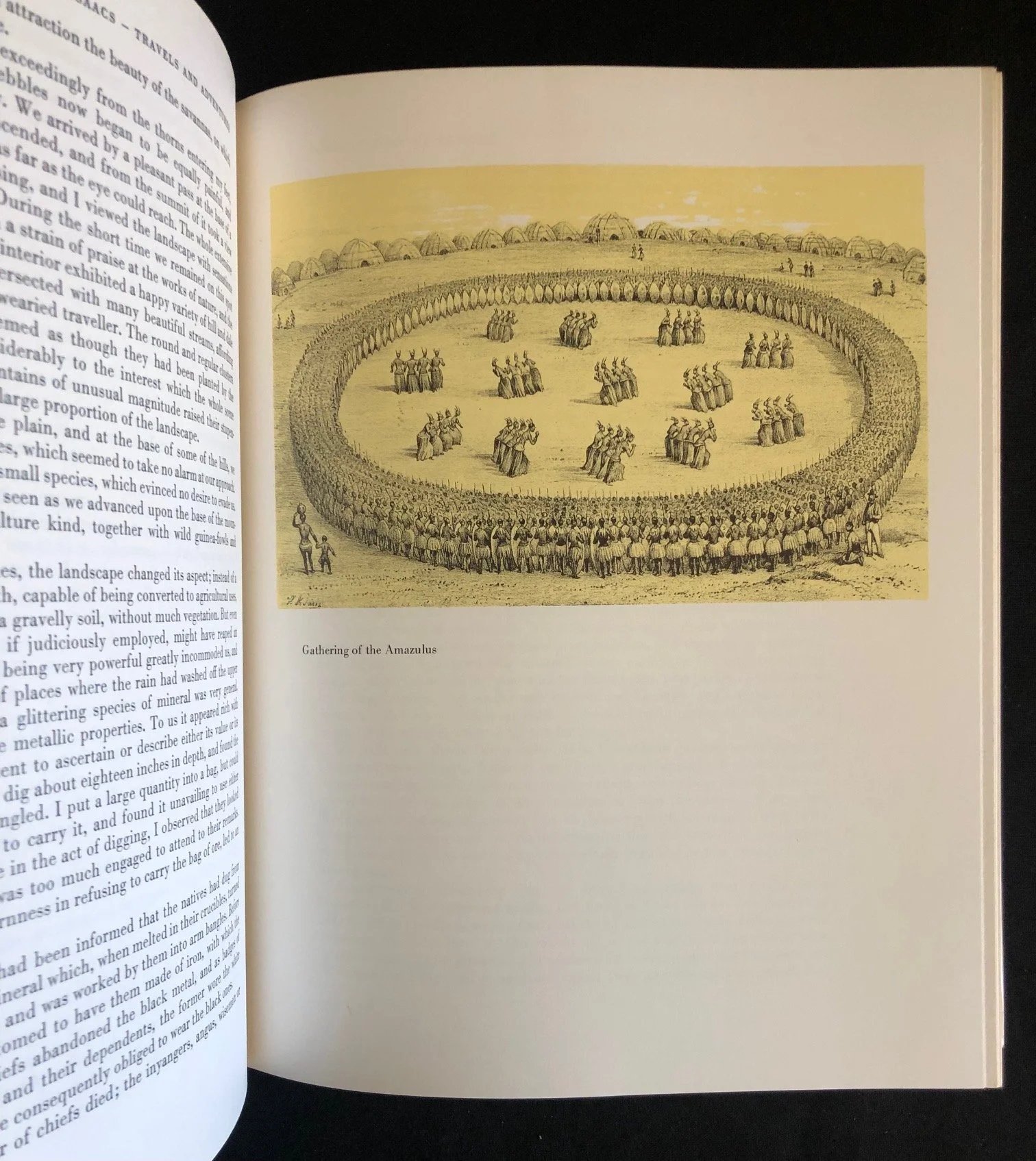
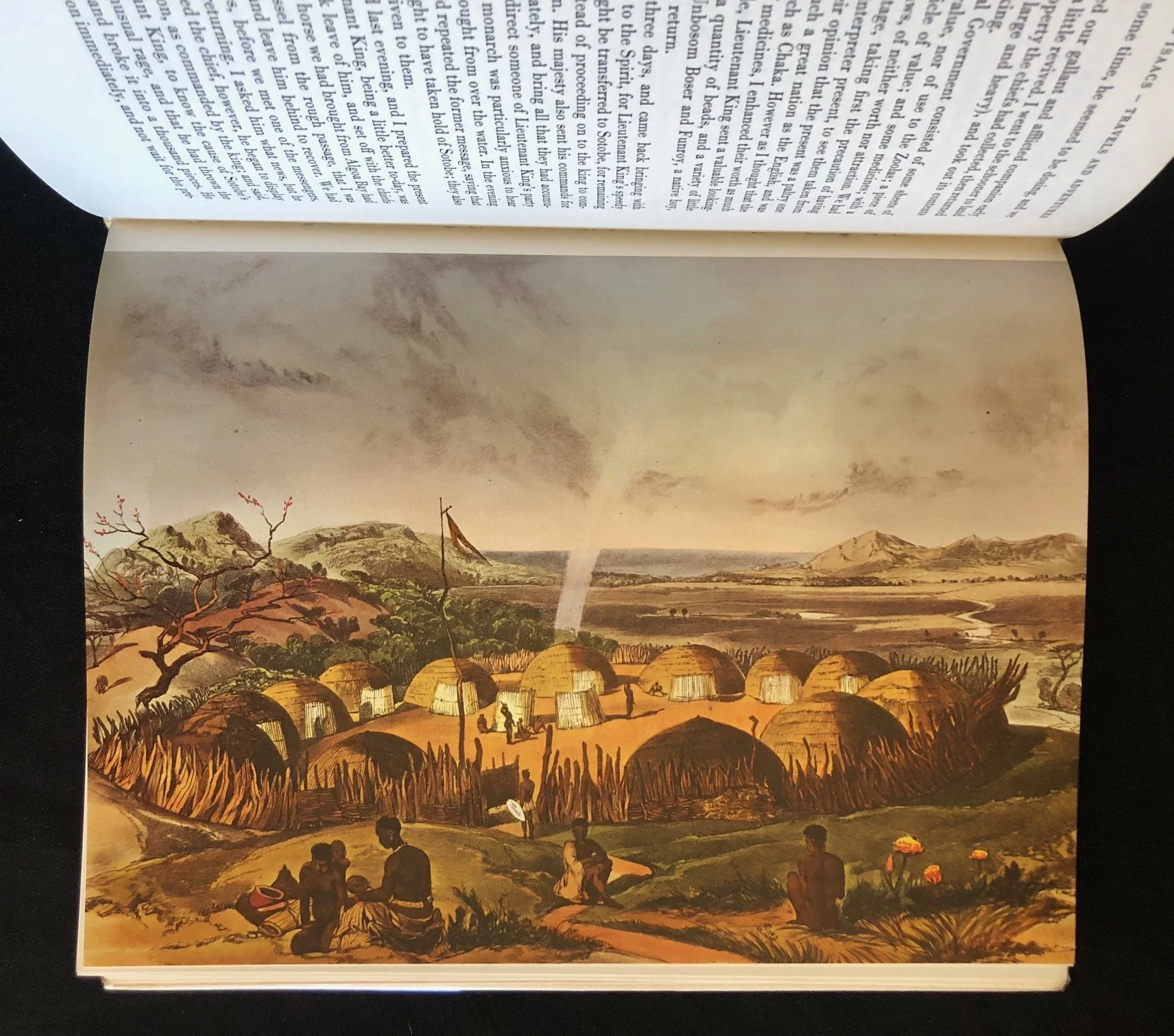
As a result of this discovery, this book is viewed by modern academics with a fascinating dual perspective. On one hand, it remains an indispensable, vivid, and irreplaceable ethnographic record of 1820s Zulu life, clothing, and customs before European colonial conquest. On the other hand, it is studied as a masterclass in early colonial propaganda—a deliberate, calculated piece of myth-making that heavily distorted the historical memory of the Zulu kingdom for over a century.
217mm x 280mm
Minor edge wear to the leather binding; dust jacket is chipped; worn and perforated in places. Otherwise is very good condition.
Sold Jul '26