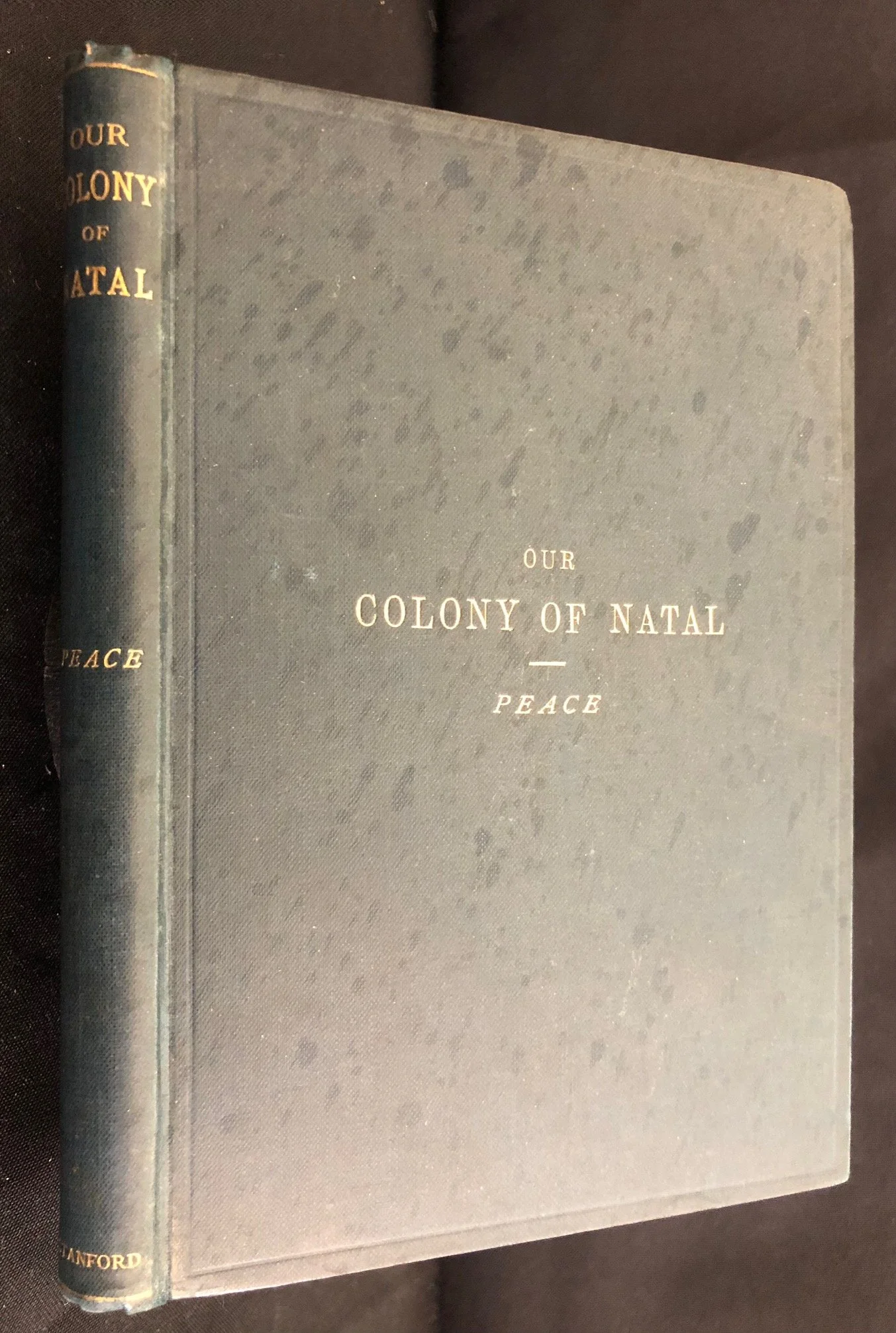
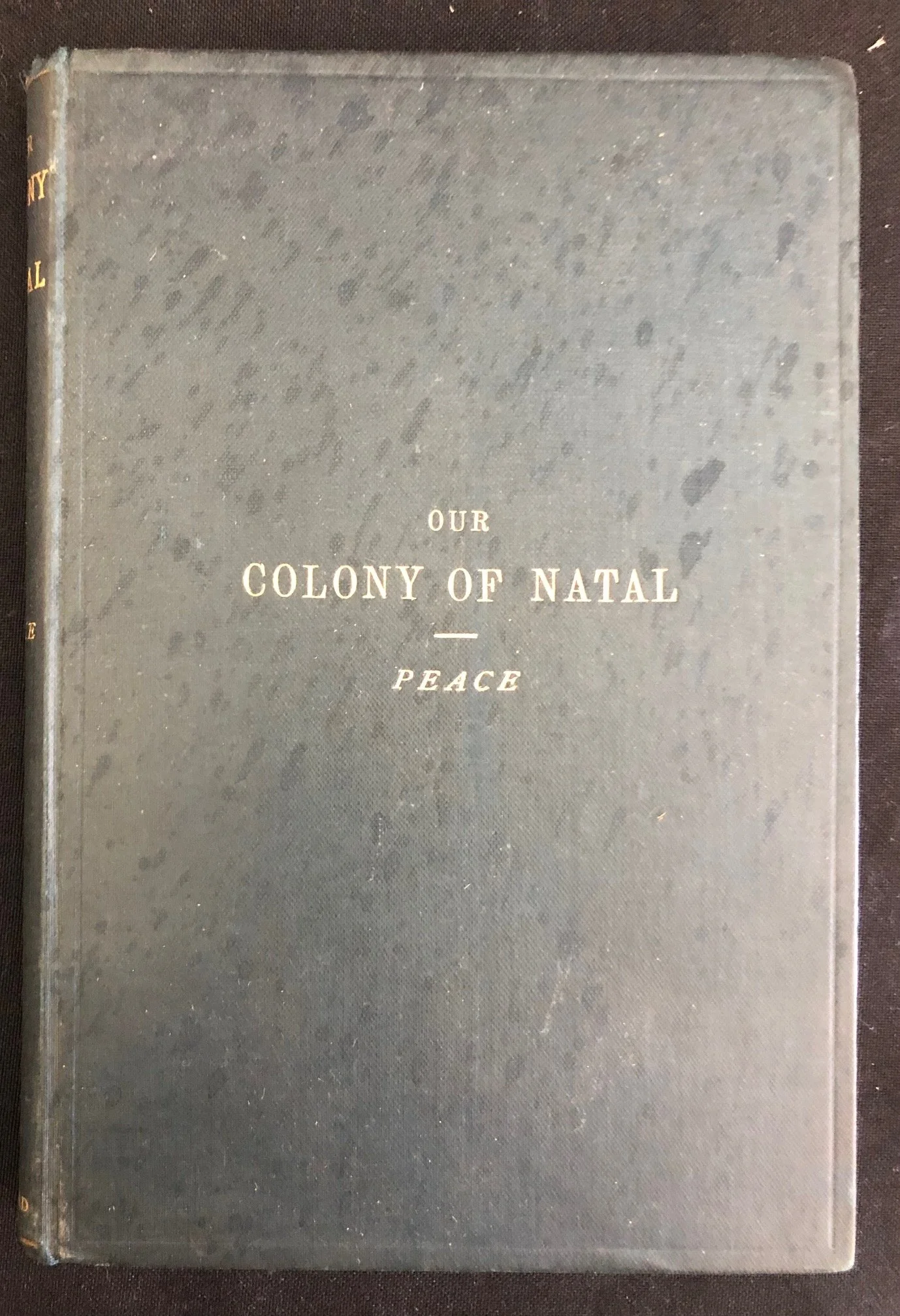
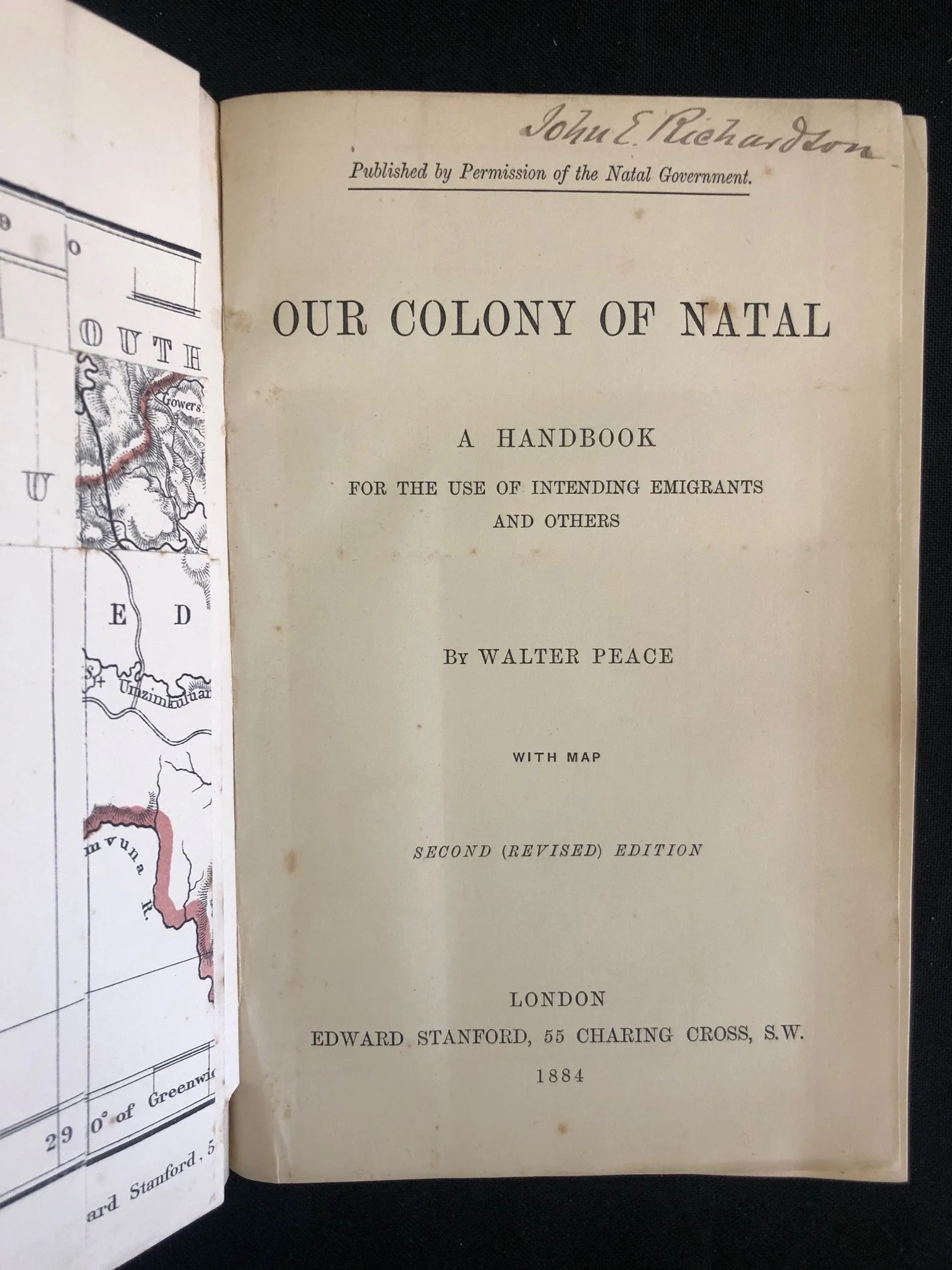
Our Colony of Natal by Walter Peace (1884)
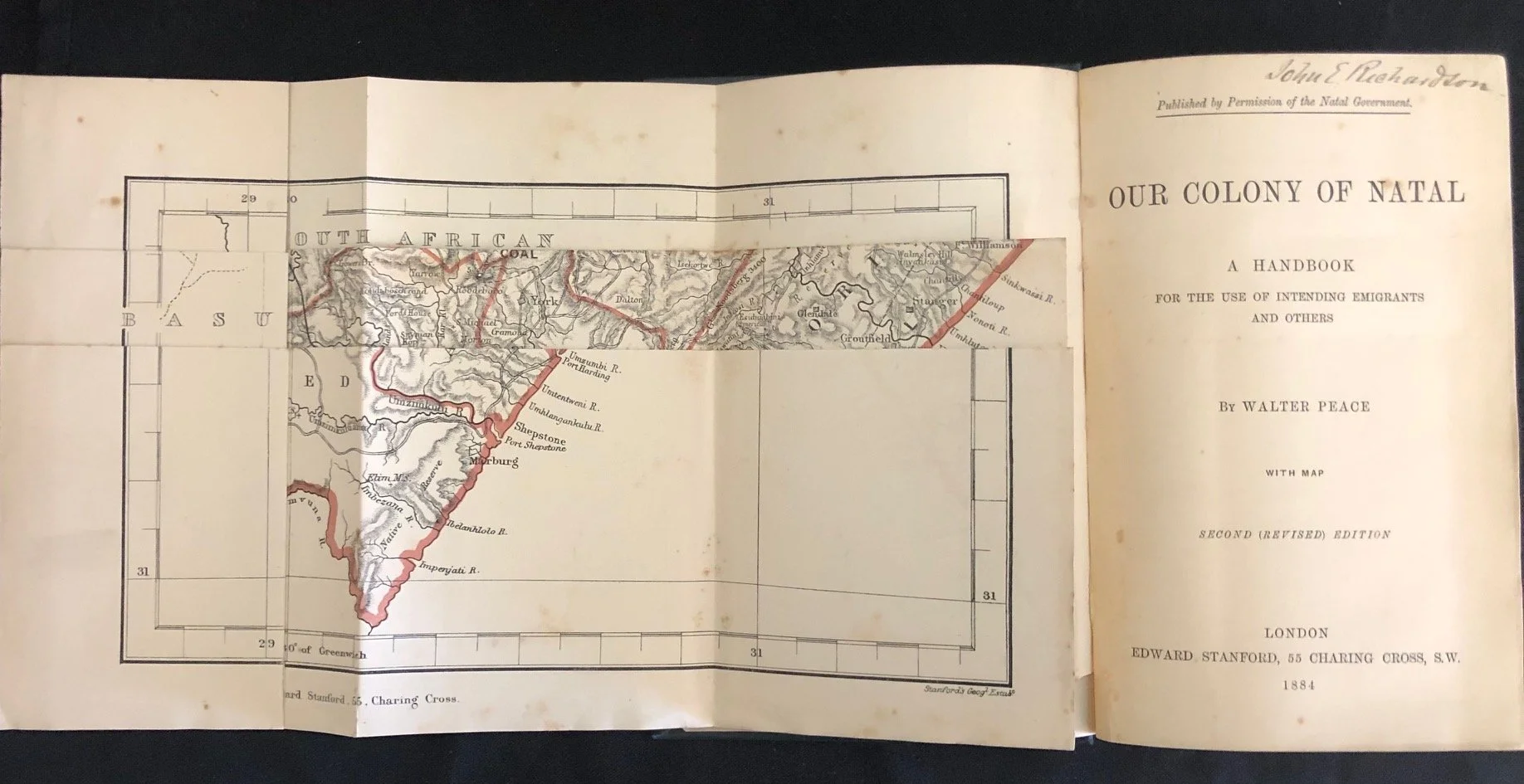
This second (revised) edition of "Our Colony of Natal" by Walter Peace, published in London by Edward Stanford in 1884, holds a fascinating place in South African colonial and migration history.
The Backstory of the Norwegian Settlement at Marburg
While the handbook was written "for the use of intending emigrants and others," Walter Peace’s role as the Natal Emigration Agent went far beyond just writing guides. Just two years before this 1884 edition was printed, the British colonial government in Natal wanted to bring German settlers to the southern region near the Mzimkulu River. However, the German government blocked the scheme.
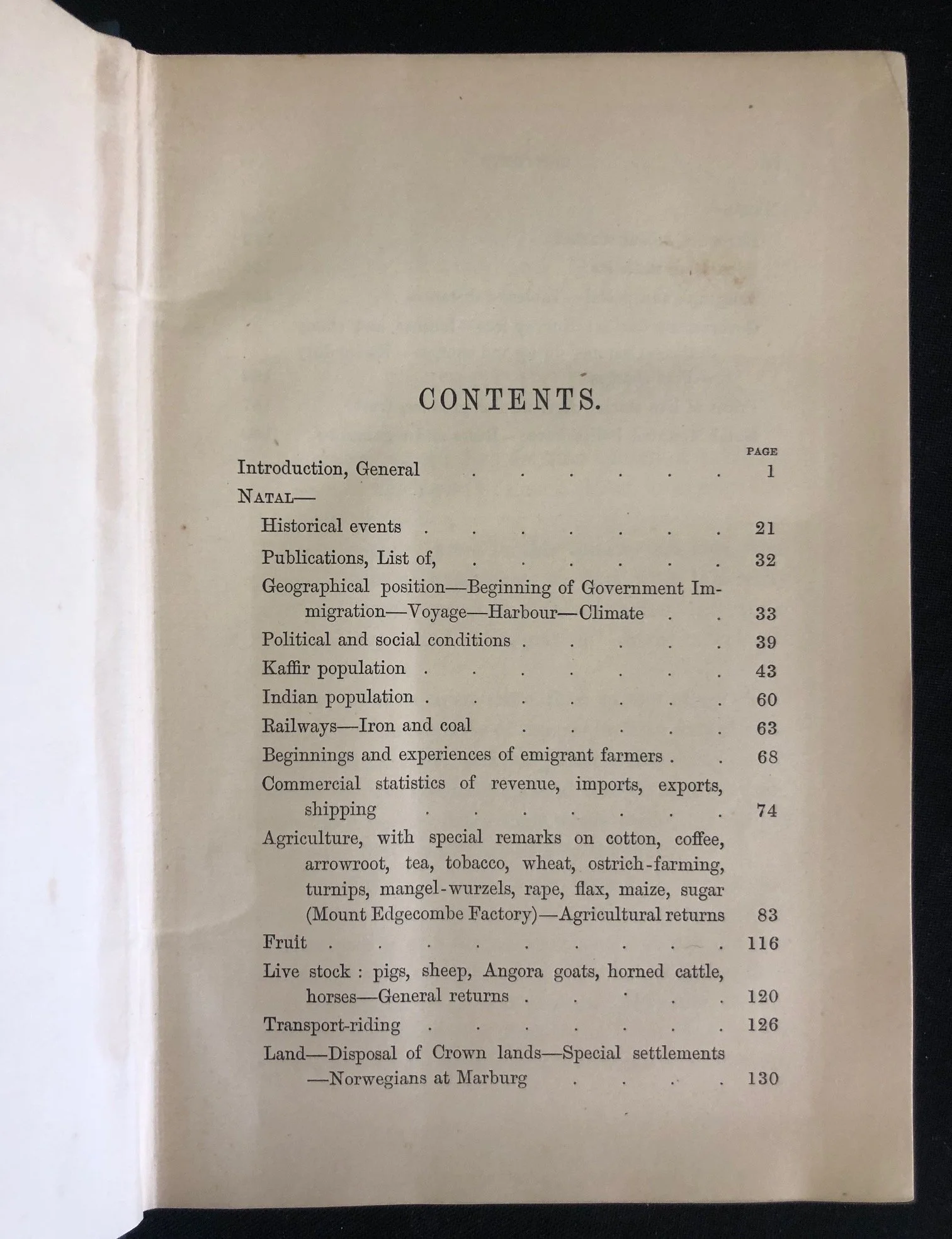
Pivotally, it was Walter Peace himself who stepped in and suggested recruiting Norwegian settlers instead. His efforts led to the successful establishment of the Marburg settlement in 1882—the only successful Scandinavian agricultural colony in South Africa. This 1884 handbook represents the height of Peace's highly organized push to populate the Natal frontier with European farmers and tradespeople.
The Edward Stanford Connection
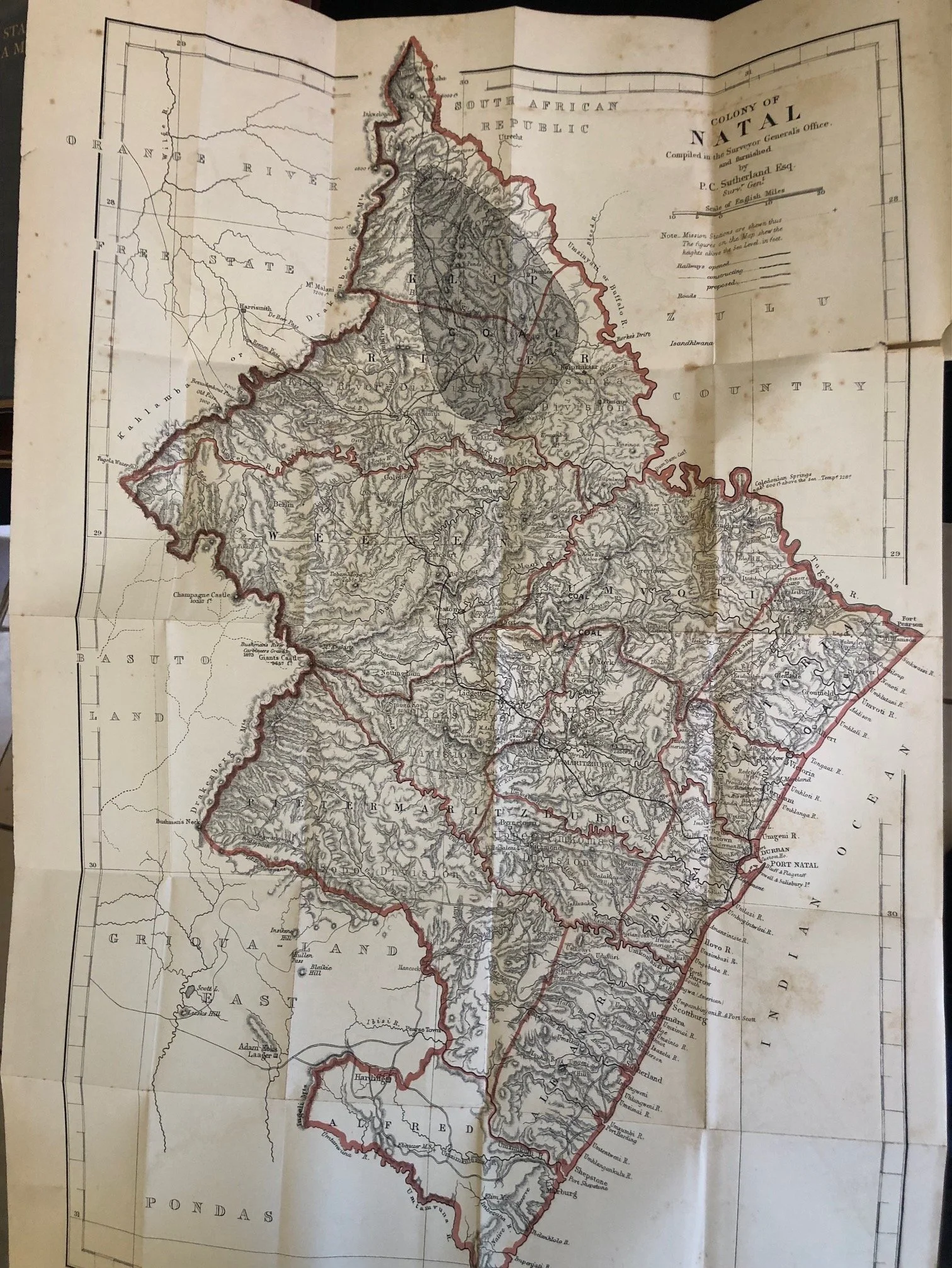
The publisher, Edward Stanford of 55 Charing Cross, is a legendary name in cartography. Stanford was the premier mapmaker and publisher of the British Empire, famous for his "Library Maps" and precision pocket maps used by colonial administrators, explorers, and military officers. The fact that the Natal Government permitted and partnered with Stanford to produce this handbook ensures that the accompanying fold-out map was crafted using the most up-to-date, authoritative colonial survey data available at the time.
A Clash with Mahatma Gandhi
Though Walter Peace wrote this book to paint Natal as a land of pristine opportunity for European settlers, his tenure as Emigration Agent and later Agent-General for Natal eventually drew the attention of a young Mahatma Gandhi.
In the late 1890s, when Indian settlers in Natal faced severe anti-Asiatic franchise and immigration restriction bills, Walter Peace publicly defended the colonial government, claiming there were "no grievances". In response, the Natal Indian Congress, under Gandhi's guidance, issued an exhaustive, point-by-point rebuttal explicitly targeting Peace’s statements to expose the ground realities of indentured and free Indian immigrants in the colony.
130mm x 196mm
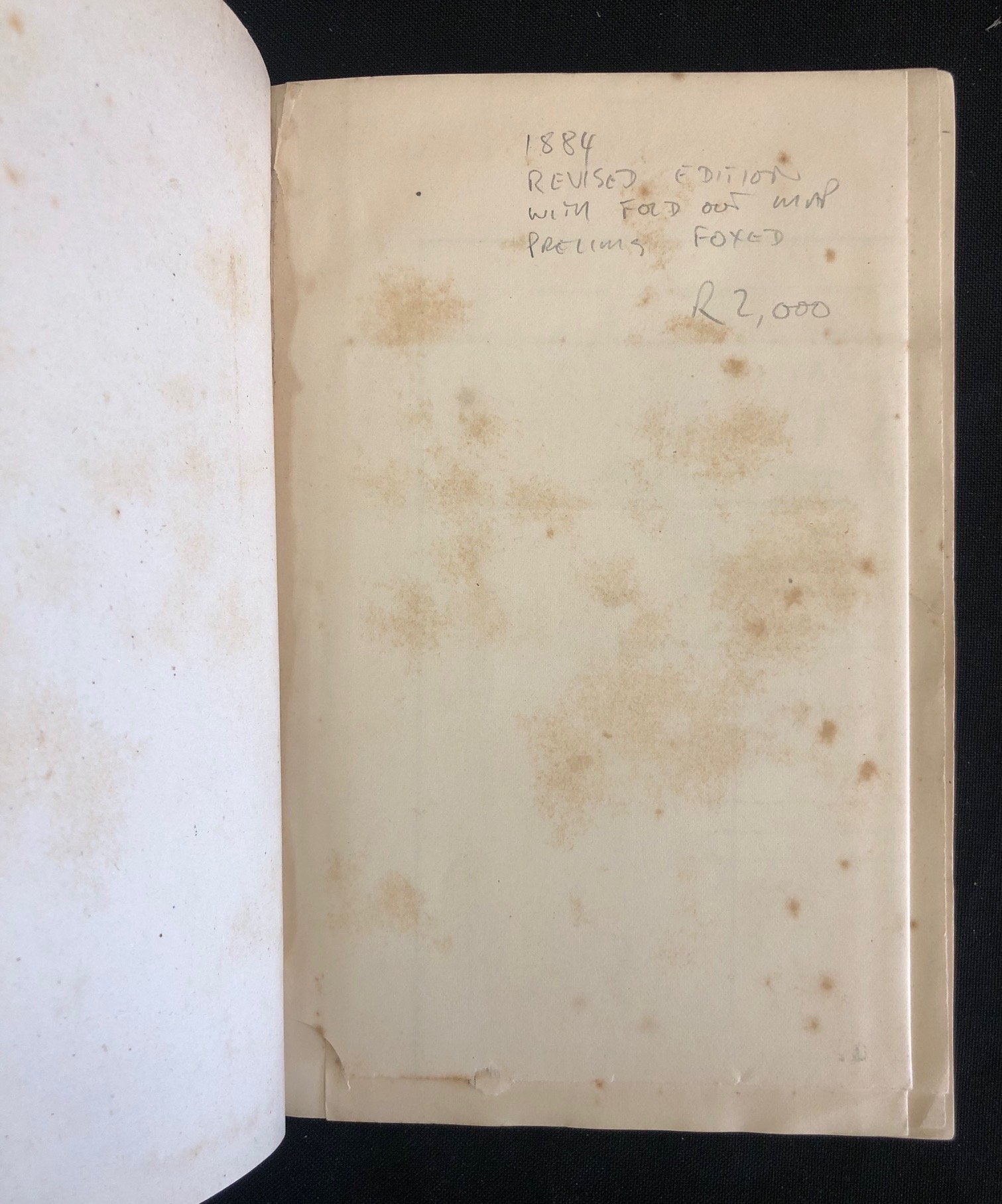
Boards stained; map torn; foxed. Previous owner’s inscription.
R2,000 Sold Oct '26