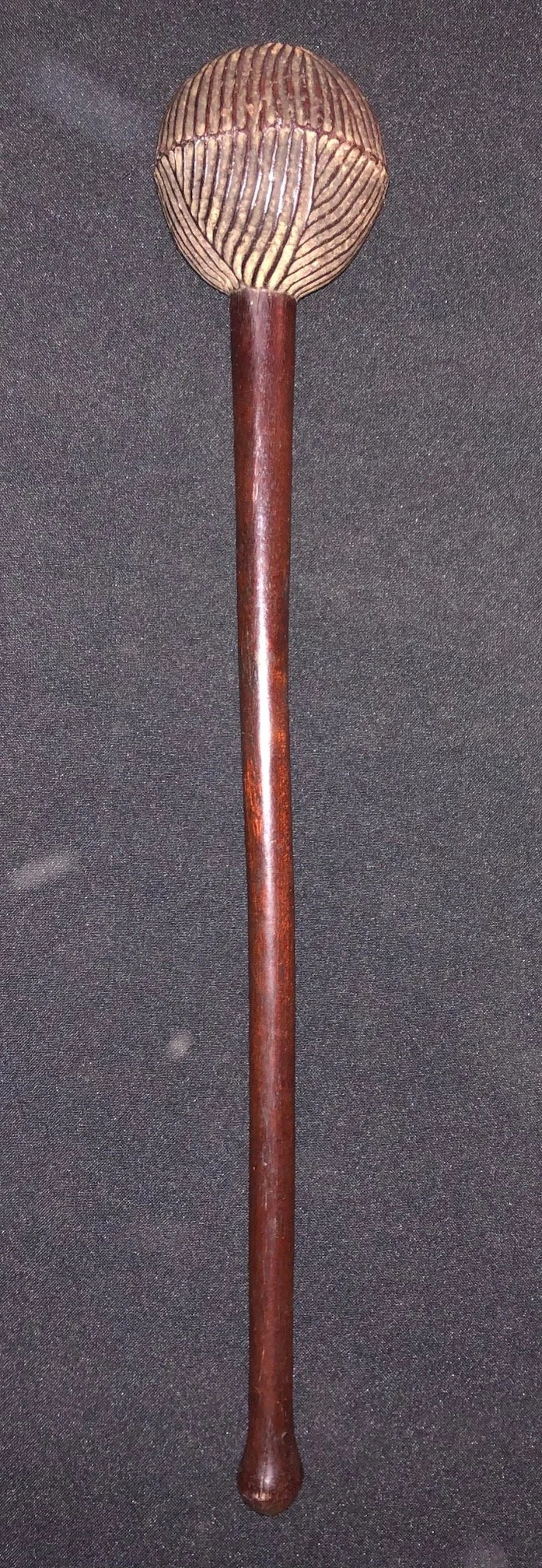
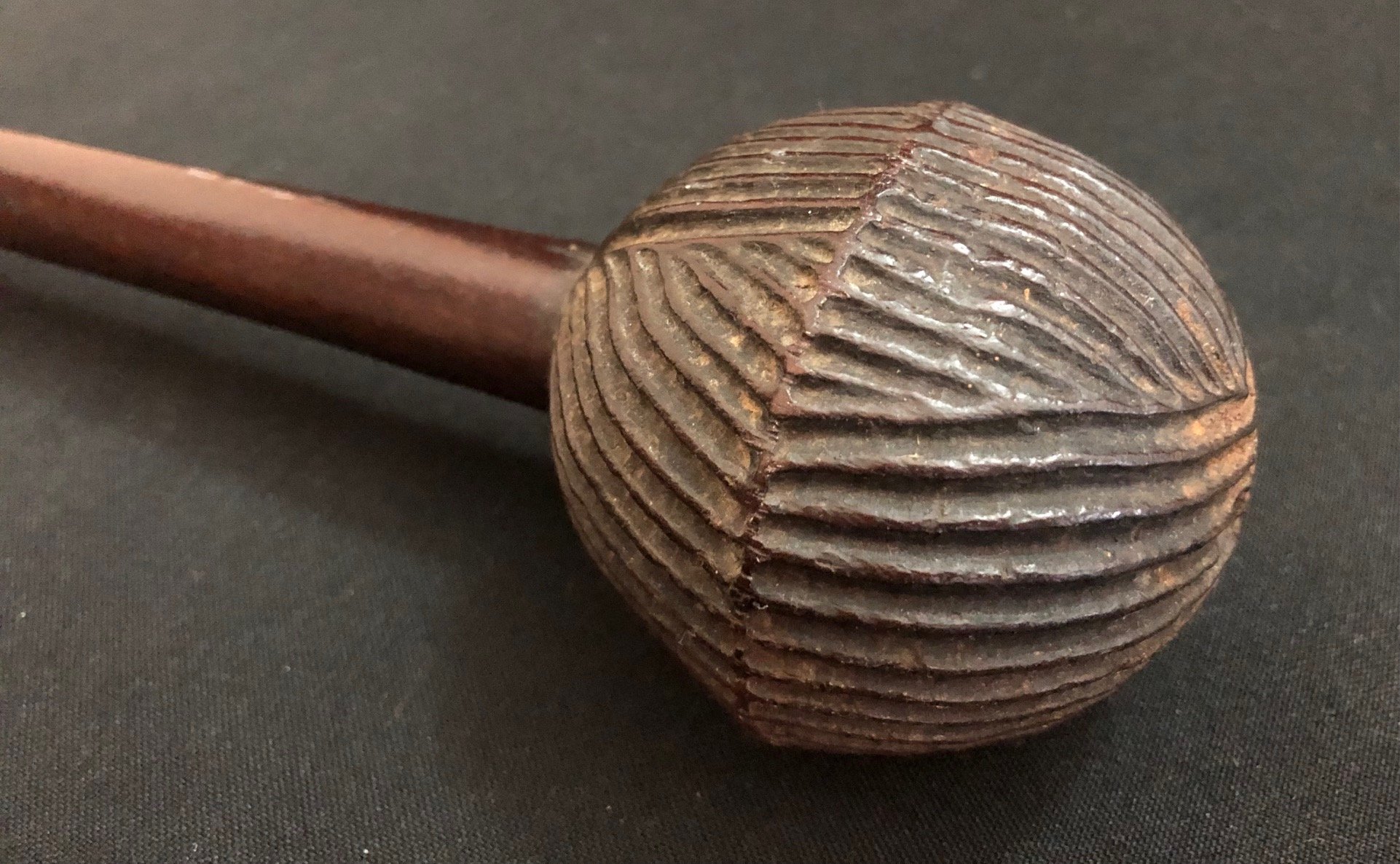
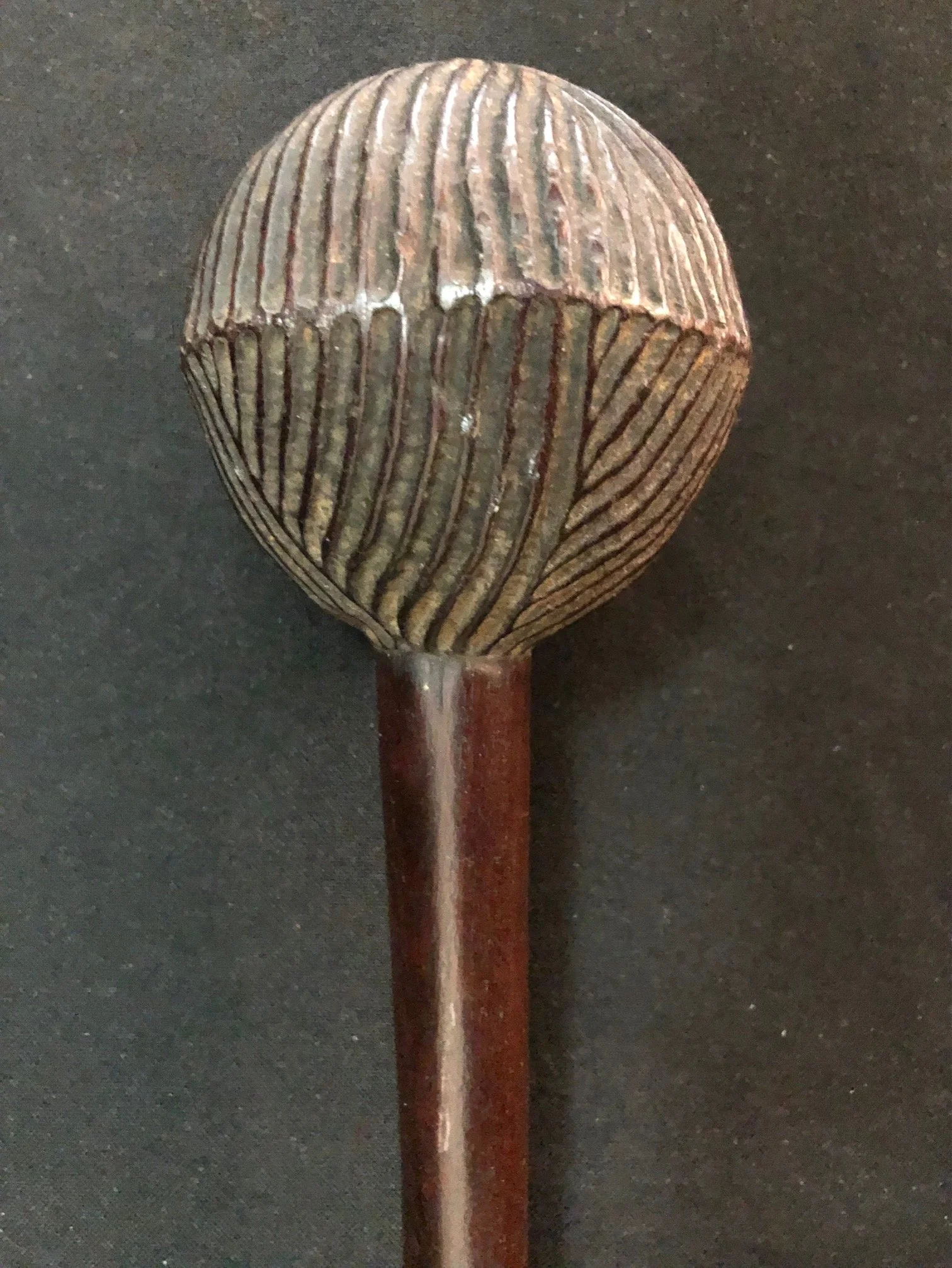
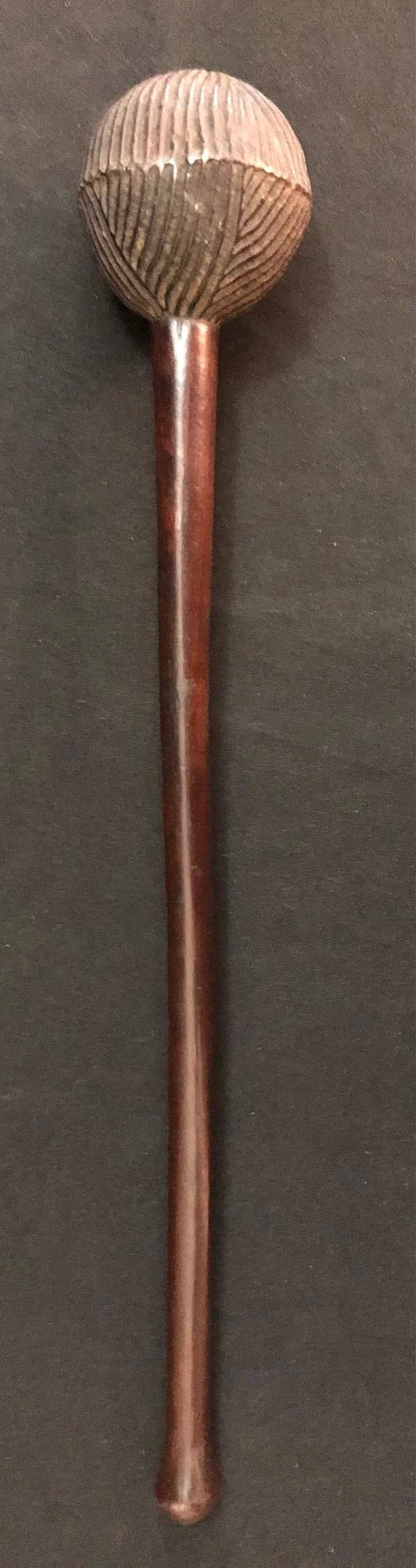
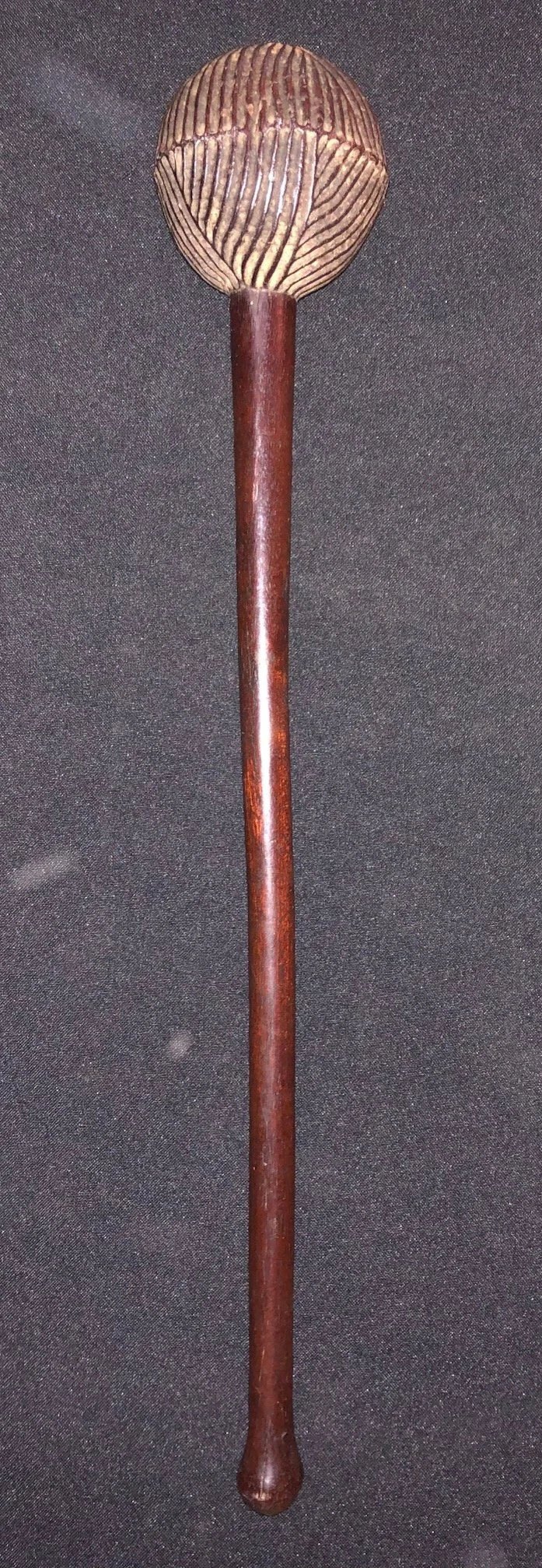
A short Zulu Iwiza
The iwisa (commonly referred to in Afrikaans/Dutch as a knobkierie) is one of the most culturally significant and historically multi-functional objects across Southern Africa, particularly within Nguni (Zulu, Xhosa, Swazi, Ndebele) culture.
Tactical Triad of King Shaka’s Military Reforms: During the reign of Shaka Zulu in the early 19th century, the iwisa served as an essential sidearm alongside the iconic iklwa (stabbing spear) and throwing spears (isijula). While the iklwa was designed for decisive, close-range stabbing, the heavy-headed iwisa was used in close quarters for crushing blows, target-flinging, or disarming opponents during war.
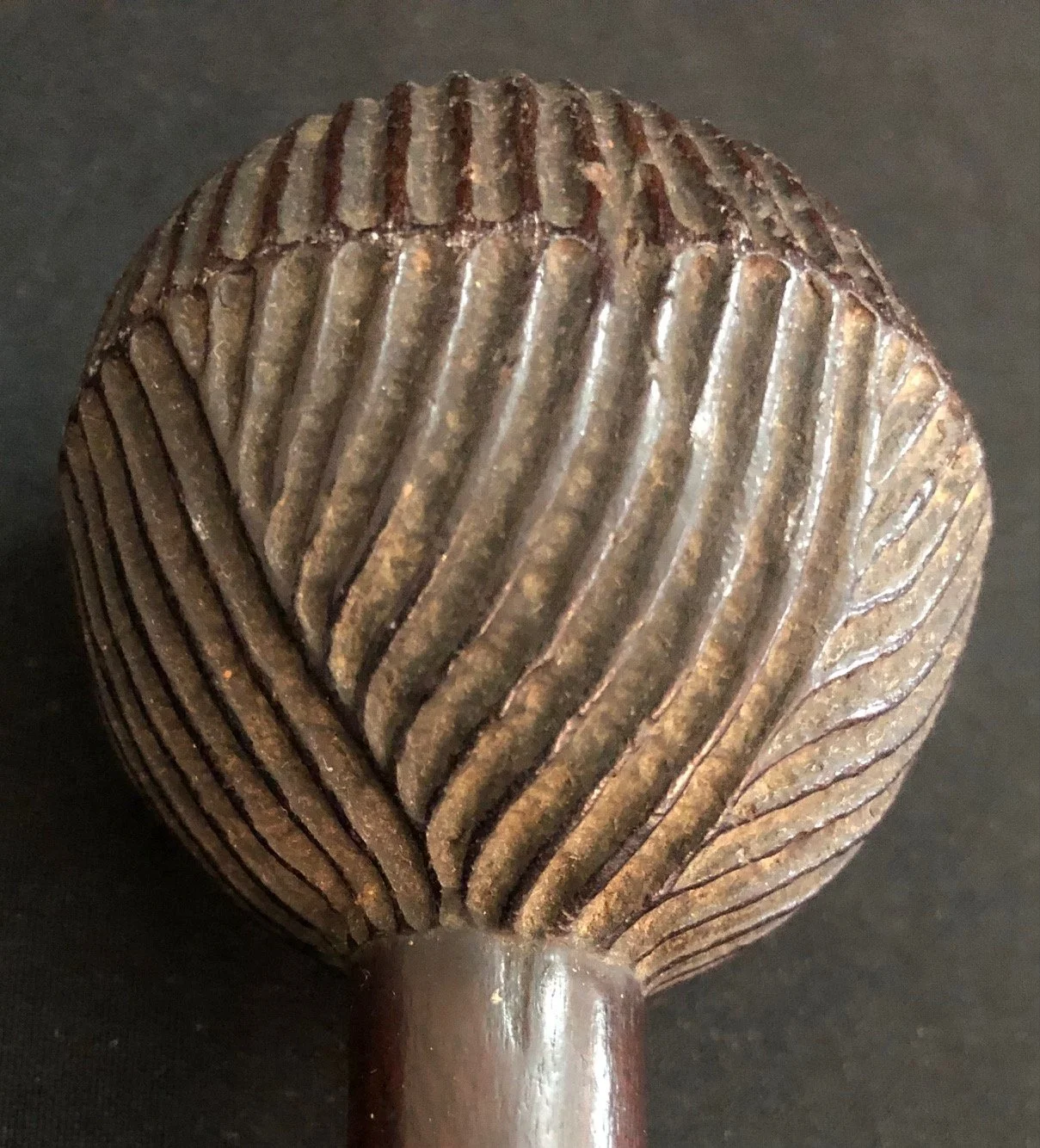
Fluted & Melon-Carved Head Aesthetics: The head on this specific piece features fine, carved fluting (often referred to as a "melon" or lobed head design). Carvings of this complexity required exceptional skill and dense indigenous hardwoods (such as Olea capensis / Ironwood or Spirostachys africana / Tamboti). Beyond tactile grip when thrown, deep artistic effort in the head distinguished everyday utilitarian tools from personal status symbols.
Prestige, Protocol, and Snuff Sharing: An iwisa was much more than a weapon; it functioned as a "swagger stick" reflecting the status, authority, and adulthood of its owner. Crucially, when entering a superior’s or chief’s kraal (homestead), strict Nguni etiquette forbade carrying edged weapons like spears inside—making the iwisa the primary tool brought into social gatherings. Special hollowed-out variations were even used as ceremonial vessels for sharing nsangu (tobacco/snuff), a central bonding ritual.
National Symbolism: Today, the historical importance of the weapon lives on as a symbol of authority and defense; an iwisa and assegai crossed together appear at the base of the official South African Coat of Arms, placed horizontally on the ground to signify peace and the laying down of conflict.
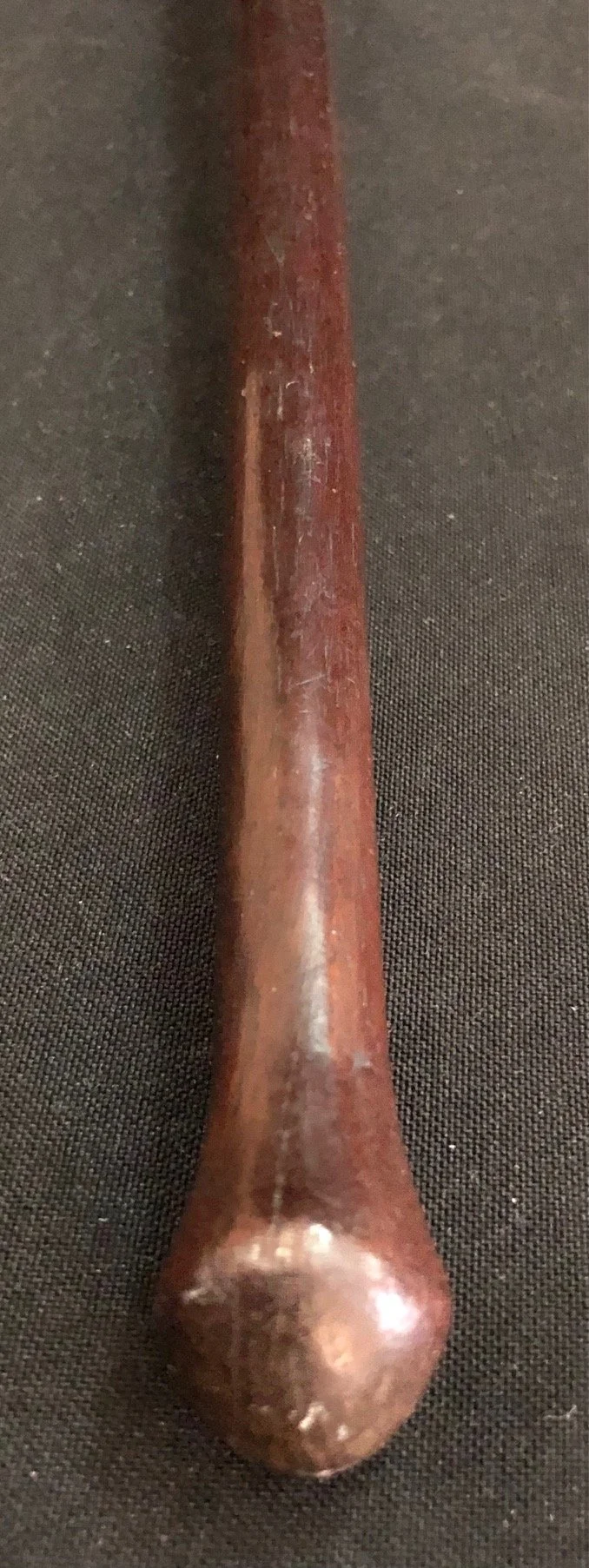
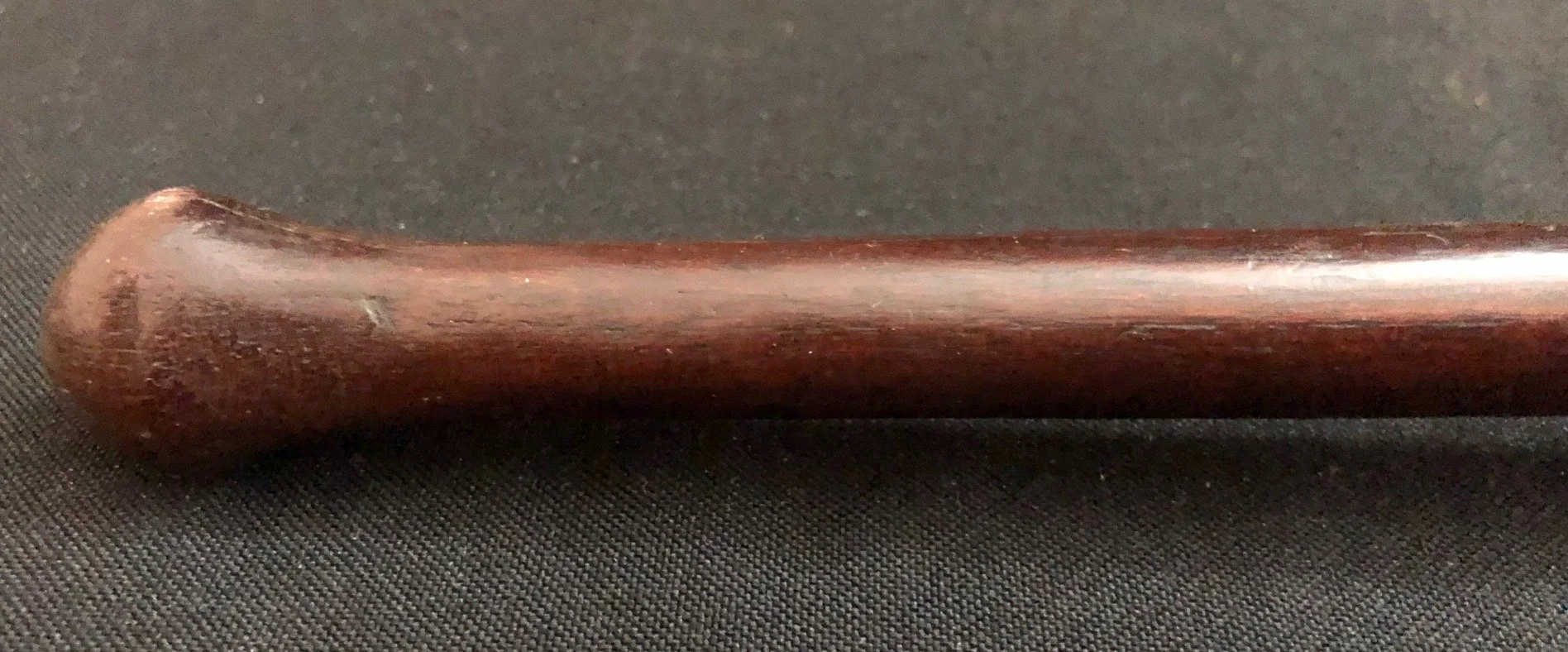
44cm long and 7cm wide. (NB this is not as long as a traditional knobkerrie). This is possibly an antique but certainly 50 years or older.
R1,650