Cape Colony Registrar and Guardian of Slaves 1826
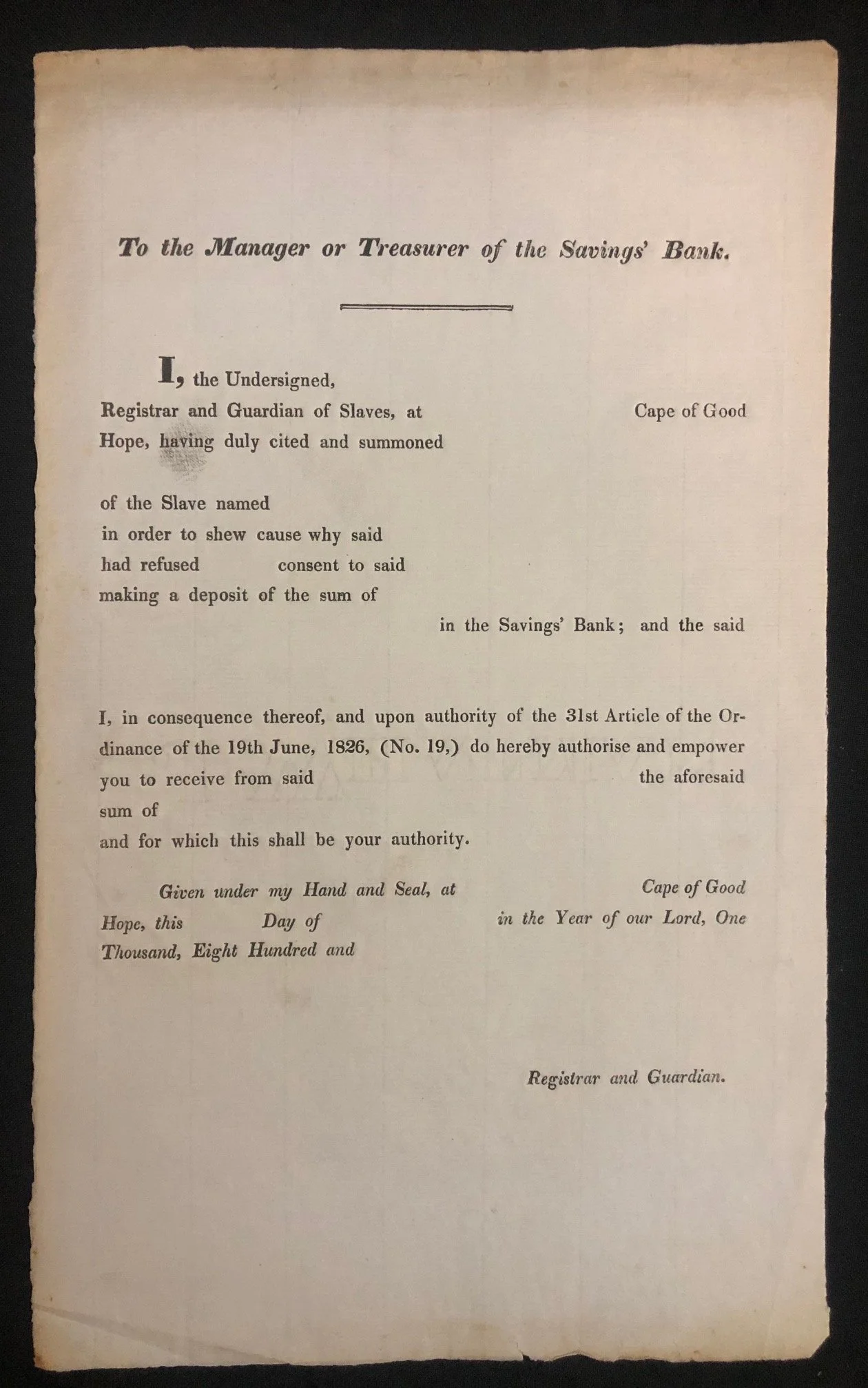
An unissued, printed legal form from the late 1820s Cape of Good Hope (Cape Town), under the administration of the Registrar and Guardian of Slaves.
While it looks like a standard financial document, it actually represents a fascinating, highly contested mechanism of institutional control and the legal agency of enslaved people just a few years before the abolition of slavery in the British Empire (1834).
Here are a few historically significant layers embedded in this document:
Ordinance No. 19 (1826)
The text explicitly cites the authority of the "31st Article of the Ordinance of the 19th June, 1826, (No. 19,)".
Ordinance 19 was a major turning point in the nineteenth-century Cape Colony. It was introduced by the British colonial government to "improve the condition of the slaves"—a policy known as amelioration. Rather than abolishing slavery outright, the British attempted to regulate it by creating the office of the Guardian of Slaves to protect enslaved people from extreme abuse, regulate working hours, and, crucially, grant them certain civil rights.
Enslaved People as Property-Owners and Depositors
The document is addressed “To the Manager or Treasurer of the Savings’ Bank.” Under Article 31 of Ordinance 19, enslaved people in the Cape were legally allowed to hold property and open bank accounts to deposit their own earnings (which they might make by working for hire on their few free hours or selling goods).
The ultimate purpose of these savings accounts was often manumission—saving up enough money to legally purchase their own freedom, or the freedom of their children.
When "Masters" Said No
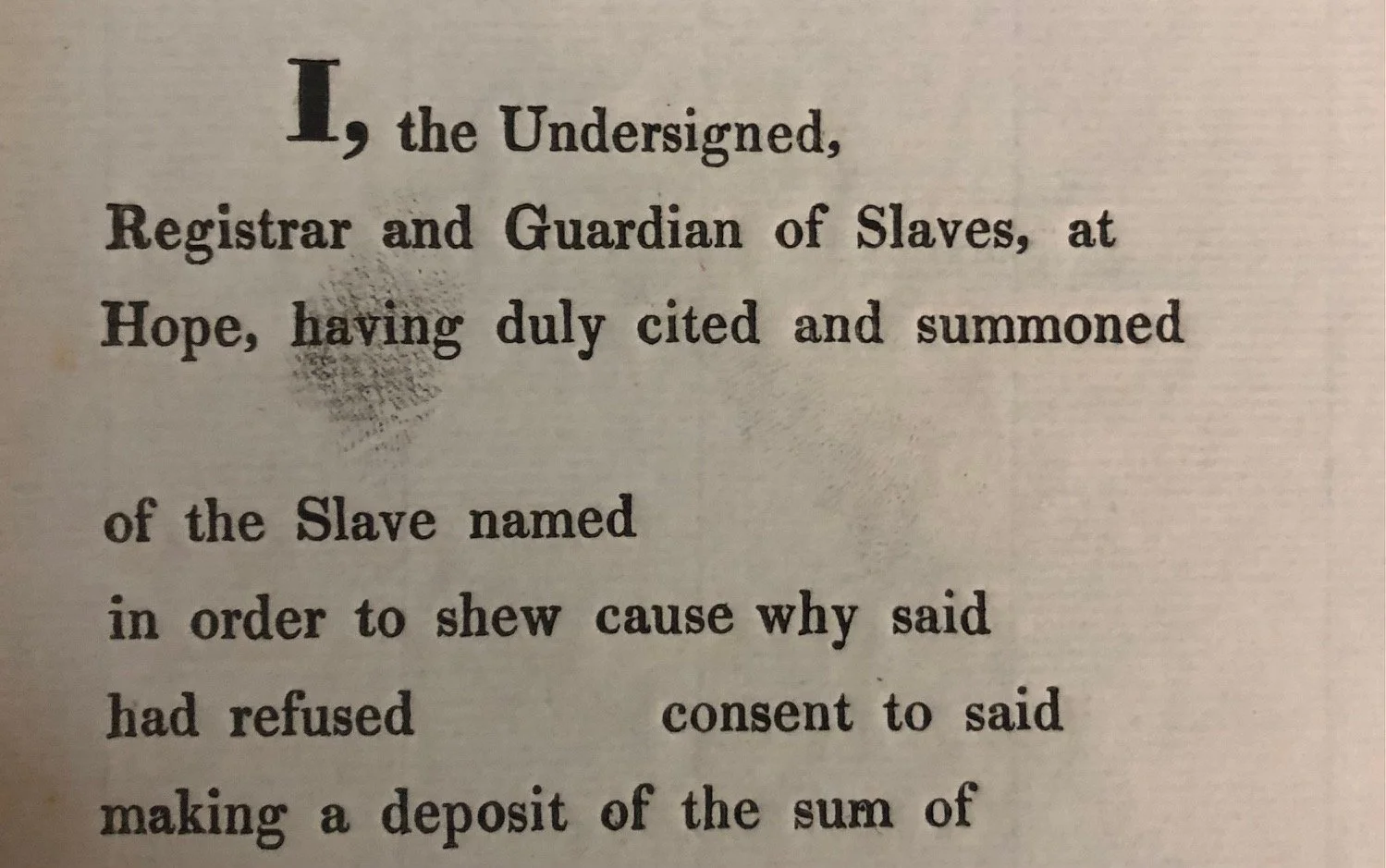
The blank spaces on this form tell a specific legal story. The form is designed for a scenario where an enslaved person wanted to make a deposit, but their enslaver (“said [blank] had refused consent”) objected.
Enslavers fiercely resisted these savings accounts because a slave with independent financial means was a slave who could potentially buy their way out of bondage, disrupting the labor supply and undermining the absolute authority of the master.
If an enslaver refused to consent to a deposit, this form shows that the law stepped in: the Guardian of Slaves would “cite and summon” the enslaver to “shew cause why” they refused. If the enslaver's objection was deemed groundless, the Guardian used this exact document to overrule them, legally authorizing and empowering the Savings Bank to accept the money anyway.
No visible watermark.
195mm x 320mm
R4,000