Child Labour "apprenticeship" Cape Colony (1819)
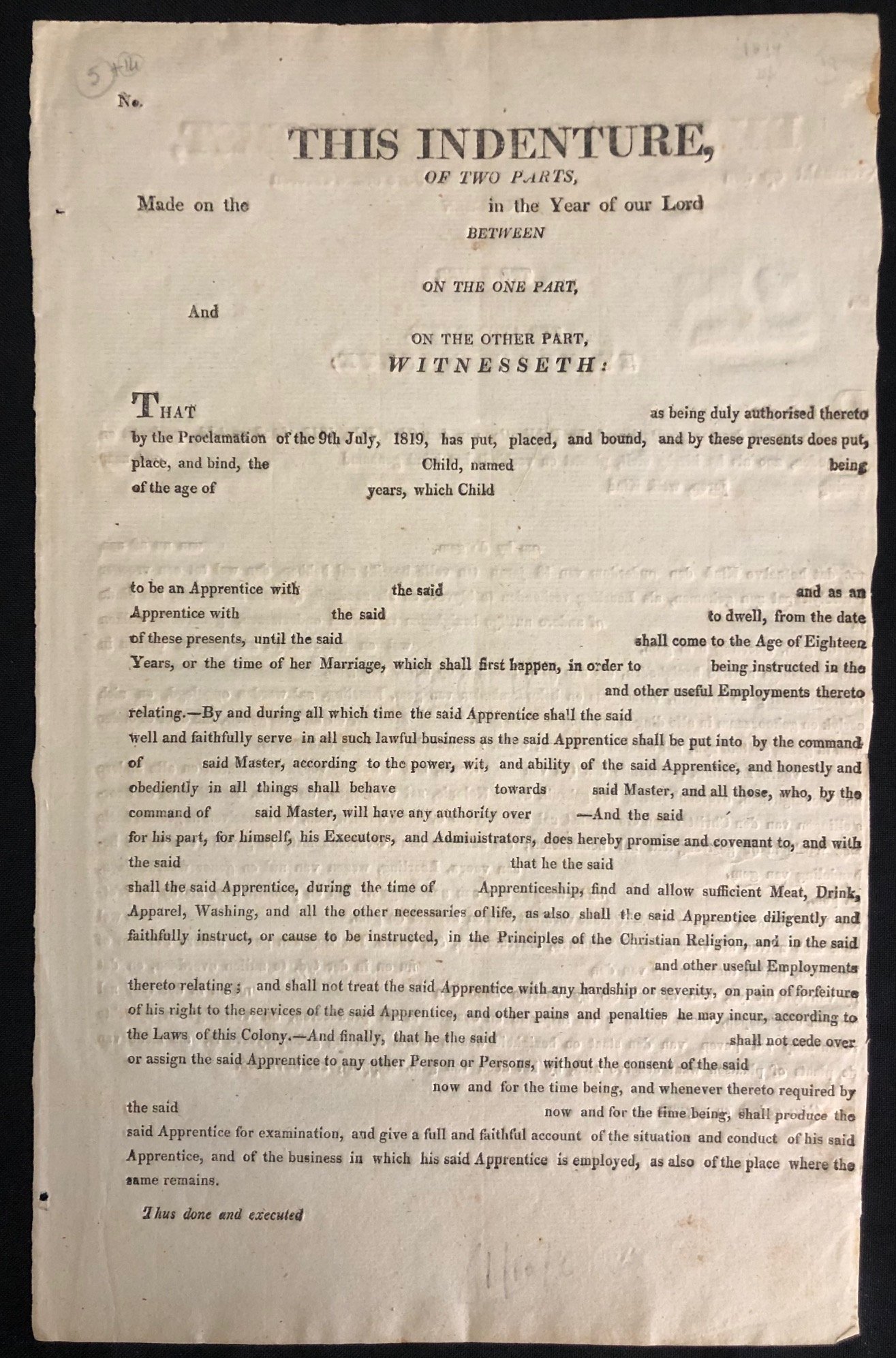
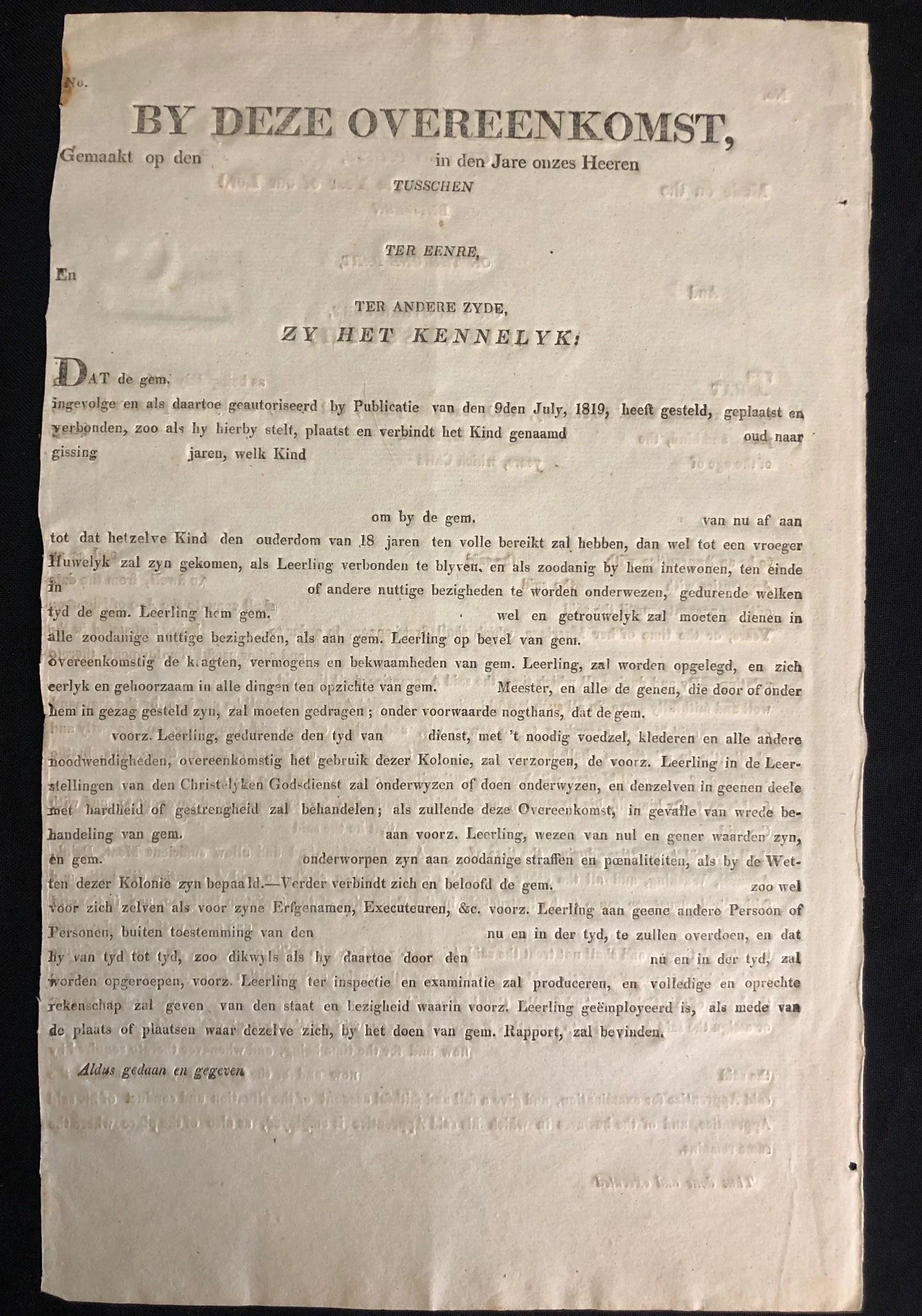
Blank document outlining the mechanism used to create a legally bound, low-cost labor class without technically calling it slavery.
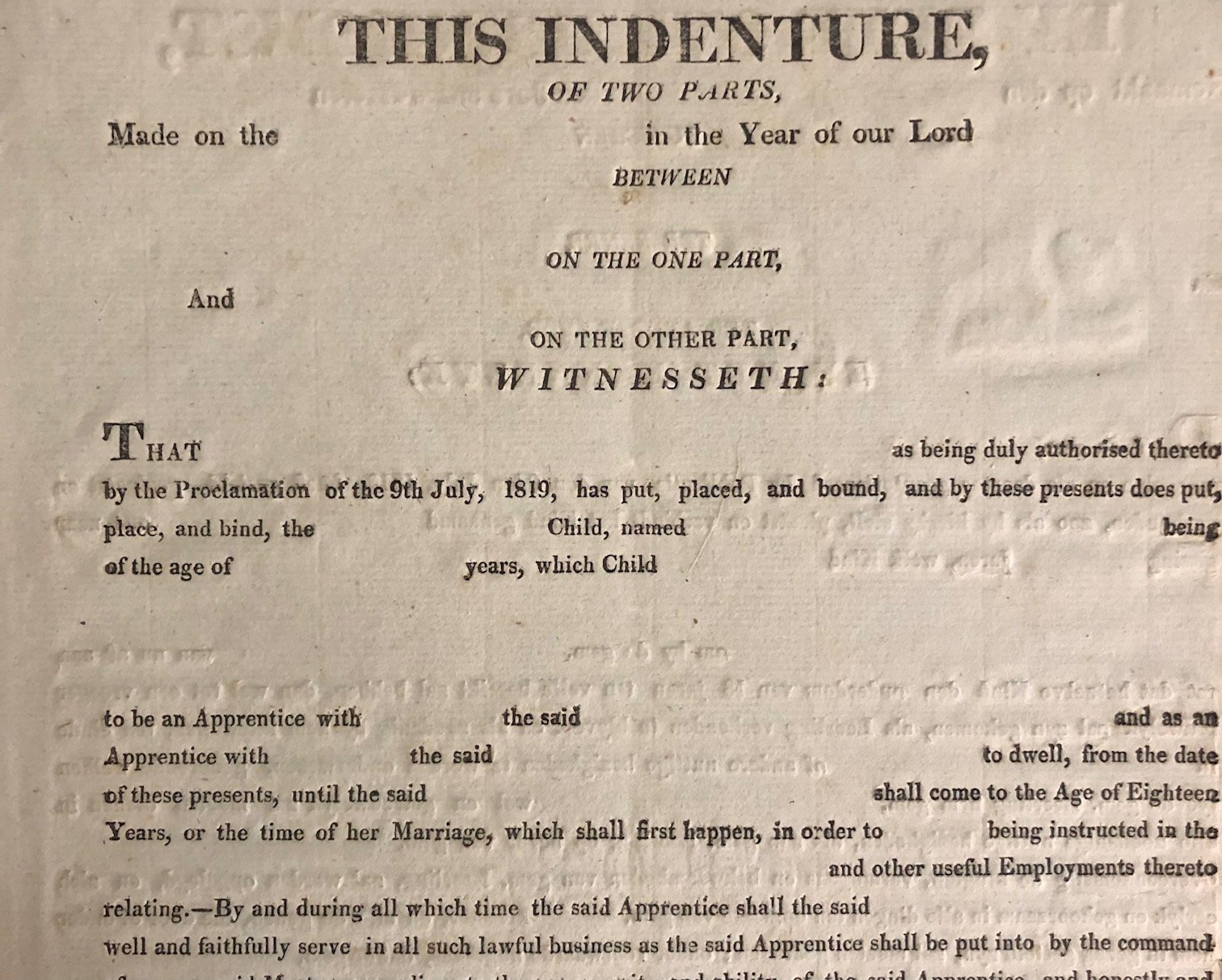
See "...by the Proclamation of the 9th July, 1819, has put, placed, and bound..."
This refers to a piece of colonial legislation enacted under the governorship of Lord Charles Somerset, which formalized and extended a draconian system of forced child labour under the guise of "apprenticeship."
The Legal Extension of the 1812 Caledon / Hottentot Code
In 1809 and 1812, the British colonial government instituted ordinances (often referred to as the Caledon Codes or Hottentot Codes) designed to tie the indigenous Khoekhoe (often spelled Khoikhoi) and mixed-race populations to white-owned farms. Under the 1812 law, if a child lived on a farm up to the age of eight, the farmer could legally claim them as an unpaid "apprentice" for another ten years (until age 18).
The Proclamation of 9th July 1819 expanded this system significantly. It closed loopholes and streamlined the process for local magistrates (Landdrosts) to "put, place, and bind" destitute, orphaned, or captured indigenous children—including San children taken during frontier commando raids—straight into the hands of colonial masters.
A System designed to mimic Slavery
Though the transatlantic slave trade had been abolished by Britain in 1807, the demand for cheap agricultural labor in the Cape was insatiable. This document outlines the exact mechanism used to create a legally bound, low-cost labor class without technically calling it slavery.
The paternalistic language embedded in the text highlights this duality:
The Master’s Obligations: The text explicitly binds the master to provide "sufficient Meat, Drink, Apparel, Washing, and all other necessaries of life," as well as to instruct the child in "the Principles of the Christian Religion."
In exchange for basic sustenance and religious instruction, the child was legally bound to "well and faithfully serve... and honestly and obediently in all things shall behave." ### 3. "The Laws of this Colony"
The text warns that the master must not treat the apprentice with "hardship or severity, on pain of forfeiture of his right to the services of the said Apprentice... according to the Laws of this Colony." While this looks like a humanitarian safeguard on paper, in practice, local landdrosts were almost exclusively wealthy colonial landowners themselves. Indigenous children had virtually no legal recourse, and the system was rife with abuse, effectively serving as an institutional bridge between formal slavery and indentured servitude.
The Countdown to Ordinance 50
Less than a decade after the 1819 proclamation, intense pressure from humanitarians, missionaries (such as Dr. John Philip), and the local population led to the passing of Ordinance 50 of 1828. This landmark ordinance liberated the Khoekhoe from the pass laws and abolished these compulsory, state-sanctioned apprenticeship practices, making documents printed from this specific 1819 template obsolete.
Some pencil notes; very slight staining; cut along the right margin (most probably cut out of a ledger).197mm x 307mm
R4,500