The Railways of Moçambique: 100 Years, 1995
Limited to a print run of 500 copies, highlighting the cornerstone of Mozambique’s colonial and post-colonial economy: transit infrastructure built to service its wealthy, landlocked neighbours.
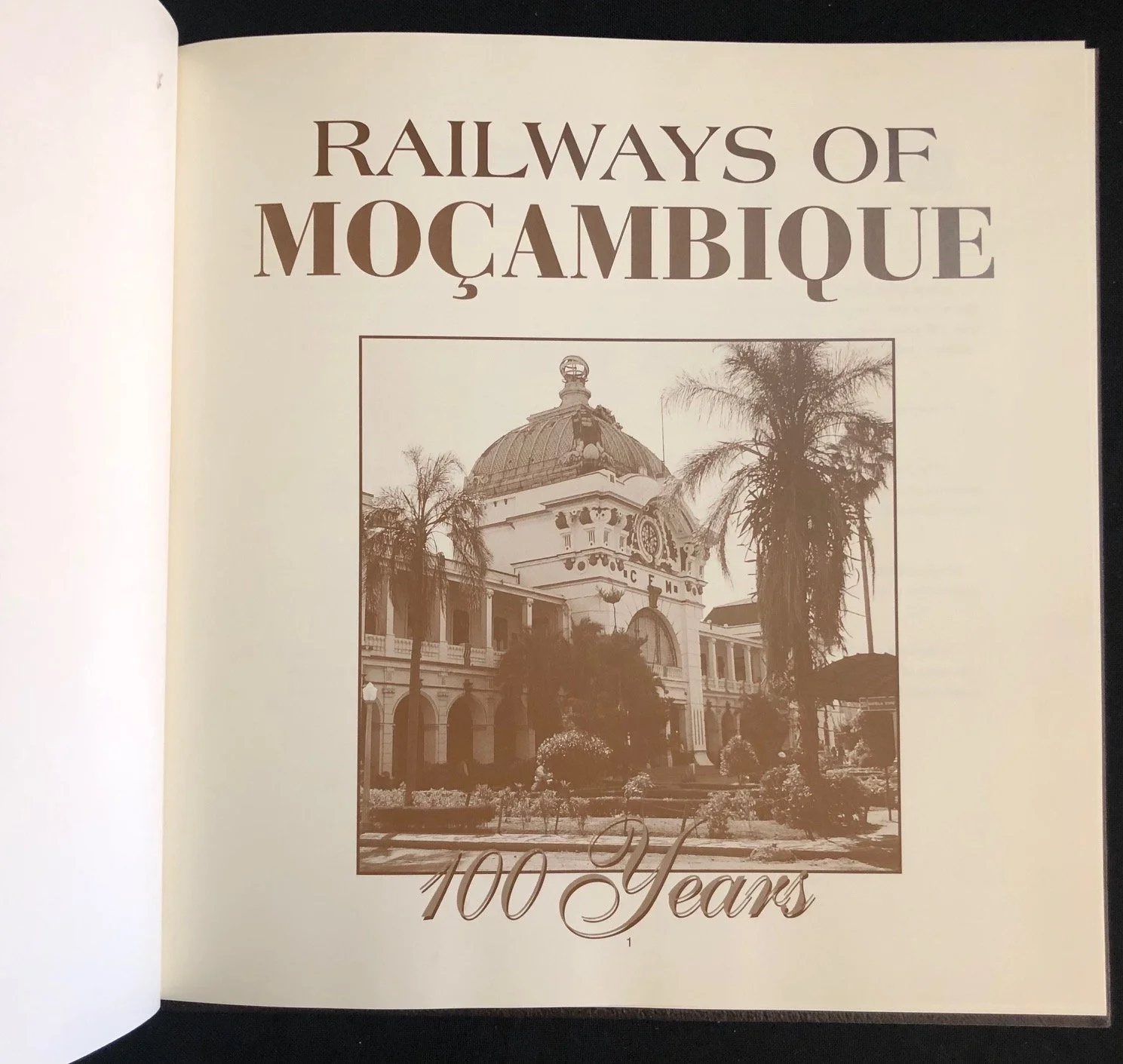
The magnificent building featured on the cover is the Estação Central de Caminhos de Ferro (CFM) in Maputo (formerly Lourenço Marques).
The Eiffel Myth: For decades, popular urban legend claimed this architectural marvel was designed by Gustave Eiffel. In reality, it was designed by his contemporaries, architects Alfredo Augusto de Lisboa de Lima, Mario Veiga, and Ferreira da Costa, and constructed between 1908 and 1916.
With its grand bronze dome, neoclassical colonnades, and ornate wrought-iron work, it is widely considered one of the most beautiful railway stations in the world. For the Portuguese Empire, building such a monumental palace of transit was a massive geopolitical statement. It was designed to impress foreign visitors and merchants arriving from South Africa and the Rhodesias, showing that Portugal was a first-rate modern power.
The Geopolitics of the "100 Years"
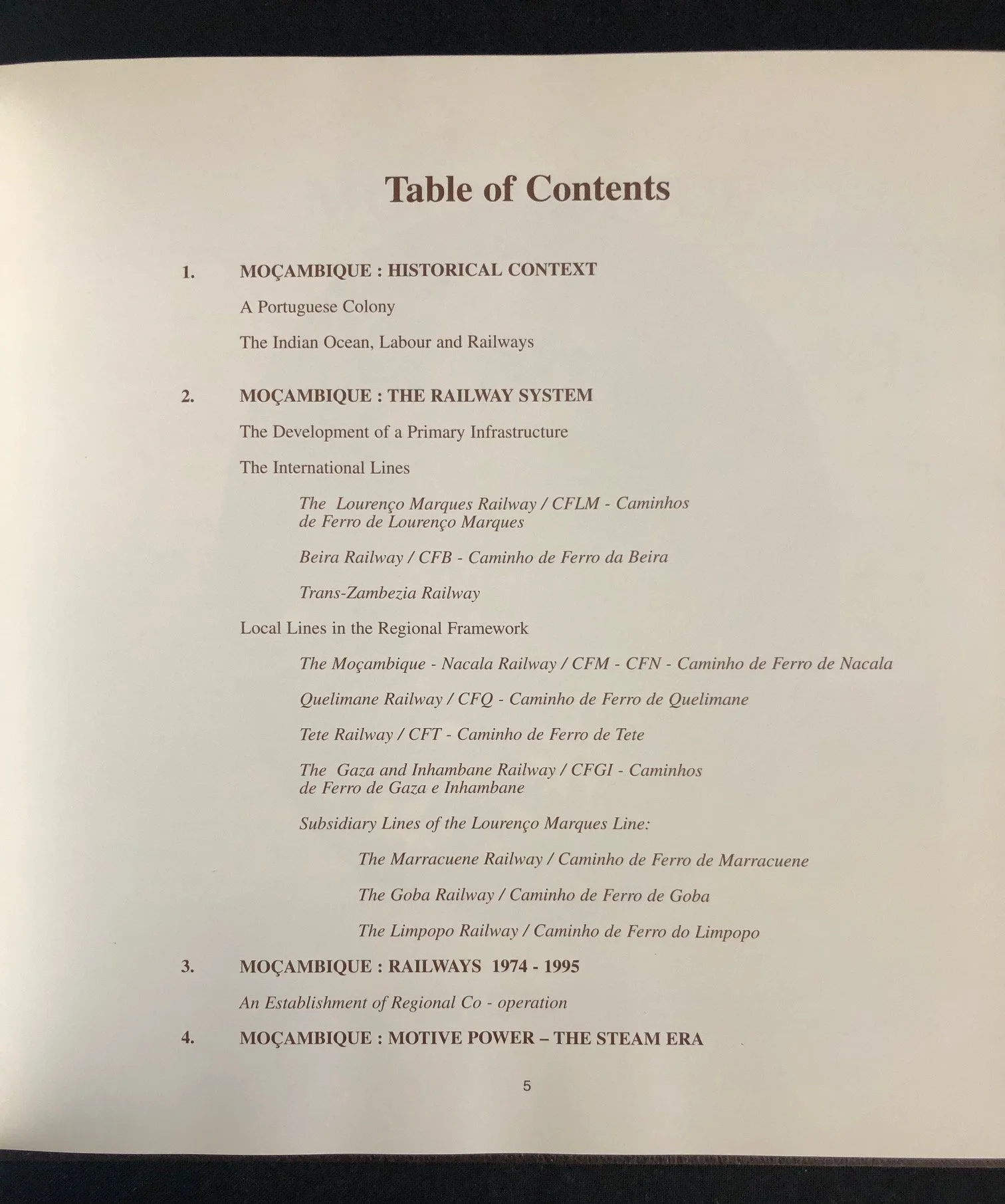
The centenary celebrated by this book traces the history of the Caminhos de Ferro de Moçambique (CFM).
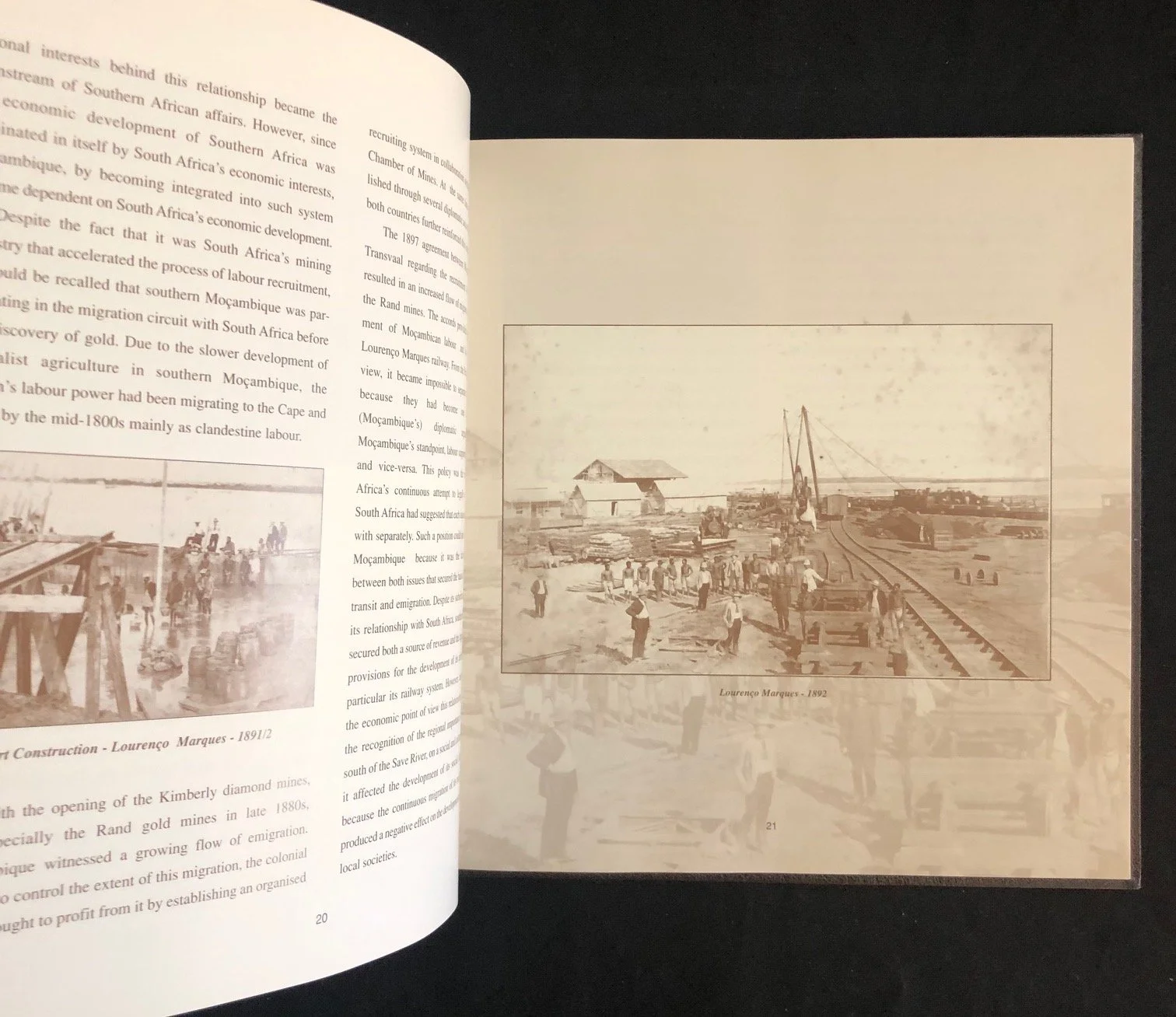
Unlike most African nations where railways were built to extract resources from the interior to the coast for the mother country, Mozambique's tracks were built to profit off other empires.
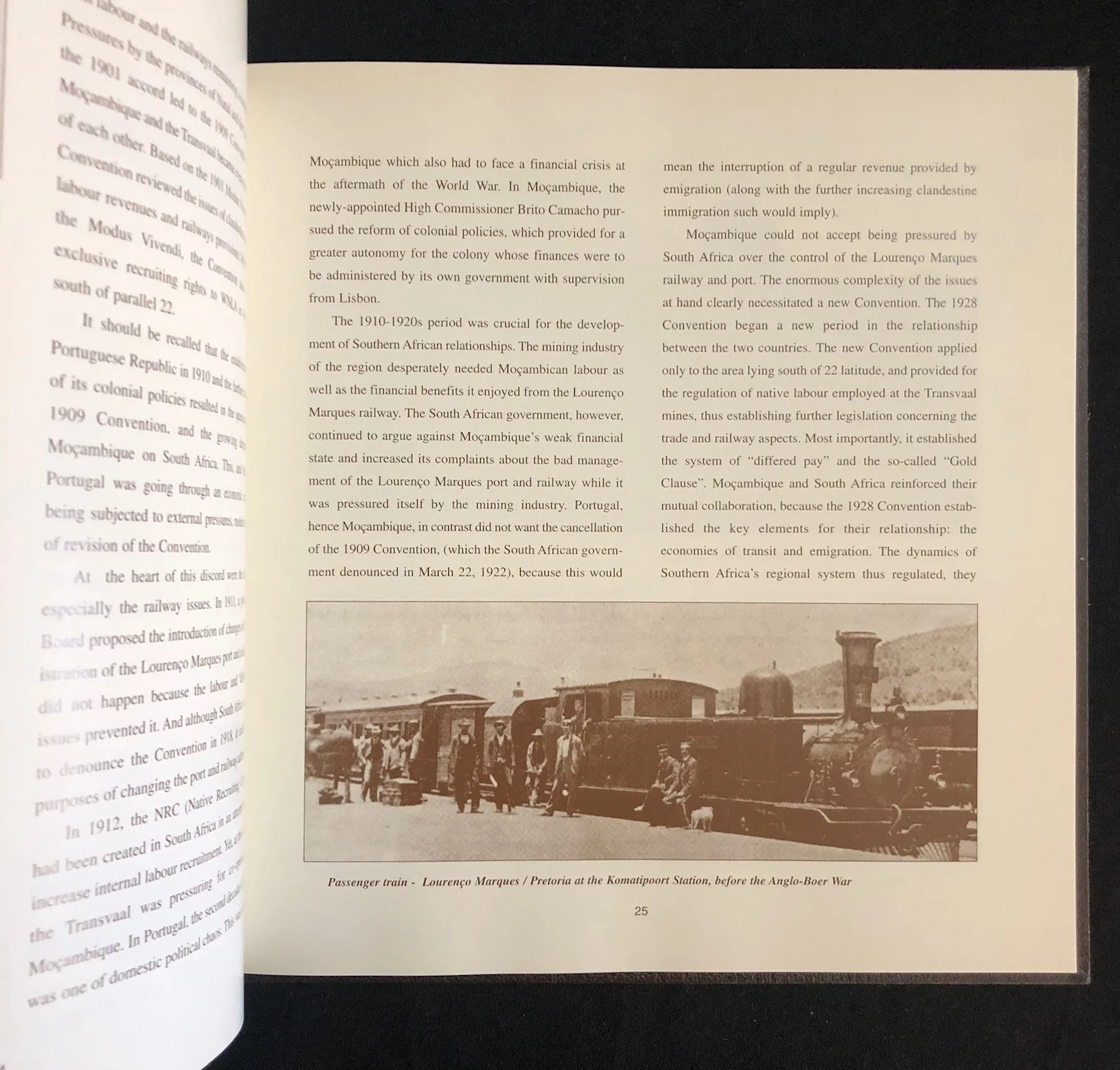
The Witwatersrand Connection: Following the discovery of gold in Johannesburg in 1886, the Delagoa Bay Railway line was rushed to completion in 1894 to connect the Transvaal Republic to Lourenço Marques. It gave Paul Kruger’s Boer republic an outlet to the sea that bypassed British-controlled Cape and Natal ports.
The Tripartite Economic Engine: This line, alongside the Beira line built for the British South Africa Company, became Mozambique's primary source of revenue. Under the historic Moçambique Convention, South Africa guaranteed that a massive percentage of rail traffic from the Witwatersrand goldfields had to route through this station in exchange for the right to recruit hundreds of thousands of Mozambican miners to work the reef.
The Language Shift: A Post-Colonial Transition
A subtle but highly significant detail is that the book's title is in English (Railways of Moçambique), yet it retains the Portuguese spelling of Moçambique with the cedilla (ç).
Published in 1995, sponsored by Manica Freight Services.
Following independence in 1975 and the devastating Mozambican Civil War, the country found itself economically isolated from Portugal but still inextricably physically linked to the English-speaking economies of the region (South Africa, Zimbabwe, and Zambia).
245mm x 245mm
Minor edge wear.
R600